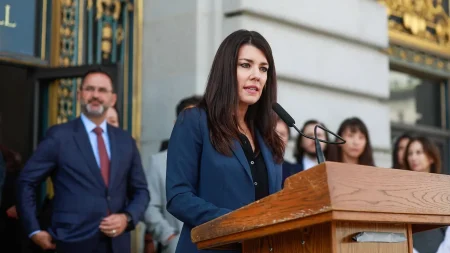






The frustration in the New York City Council hearing room was not the loud, theatrical kind that fills campaign rallies. It was the quieter, more patient kind—the kind that slowly settles into the room when people in positions of authority realize they are not going to get the answers they came for. Outside, the city hummed with its usual chaos: buses groaned up Broadway, delivery bikes swerved through traffic, and millions of New Yorkers scrolled through their phones, unaware that their city government was about to collide with the strange, slippery world of internet fame. Inside the hearing chamber, though, the air was tense. Council members sat behind curved desks, their aides leaning forward with laptops and notepads. At the witness table, representatives of Mayor Zohran Mamdani’s administration shifted in their seats. The topic was the mayor’s use of social media influencers—a communication strategy that seems cutting-edge on its surface but had suddenly become a puzzle no one could solve. Again and again, council members asked basic questions. Who chose these influencers? What were they paid? Were their posts labeled as government communications? Did anyone track whether the messages actually helped New Yorkers? And again and again, the representatives gave the same kind of answer: we don’t have that information at this time, we’ll have to get back to you, that’s handled by another office. The frustration grew, not because the questions were unfair, but because they were so basic. It is human to expect that when a mayor’s office decides to spend public money or public attention on a new kind of media campaign, someone in that office would understand how it works. That expectation, simple as it sounds, was not met.
To understand why this matters, you have to understand what an influencer actually is in the modern city. An influencer is not necessarily a celebrity with millions of followers. In New York, an influencer might be a mom in Flatbush who reviews strollers on Instagram, a college student in Washington Heights who makes funny videos about the subway, a food blogger in Queens who knows every dumpling shop on Maple Avenue. These are real people with real audiences, and their recommendations carry a weird kind of trust that television ads and press releases no longer have. When a mayor’s office partners with such people, the hope is that government messaging can feel less official and more organic—less like a lecture and more like a conversation between friends. That is not a bad idea in theory. Cities everywhere are struggling to reach younger residents who do not watch local news or read city newspapers. If the mayor wants to tell young New Yorkers about rent relief, vaccination sites, or a new summer jobs program, a trusted voice on TikTok might be more effective than a glossy brochure. But with that opportunity comes responsibility. The public has a right to know when the city is paying someone to cheerlead for it. The public has a right to know what messages are being amplified and why. And the council’s questions were simply designed to protect that right. Instead of clear answers, they heard vague references to digital strategies and creative partnerships. It was like watching someone explain a magic trick by saying “abracadabra” instead of showing you the hidden wire. The room grew heavier with each non-answer, because the silence itself was informative. It suggested that the mayor’s office had jumped into influencer politics without a clear rulebook, a clear budget, or a clear conscience about who was being paid to say what.
The hearing had moments that felt almost painfully human. One council member, after hearing yet another vague response, let out a long, slow exhale and pinched the bridge of her nose. Another pressed for a simple number: the total amount of taxpayer money spent on influencer partnerships in the past year. The representative across the table adjusted her glasses and said the number was still being compiled. A young staffer in the back of the room looked down at his phone, and his face went blank, as if he were checking his email for a miracle. The moderator had to remind everyone to speak one at a time, because a low murmur of disbelief kept bubbling up. At one point, a council member directly asked the administration team if they had reviewed the content of the influencers’ posts before the posts went out. Did anyone in the mayor’s office read the captions, watch the videos, or check the comments? The answer, delivered with a slight pause, was that the digital engagement team kept a running log, but the log had not been shared with the council. It was the kind of answer that raises more questions than it settles. Was there a log? Did anyone actually look at it? Were influencers free to say anything they wanted, as long as they tagged the mayor? The people in the room did not need a law degree to see the potential for embarrassment, waste, and even corruption. They just needed a little common sense. And the longer the representatives failed to provide details, the more the hearing began to feel less like an oversight session and more like a glimpse into a machine that had been allowed to run without a driver.
Beyond the procedural frustration, there was a deeper worry about what this means for democracy in a noisy digital age. Government communication has always been a matter of trust. When a mayor stands behind a podium and speaks to the press, the public can see the mayor’s face, hear the mayor’s words, and compare those words with actions. But when a government message is wrapped inside an influencer’s casual video, the line between fact and promotion becomes blurry. The viewer may not know that the city paid for the praise. The viewer may not know that the smiling young person in the video is not an independent fan but a contractor with a message to deliver. That is not necessarily a lie, but it is a kind of mist, a fog that makes it hard to tell who is speaking and why. New Yorkers have always been skeptical of authority; it is part of the city’s character. But skepticism becomes harder when people cannot tell what they are being asked to believe. Is this a public service announcement or an advertisement? Is this a real review or a sponsored post? Those questions are not just technical details. They are the difference between a government that is open with its citizens and a government that manages its image like a brand. The council hearing was not a debate about whether influencers can be useful. Of course they can. It was a debate about whether the city was being honest about its own communication—and the silence from the mayor’s representatives suggested that honesty was not the priority.
It would be easy to paint everyone in that room as either a hero or a villain, but the truth is more complicated. The staffers at the witness table were probably not trying to hide a conspiracy. They were likely young, overworked, social-media-savvy people who had been hired to build the mayor’s online presence and had never been asked to explain themselves in a formal setting. They may have genuinely believed that the influencer program was going well, that it was making the mayor feel more relatable, that it was generating clicks and likes and shares. They may not have realized that every click and like costs money, that every partnership carries an ethical weight, and that the public might want to know why a city government is telling its residents to trust someone who is being paid to be trusted. On the other side, the council members were not looking for a scandal; they were looking for accountability, which is a basic human need. We all want to know that the people in power are paying attention, that someone is keeping the books, that there is a method behind the madness. The problem was that the method, if it existed, was invisible. And what was visible instead was a room full of adults trying to talk seriously about something that had been treated unseriously. The human temptation is to mock the whole situation—to laugh at politicians who think a TikTok star can solve urban poverty, or to sneer at young staffers who mistake engagement metrics for real connection. But the people most affected by this mess are ordinary New Yorkers: the single mother trying to find out if her child’s school is closed, the immigrant elder who gets news from a community influencer’s WhatsApp message, the small business owner who needs to know about street closures and sanitation rules. If the city’s digital outreach is a house of cards, they are the ones who will be left without reliable information when the cards fall.
In the end, the hearing was not just about influencers, and it was not just about the mayor’s representatives stumbling through questions. It was about whether a city can adapt to new forms of communication without losing its soul. New York is a place that has always moved fast, always tried the next thing, always embraced the spectacle. That is part of its genius. But democracy requires a little more. It requires transparency, and transparency requires the willingness to be boring, to write things down, to explain yourself even when you would rather just move on to the next post. The council’s frustration was really the frustration of citizens who understand that trust is not built by algorithms. It is built by showing your work. As the hearing wound down, one of the mayor’s representatives promised to provide written answers, to compile a report, to be more thorough in the future. The promise was delivered with tired politeness, and some council members nodded, perhaps wanting to believe that this had all been a miscommunication, a simple matter of a new team growing into its responsibilities. But the room was still unsettled. Everyone knew that the next hearing would come, and the next question would be sharper. The mayor’s use of influencers was not going to disappear, because influencers are not going to disappear. The only real question is whether the people behind the accounts will ever be as accountable as the people they are paid to influence—and whether the city’s leaders will learn that in a democracy, the most important message is the one that can be explained, verified, and defended in the bright, unforgiving light of a public hearing.