




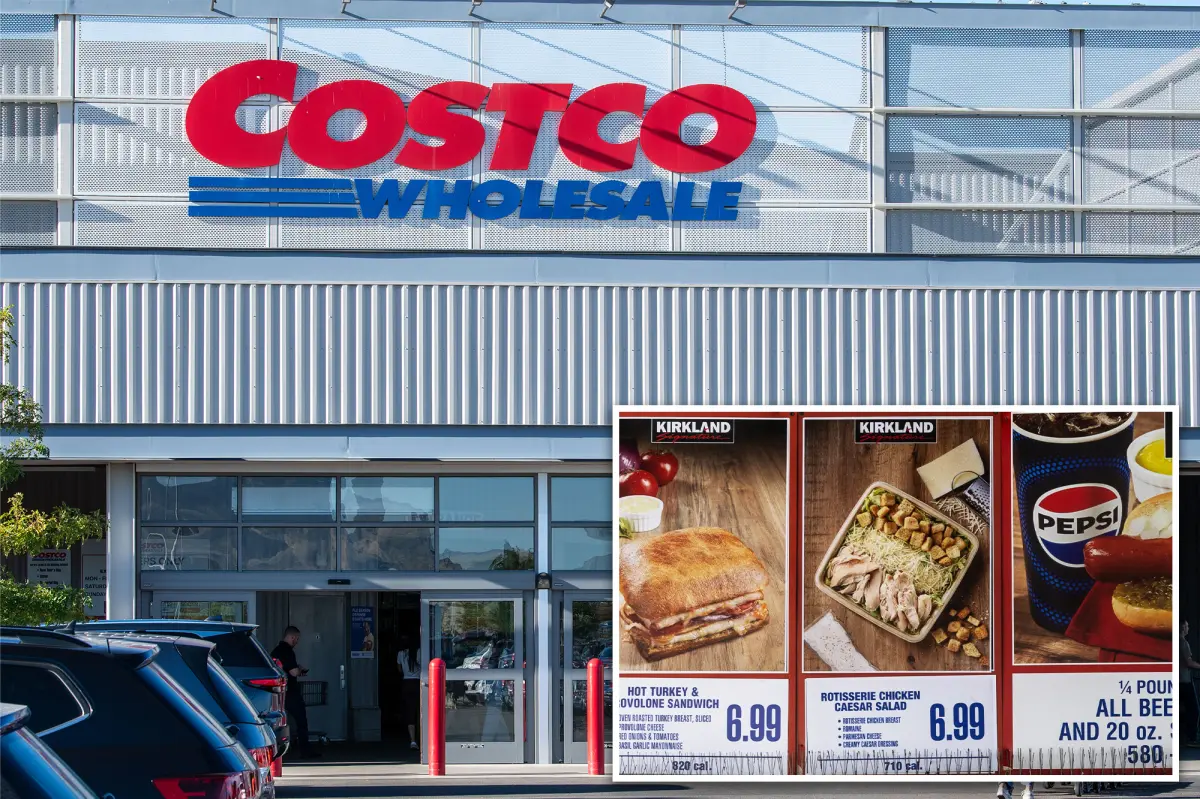
Walking into any Costco, the scent of cheap pizza and freshly spun frozen yogurt tends to hit you before you even reach the carts. For decades, the warehouse club’s food court has been a strange, beloved institution—part pit stop, part guilty pleasure, part high-volume cafeteria. It’s where you can still get a hot dog and soda for $1.50, where oversized slices of pepperoni pizza feel like dinner plates, and where the lines are always long but somehow move fast. So when Costco announced a new food court item this year called the Rotisserie Chicken Chef Salad, it captured attention in a way that the latest frozen novelty might not. This wasn’t just another splashy sugary treat. It was a salad with a protein number so big it seemed to belong on a gym poster. The headline? The salad boasts 59 grams of protein, which is more than any other item currently on the food court menu. That single fact is enough to make people pause. In a culture constantly chasing more protein for muscle gain, satiety, and overall nutrition, a salad that promises nearly three times what you’d get from a standard fast food burger feels like a revelation. But it also raises a question: does more protein automatically mean a better meal? Costco’s shoppers are now asking that question, and the answers are more complicated than the menu board suggests. The salad, while impressive in one nutritional category, is not exactly a lightweight. With 840 calories, it’s a substantial meal, and there are caveats that a quick glance at a protein count doesn’t reveal. Before you decide whether to grab one on your next trip, it’s worth unpacking what’s really in that foil-lined bowl and how it fits into a normal day of eating.
Let’s break down what you’re actually getting for $7.99. The Rotisserie Chicken Chef Salad starts with a bed of romaine lettuce, then gets topped with generous portions of rotisserie chicken, hard-boiled eggs, bacon bits, and shredded cheddar cheese. Add some cherry tomatoes and a creamy peppercorn ranch dressing, and you have something that looks more like a composed meal than a side dish. The ingredients are, in many ways, a greatest hits of the Costco menu — the same rotisserie chicken that has a cult following, the hard-boiled eggs that batch-cooking advocates love, and the bacon bits that add a smoky, salty punch. The dressing, with its sharp peppercorn kick, is the kind of thing that can make even a self-proclaimed salad hater sit up and take notice. At 840 calories, it’s not a diet plate. But for many people, it’s not unreasonable as a full meal, especially if you’re active, tall, or haven’t eaten much earlier in the day. The 59 grams of protein are impressive by nearly any standard. To put that in perspective, that’s roughly the equivalent of about two large chicken breasts or seven and a half large eggs. It’s the kind of number that bodybuilders might track, and it instantly makes the salad a stronger protein source than the food court’s other mainstays. Yet the salad’s composition also raises a few eyebrows. The combination of cheddar, bacon, and ranch dressing means that not all of those calories are created equal. Bacon bits contribute sodium, the dressing adds saturated fat, and the cheese brings both. So, yes, the salad offers protein and some helpful vegetables, but it’s also a dish that benefits from a closer look at its full nutritional picture. Costco made a smart move by spotlighting the item, but the menu board only tells part of the story.
For that fuller story, Fox News Digital turned to Jamie Lee McIntyre, a Florida-based registered dietitian nutritionist. Her reaction to the salad’s 59 grams of protein was not the unguarded excitement you might expect. Instead, she urged shoppers to look beyond the eye-catching number. “That’s just a nutrition attribute,” McIntyre said. In other words, protein is one factor among many, and a food can be high in protein but still be high in sodium, saturated fat, or calories. Her point is an important one for a culture that has spent the last decade treating protein like a magic nutrient. You see it in protein bars, protein coffee, protein pancake mix, even protein water. But a meal’s healthfulness depends on the total combination of nutrients and how it fits into your day. “A food can be high in protein, but it can also still be high in sodium, saturated fat or calories,” she noted. That doesn’t mean the salad is bad; it simply means that you have to consider what else comes along with the protein. On the positive side, McIntyre pointed out that the salad’s protein “is coming from some good whole foods, chicken and eggs.” Those are high-quality sources, and the romaine and tomatoes add vegetables that many food court options lack. “So those are some good building blocks of the meal,” she said. But then came the caveat: “For a lot of people, 840 calories might be a bit much for a light lunch.” Her words reflect a deeper truth about nutrition: context matters. An 840-calorie salad can be exactly right for a 6-foot-5 construction worker who skipped breakfast, but it can derail a week of careful eating for a petite office worker who eats lunch at 11:30. It all depends on the person, their hunger level, and what they’re planning to eat for the rest of the day. That nuance is often lost in the endless debate over good foods and bad foods. The salad is not a health halo, nor is it a dietary disaster. It’s a real meal with real benefits and real tradeoffs.
The Rotisserie Chicken Chef Salad also appears in a food court that now looks almost like a high-protein showcase. If you want protein, you don’t have to get the new salad. The Chicken Caesar Salad is right there with 58 grams of protein — just one gram less. The Chicken Bake, that warm, doughy, cheesy hand-held favorite, still has 53 grams of protein. So the salad’s protein edge is real but narrow. A difference of one or two grams is unlikely to make or break anyone’s meal. What those numbers do, though, is say something about how Costco’s menu has evolved. The food court once seemed like the place you went for cheap, comforting carbs. Now, it’s competing with the protein demands of modern eaters. But here’s the thing: comparing only protein counts is like judging a house by its square footage. It’s a useful metric, but it doesn’t tell you about the structure’s bones, its insulated windows, or the quality of the kitchen. The Chicken Caesar Salad might have nearly the same protein as the chef salad, but the Caesar’s dressing and croutons will bring a different set of nutritional tradeoffs than the bacon and ranch in the chef salad. The Chicken Bake, for all its protein, has long been recognized as a sodium bomb that sits in your stomach like a brick. The new chef salad may be more moderate, but it still packs a big caloric punch. What a protein count doesn’t do is tell you how full you’ll feel, how your blood sugar will respond, or whether you’ll want to take a nap immediately afterward. The dietitian’s advice to look at the whole package becomes especially important in a place where the menu is built on convenience and value. It’s also worth remembering that protein needs vary from person to person. The recommended daily amount for a sedentary adult is about 0.8 grams per kilogram of body weight — for many people, that’s only 45 to 55 grams total per day. That means one serving of this salad might eclipse the entire day’s protein requirement for some, or fall well short of what a strength athlete needs at a single sitting. So the “59 grams” isn’t automatically a goal; it’s just a number, and its meaning depends on who is doing the eating.
Online reactions to the new salad have been mixed, and in a wonderfully human way. Costco shoppers are never shy about sharing their opinions, and the chef salad has inspired the full range of internet verdicts. One Reddit user was bluntly disappointed: “Tons of toppings, not enough lettuce. Salty for a salad. I wouldn’t buy it again, the portions are just way off, and it was a whole thing to assemble.” That comment highlights something that doesn’t show up on a nutrition label: texture, balance, and effort. A salad with too few greens and too many toppings can feel more like a casserole served cold than a crisp, refreshing meal. The saltiness issue is also worth noting, especially because the bacon bits, cheese, and ranch dressing each bring sodium to the table. Another user had the opposite reaction, saying, “Someone bought me one, and I went back 2 days later to buy another.” That’s the highest praise a busy food court item can get — a repeat purchase less than 48 hours later. Yet the most passionate response so far may be about the dressing: “I am not a salad person, but I love this dressing. I wish I knew what company makes the Peppercorn Ranch dressing.” There’s something almost comical about the fact that a salad meant to attract protein-chasers has become a source of dressing envy. But that’s how food enthusiasm works. People connect to flavors and to the little details, not just macro numbers. These mixed reactions also illustrate the inherent subjectivity of eating. One person’s “too salty” is another’s “flavor-packed.” One person’s “not enough lettuce” is another’s “finally, a salad with actual stuff on it.” And for every person who considers 840 calories too high, there’s another person who sees it as a solid, filling meal that justifies the price. Costco, for its part, is unlikely to lose sleep over the criticisms. The salad gives them a headline moment and gives shoppers a new reason to stop by the food court. But the online chatter is a reminder that nutrition isn’t just a list of numbers on a menu. It’s about appetite, taste, convenience, and expectation. It’s about the moment you peel open the plastic dome and decide whether what’s inside looks worth the calories. The Reddit thread says yes, no, and everywhere in between.
At the time of publication, Fox News Digital had reached out to Costco for comment, but there was no immediate response. That silence is typical in the world of corporate food courts, where products come and go without much explanation. But the conversation around this salad is worth having even without official input. The Rotisserie Chicken Chef Salad is, in many ways, a perfect symbol of our complicated relationship with food. On one hand, it’s got the protein count that catches your eye, the vegetables that make you feel virtuous, and the low price that makes you feel smart. On the other hand, it’s got 840 calories, a fair amount of sodium, and a creamy dressing that you could easily find yourself pouring on generously. It’s neither a health halo nor a guilty secret; it’s just a meal. The real lesson, as dietitian Jamie Lee McIntyre suggested, is to look beyond single nutrients. Protein matters, but so do calories, fat, sodium, and perhaps most importantly, how the food makes you feel. If you’re genuinely hungry and want a filling lunch that includes chicken and eggs and greens, this salad might be a great choice for your next Costco run. If you’re looking for something light and low-calorie, you might want to split it with a friend or take half home for tomorrow. Food decisions are rarely universal, and the best answer is almost always “it depends.” Humanizing this salad means recognizing that people will bring different needs, tastes, and expectations to the table. It also means remembering that a food court order is about more than nutrition. It’s about the pleasure of eating, the convenience of grabbing something quick, and the simple joy of tasting something that makes you want to buy another one two days later. The Rotisserie Chicken Chef Salad may not have the same cultural power as the $1.50 hot dog, but it tells us something about where our tastes are headed. We want protein, yes. But we also want flavor, value, and the feeling that we’re making a reasonable choice. This salad gives us all of that — in portions and proportions that are, like much of life, a little bit messy. And in a way, that messiness is the most human thing about it.