





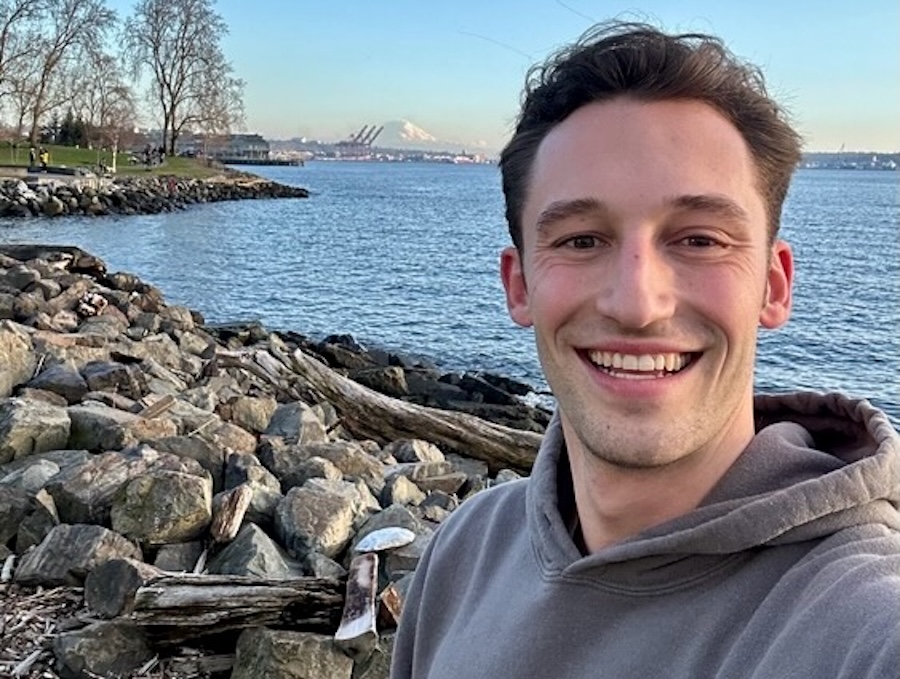
In the heart of Seattle, where the gray skies often mirror the city’s famously elusive social scene, 26-year-old Reid Miller was navigating the murky waters of modern romance. A software engineer at Amazon, he had moved from Milwaukee four years ago, leaving behind the familiar comfort of the Midwest for the tech-driven pulse of the Pacific Northwest. Since then, his love life had been a series of closed chapters: a long-term relationship that ended, another that followed suit, and a handful of dates that fizzled into the digital ether. Like so many others, he found himself trapped in the exhausting cycle of dating apps—swiping, matching, chatting, and too often, ghosting. The so-called “Seattle freeze” wasn’t just a myth; it was a lived reality, a social inertia that made genuine connection feel like a rare commodity. Add to that the city’s simmering anti-tech sentiment, and a young man who spends his days coding for one of the world’s largest companies often carries an unspoken penalty on a first date. Miller felt it—the subtle judgment, the “minus one” in someone’s mind when he said “software engineer.” But he also knew that hiding who he was wouldn’t lead anywhere real. So he kept trying, kept showing up, kept hoping that somewhere in this city of rain and ambition, he’d find someone who saw past his job title and into the genuine, golden-retriever-energy guy his friends knew him to be.
That’s where his friends stepped in—not with a pep talk or a gentle push to update his profile, but with something far more creative and unapologetically earnest. Bryn Lloyd-Davies, who works in tech herself and is dating Miller’s best friend, Eric, had watched him struggle through post-breakup dating with a growing sense of frustration. She saw what the apps couldn’t capture: his loyalty, his adventurous spirit, his Midwestern charm that made him stand out in a crowd. So she hatched a plan. With Eric’s help, and a circle of friends who were tired of seeing a good guy get lost in the digital noise, she designed flyers that read “DATE OUR FRIEND” in bold letters. Beneath a smiling photo of Miller, they listed his winning qualities: “He’s above average looking! He’s employed! He’s fun, adventurous, and supportive! He follows through! He’ll show up, and text you back!” It was playful, direct, and disarmingly honest. The flyers were posted around Ballard, the trendy Seattle neighborhood where Miller lives, and handed out to strangers. A QR code linked to a custom website, DateReid.com, turning a piece of paper into a digital invitation. Behind the lighthearted joke—Lloyd-Davies joked she was “trying to find a girlfriend for my boyfriend’s boyfriend”—was a real belief that sometimes, the most human way to find love is to ask for help, boldly and publicly.
The website itself is a charming antidote to the cold efficiency of dating apps. “Looking for the real deal?” the homepage asks women, before introducing Reid as an outgoing 6-footer with a dash of Midwest charm. The “About” page dives deeper: his Wisconsin roots, his education at the University of Wisconsin, his love for competitive water skiing, snow skiing, rock climbing, and restaurant-hopping. There’s a gallery of photos—meant to be scrolled, not swiped—and a video section showing him doing the very sports he talks about. Then comes the application form, a playful but sincere questionnaire for interested women aged 21 to 31. They’re asked if they’re gainfully employed, how adventurous they are on a scale of 1 to 5, and what their dealbreakers are. They’re also encouraged to upload a few photos, because, as the site says, “Looks aren’t everything but let’s be real, attraction is important!” The response was slow at first—just a handful of applications over the first month. But then someone posted a picture of the flyer on Reddit, and the internet did what it does best: it went viral. In a single day, the site’s views jumped from about 75 to over 3,000, and by Thursday afternoon, at least 13 new applications had rolled in. For a city that often hides behind screens, this analog-meets-digital approach felt refreshingly human—a reminder that sometimes, the most effective way to stand out is to stop trying to blend in.
For Miller, the sudden attention was both exhilarating and surreal. He first learned about the flyers when a friend at a bar showed him a picture. “Oh my gosh, that’s me!” he recalled, laughing. He hadn’t known about the website or the full scope of his friends’ plans, but once he saw it, he decided to take it seriously. “Dating’s a numbers game,” he said, “so I appreciate it. My whole goal is to look for what I’m looking for, but also make sure we both have a good time and just both leave it happy.” That pragmatic yet generous outlook is classic Miller, according to those who know him. He’s aware that leading with a tech background doesn’t always win him points—especially in a city where Amazon and Microsoft are often blamed for rising rents and cultural homogenization. But he refuses to apologize for it. “You’ve just got to own it,” he said. “It’s my living, it’s my life.” Still, he knows that what makes him interesting isn’t his résumé. It’s the way he bottle-fed raccoons back on his family’s farm in Wisconsin—a detail that delighted Seattle’s viral raccoon celebrity, Jimothy, when fans made the connection. It’s his sense of follow-through, his willingness to show up, his ability to make people feel seen. Those are the qualities that dating apps struggle to convey, the ones his friends hoped would shine through a paper flyer and a simple website.
The broader context of this story is a city, and a generation, wrestling with how to connect in an era of digital overload. Seattle’s dating culture is notoriously difficult—a blend of introversion, high expectations, and what some call the “Seattle freeze,” a social reserve that can make even friendly encounters feel distant. For tech workers, the challenge is compounded by stereotypes: the coder who can’t hold a conversation, the engineer who talks only about algorithms, the corporate climber who values efficiency over emotion. Lloyd-Davies and her friends wanted to disrupt that narrative, to show that behind the job title is a person who laughs easily, who skis competitively, who bakes cookies for his friends. In an interview, she explained why she went to such lengths: “I think dating anywhere is especially hard these days, and it just seems to get harder and harder the more terminally online we become as a society. Someone like him who very quickly stands out as so genuine and a green flag in real life is hard to discern from 100 low-effort, flaky people on a dating app.” Her frustration isn’t unique—it’s shared by millions who feel that algorithms are flattening human complexity into swipeable profiles. But by turning to old-fashioned paper and personal endorsement, she and her friends reasserted that connection is still fundamentally human, that the best way to find someone who sees you is to let them see you through the eyes of people who already do.
As the applications trickle in, Miller is preparing to do something increasingly rare in the dating world: read every single one, respond respectfully, and give each person a fair chance. He knows that not every match will lead to a spark, but he’s committed to honoring the courage it takes for someone to put themselves out there—whether on a flyer, a website, or an app. “My whole goal,” he repeated, “is to look for what I’m looking for, but also make sure we both have a good time and just both leave it happy.” It’s a sentiment that feels almost old-fashioned in its sincerity, but it’s exactly what his friends were betting on. In a world where dating often feels like a transaction, Reid Miller’s story is a reminder that love—real, messy, hopeful love—still thrives on vulnerability, creativity, and a little bit of help from the people who know you best. Whether or not this experiment leads to a lasting relationship, it has already done something remarkable: it has made a tech worker in Seattle feel seen, not as a data point or a stereotype, but as a whole person. And in a time when so many of us are searching for genuine connection, that might be the most human outcome of all.