






The devastating wildfires tearing through Eastern Washington have transformed peaceful communities in the Spokane area into a landscape of ash and uncertainty. With hundreds of homes and businesses destroyed and nearly 65,000 residents forced to flee their neighborhoods, the disaster has struck a deeply personal chord for Washington’s business community. For major employers rooted in the Pacific Northwest, this is not a remote tragedy observed from afar, but a crisis affecting their own employees, customers, and neighbors. In response to what Amazon’s Chief Sustainability Officer Kara Hurst described as a “living nightmare,” a coalition of the state’s most prominent corporations and state agencies has mobilized to deploy critical logistics, cutting-edge technology, financial relief, and emergency supplies to those fighting the flames and families displaced by the smoke.
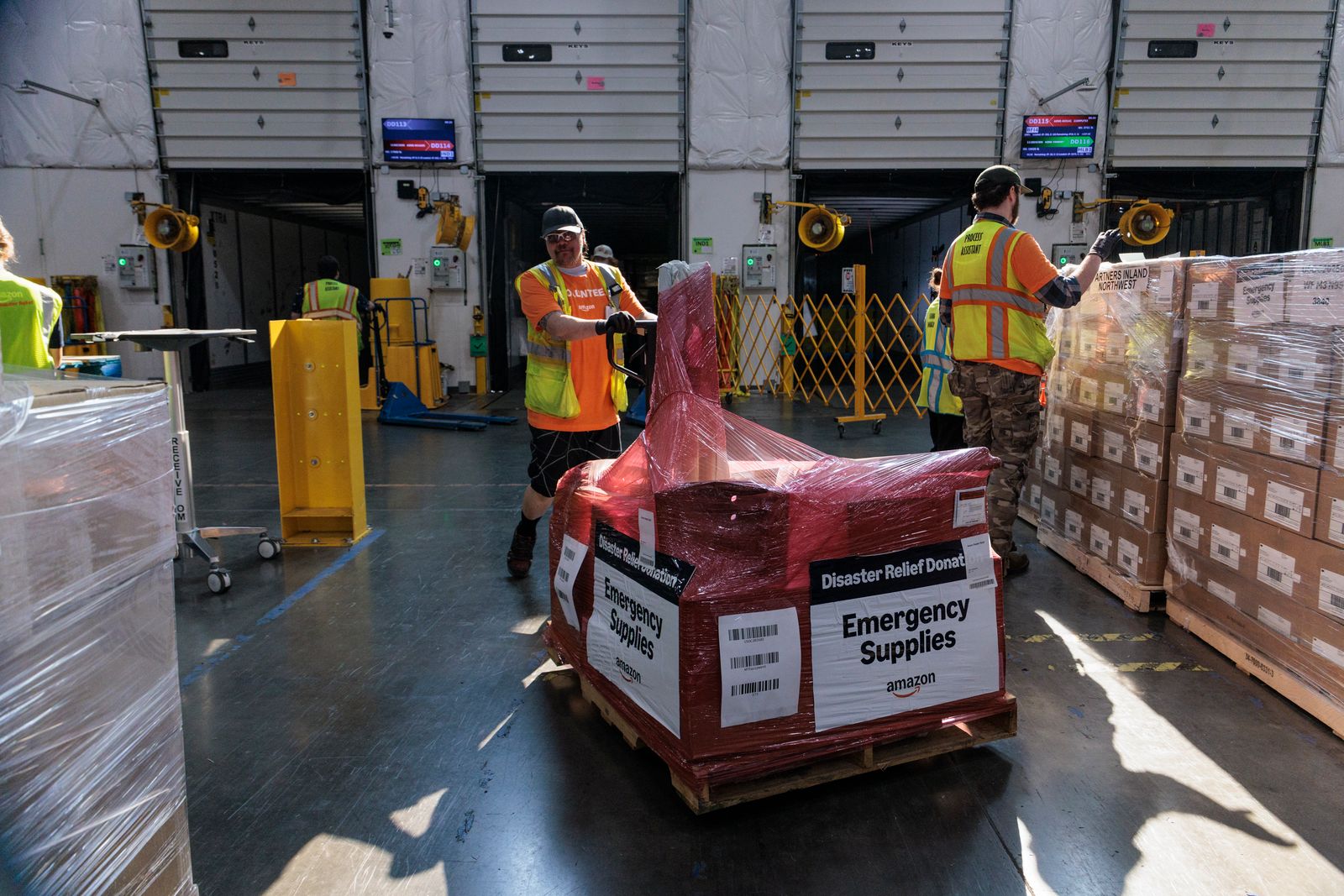
At the forefront of the physical relief effort is Amazon, leveraging its global logistics machine to deliver immediate comfort and safety to evacuated families and exhausted first responders. Operating through its specialized Disaster Relief team and drawing from a newly established hub in California’s San Bernardino Valley—one of 12 dedicated disaster hubs worldwide—Amazon has coordinated the delivery of more than 26,000 essential items. In partnership with the American Red Cross, Save the Children, and local Spokane nonprofits, the company is distributing critical resources like air purifiers and masks to combat the hazardous, smoke-choked air, alongside diapers and hygiene kits for displaced families. For the brave crews working on the frontlines to contain the blazes, Amazon is sending heavy-duty gloves, protective boots, and hydration packets, with a second wave of supplies already en route. Abe Diaz, Amazon’s Head of Disaster Relief, emphasized that supporting the affected Spokane community is an absolute priority, noting that Washington is home to tens of thousands of Amazon employees who feel the weight of this crisis directly.
This spirit of corporate solidarity is mirrored by aerospace giant Boeing and networking security leader F5, both of which are prioritizing immediate financial backing and employee welfare. Boeing, which employs more than 65,000 people across Washington, announced a $250,000 grant from its Charitable Trust to the Innovia Foundation of Eastern Washington and Northern Idaho. This funding is designed to empower local grassroots nonprofits, small businesses, and community organizations that understand the immediate, on-the-ground needs of the survivors. Additionally, Boeing is matching eligible employee contributions to double the impact of personal donations. Meanwhile, F5 is focusing heavily on its significant workforce in the Spokane Valley through its F5er Emergency Relief Fund, providing direct financial assistance to employees facing emergency evacuations and the daunting task of long-term recovery. F5 is also matching employee donations and volunteer hours up to $5,000 annually per employee, ensuring that their collective workforce can actively participate in rebuilding the community they call home.
As emergency crews battle the physical flames, Microsoft is deploying its technological expertise to help responders comprehend the scale of the destruction. The company’s AI for Good Lab has activated its HASTE (High-speed Assessment and Satellite Tracking for Emergencies) platform, an open-source, no-code tool that utilizes satellite imagery to conduct rapid damage assessments. In the Spokane area alone, the platform has already analyzed 16,171 buildings, identifying 624 structures that have sustained damage, while noting that a small fraction remains unanalyzable due to heavy smoke and cloud cover. By converting complex satellite data into visual, actionable insights, Microsoft is giving rescue workers, local authorities, and relief organizations a clearer picture of where help is needed most. Although Microsoft notes that these preliminary findings still require validation on the ground, the technology offers an invaluable head start in coordinating safe recovery and reconstruction efforts.
Recognizing that communication is a lifeline during evacuations, T-Mobile has stepped in to ensure that residents, evacuees, and first responders remain connected to their loved ones and emergency services. The Bellevue-based wireless provider has transformed its Five Mile Plaza Experience Store in Spokane and the Spokane Convention Center into community hubs, offering free Wi-Fi, device charging stations, and essential power packs. To prevent anyone from being cut off during the crisis, T-Mobile has activated unlimited talk, text, and data for customers on its own network and affiliated brands like Metro, USCellular, Mint, and Assurance Wireless. Furthermore, in a groundbreaking effort to bypass compromised ground infrastructure, T-Mobile has activated its T-Satellite service with Starlink, enabling compatible mobile devices to send critical text messages and access text-to-911 services even in areas where traditional cell towers have been damaged or deactivated.
Finally, the long-term emotional and physical recovery of the region is being bolstered by grassroots fundraising, corporate matching, and state-level protections. Starbucks is mobilizing its vast network of coffeehouses across Washington, inviting customers to donate to the Red Cross’s local wildfire campaign while double-matching employee donations to global relief organizations like World Central Kitchen. Within its own corporate family, Starbucks is utilizing its Caring Unites Partners (CUP) Fund to provide financial aid to employees in distress. This wave of generosity is being carefully organized by Washington State officials to ensure donations are utilized effectively and securely. Secretary of State Steve Hobbs activated the state’s Disaster Relief Center to connect the public with vetted, legitimate nonprofits, while Attorney General Nick Brown urged donors to give safely to avoid predatory charity scams. Backed by these safeguards, local initiatives like Spokane’s “H.O.M.E. Starts Here” fund have already raised hundreds of thousands of dollars, proving that while global corporations provide the heavy lifting, it is the resilience and shared humanity of Washingtonians that will ultimately restore Eastern Washington.