

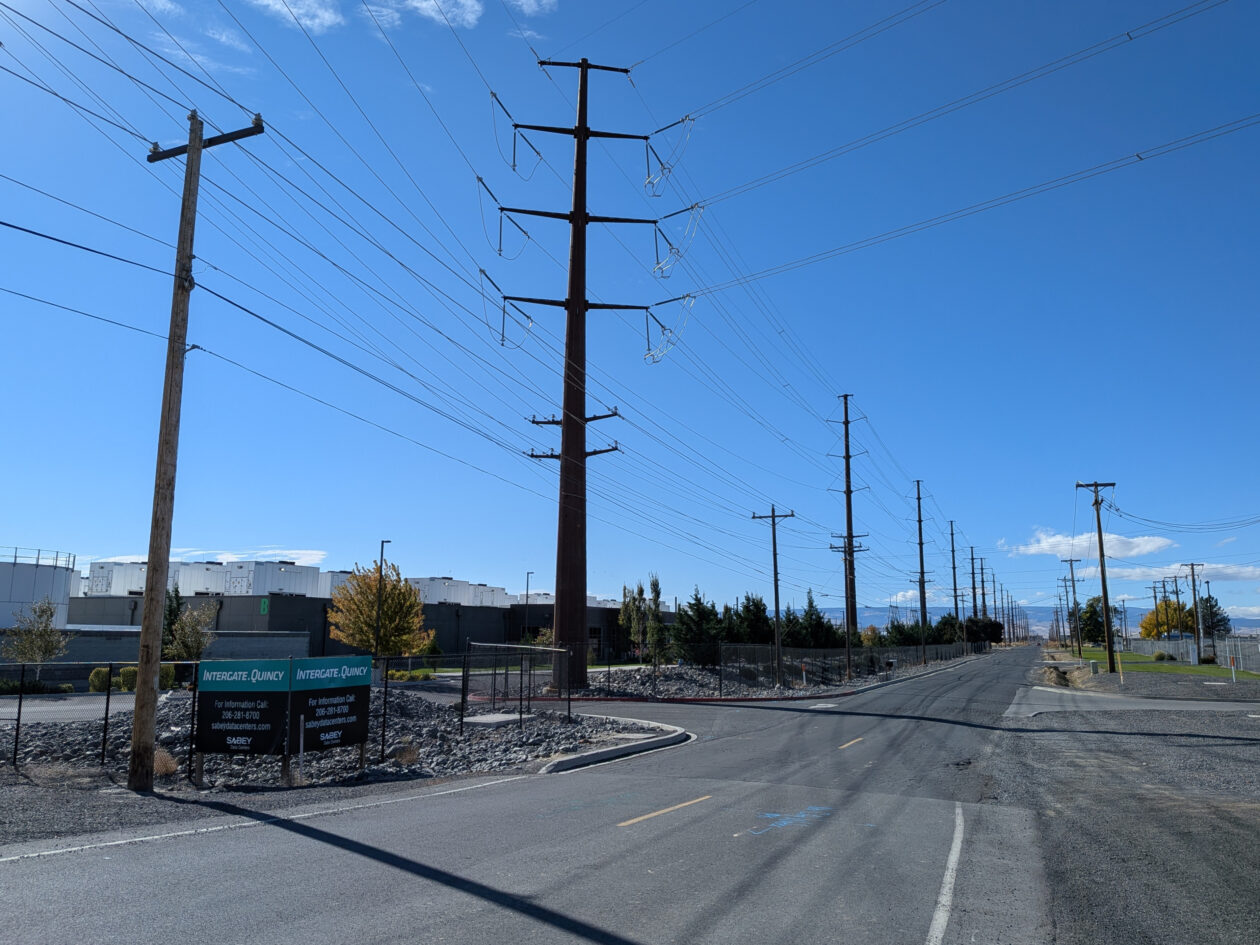
For years, data center developers could operate in the quiet corridors of local planning boards and utility commissions, where a promise of jobs and tax revenue was usually enough to smooth the path for massive new facilities. That era ended abruptly this month. The midterm elections delivered a unmistakable message: voters are no longer willing to accept data centers as unqualified blessings. In a dozen states, voters approved restrictions on data centers in 44 of 45 local ballot measures, a stunning near-sweep that caught even industry insiders off guard. Candidates who campaigned on stronger regulation of the facilities won 32 of the 34 gubernatorial races called so far. And according to the Associated Press, political campaigns spent more than $380 million on television ads that referenced data centers—a staggering sum that shows just how central this issue has become in American politics. The results capped a year of accelerating resistance as tech giants like Microsoft, Amazon, and Google announced plans to spend hundreds of billions of dollars on new infrastructure to power artificial intelligence, cloud computing, and streaming services. For communities across the country, the question is no longer whether data centers will be built, but on whose terms. In the Pacific Northwest, where some of the world’s largest tech companies are headquartered, industry leaders say they have heard the message loud and clear. They are promising more outreach, more transparency, and an acceptance that state and local governments will likely pass new rules governing data centers. “We’ve been working and adapting our approach to meet the moment,” said John Wilson, chief financial officer of Sabey Data Centers, in an interview. “There used to be a time where we would say that our track record could speak for itself, and that’s clearly no longer the case.”
The resistance is not irrational, and it is not confined to a handful of noisy activists. Communities nationwide have raised legitimate concerns about the facilities’ effect on rising electric bills, their voracious water use for cooling electronics, and the constant hum of backup generators and cooling systems that can disturb nearby residents. But the pushback has also been fueled by something broader and harder to address: a deep unease about artificial intelligence itself. People worry that AI will replace workers, appropriate human-created content, spread erroneous information, foster unhealthy relationships with users, or be used to facilitate scams and terrorist attacks. Data centers are the physical manifestation of that anxiety—the visible, humming, energy-guzzling temples where the digital future is being built, often without meaningful input from the people who live next door. In Washington state, which is home to the headquarters of Sabey, Microsoft, and Amazon, these concerns are about to collide with the legislative calendar. Earlier this year, state Rep. Beth Doglio, a Democrat from Olympia, pushed legislation that included ratepayer protections, transparency requirements on environmental impacts, and mandates for clean energy. Microsoft and the national Data Center Coalition opposed the bill, which failed. But Doglio has spent the intervening months meeting with stakeholders, including tech companies and data center developers, and she plans to try again in the upcoming legislative session under noticeably different conditions. Her fellow lawmakers, she said, will take on AI’s intersection with privacy, education, labor, and other issues. “It’s going to be a very tech-heavy session,” Doglio said. For data center developers, the message is clear: the political ground has shifted beneath their feet, and the old playbook of quiet negotiations and generous tax incentives is no longer enough.
The industry, to its credit, has begun to respond with a wave of public relations initiatives, though whether these efforts will be enough to rebuild trust remains an open question. In January, Microsoft launched its “Community First AI Infrastructure” initiative, which includes promises to pay the company’s full power costs, reject local property tax breaks, replenish more water than it uses, train local workers, and fund AI education and community programs. Last month, Amazon announced its “Built Together” program, pledging to invest $1 billion over five years in the U.S. communities where it operates data centers, with support for education and civic projects, as well as commitments to transparency and covering its energy costs. These are significant commitments, but they are corporate promises, and many communities have learned to be skeptical of promises made in boardrooms and broken in the permitting process. Sabey Data Centers, a family-owned company that operates facilities across the Pacific Northwest and beyond, is taking a more personal approach. When a proposed campus in Indianapolis triggered significant pushback, the company brought community members to Quincy, a small central Washington town that has become a data center hub, to tour a Sabey facility and hear directly from local residents about their experience living alongside the massive buildings. “It requires a lot of patience. It requires a lot of transparency in our communication,” Wilson said. Sabey’s Decatur Technology Park in Indianapolis is moving ahead, and the company aims to bring it online in 2030. But even as individual projects find their way forward, the industry faces a far bigger challenge: statewide moratoriums and outright bans. In October, Oregon Gov. Tina Kotek directed a state agency to pause processing and issuing permits for new and expanding data centers until July 2027. In Umatilla, where Sabey is developing its first Oregon campus, local officials declared a state of emergency over the potential loss of investment and revenue. The contradiction is stark: even in communities that welcome data centers, state-level action can override local desires, and the industry is left to navigate a patchwork of new rules that seem to change by the week. Wilson acknowledged the difficulty, but insisted that the company has been able to find its way through. “We’ve been able to find our way through on every project that we’ve had,” he said. “I’m knocking on wood as I say that.”
Perhaps the most significant shift is happening at the level of corporate leadership, where executives are beginning to acknowledge that voluntary commitments are no longer sufficient to win public confidence. Brad Smith, Microsoft’s vice chair and president, described the current moment as a “watershed” in a GeekWire interview, but one that the company anticipated. Communities, he said, increasingly want laws that require all data center developers to build responsibly, not just the ones that happen to be run by good actors. “People want to see everyone who builds a data center do it in a responsible way,” Smith said, “and they feel that the only way that one can obtain that result is to have some new laws that are put in place.” That is a remarkable statement from a tech executive, and it signals a fundamental change in how the industry views regulation. For years, data center developers fought against mandates, arguing that market forces and corporate responsibility were enough. Now, with voters across the country demanding action, even the most powerful companies are accepting that legislation is inevitable. The question is what that legislation will look like. Come next year, that could include Washington, which would directly impact Microsoft, Amazon, Sabey, and other major players. According to Baxtel, a data center industry research firm, Microsoft operates 29 facilities in Washington and has four under construction. Sabey operates eight facilities in the state. Amazon, which has long relied on other companies’ data centers in Washington, is planning its first large-scale campuses in Walla Walla County and the Tri-Cities. Amazon did not respond to repeated requests for comment on this story, but the company’s planned expansion means it will be deeply affected by any new state regulations.
Doglio, for her part, is not backing down. She said the next version of her bill will be more stringent, not less, and she believes the public and members of her own party are demanding action. “We have to have a strong bill,” she said. Microsoft did not publicly specify which provisions triggered its opposition to the previous bill, but the company’s willingness to engage with lawmakers suggests it is looking for a compromise rather than a confrontation. Wilson, however, hopes that any legislation—in Washington or elsewhere—allows for flexibility and recognizes that data centers vary widely in size, impact, and application. Sabey provides data center space and infrastructure for customers ranging from major cloud companies to corporations and community organizations, and Wilson argued that treating all data centers as a single monolith would be a mistake. “Describing all data centers as one thing is just not accurate,” he said, “and it doesn’t understand the realities of the industry itself.” That is a fair point: a small edge data center serving a rural hospital is very different from a sprawling hyperscale campus that consumes as much electricity as a small city. But in the current political climate, nuance is often lost, and the industry is paying the price for years of opacity and defensive posturing. Smith expressed optimism that U.S. lawmakers can find a middle ground that meets the needs of communities and tech companies. “There’s plenty of room to draft laws that enable people to go forward and build responsible data centers without chilling the economic contributions these data centers make, especially to local communities,” he said. That optimism may be justified, but it will require a level of trust and collaboration that has been conspicuously absent in recent years.
Looking ahead, the data center industry is entering a new era—one defined not by tax breaks and ribbon cuttings, but by accountability, transparency, and hard-fought political compromises. The midterm elections were a wake-up call, and the industry’s leaders seem to understand that they cannot simply wait for the storm to pass. They are investing in community outreach, making ambitious promises about energy and water usage, and preparing to operate under a new set of rules that will likely be written in statehouses across the country. But the path forward will not be smooth. The same anxieties that drove voters to the ballot box—fear of rising utility bills, mistrust of technology giants, anxiety about AI’s impact on jobs and society—will not disappear with a few well-publicized corporate initiatives. Lawmakers like Doglio are under pressure to act, and they will be judged by their constituents on whether they deliver meaningful protections. Meanwhile, industry executives like Wilson are left to navigate an increasingly complex landscape, where a single project can take years to win approval and where even the most careful outreach can be undermined by a viral video or a contentious public hearing. Wilson’s phrase—“knocking on wood”—captures the mood perfectly. There is hope, but there is also a profound sense of uncertainty. What happens in Washington state over the next year will be closely watched by the rest of the country, not just because Microsoft and Amazon are headquartered there, but because the legislative battles unfolding there could serve as a model—or a warning—for every other state grappling with the data center boom. The industry’s leaders say they are ready to adapt, to listen, and to be held to a higher standard. But the real test will come when the laws are written, the permits are reviewed, and the first new data centers begin to hum in communities that have learned to ask hard questions before saying yes. For now, the message from voters is clear: the era of unconditional acceptance is over, and the era of responsible growth has begun. Whether the industry can meet that challenge will determine not only its own future, but the shape of the digital economy for decades to come.