


By the end of this year, Amazon’s Prime Air drone delivery service is poised to become a part of everyday life for millions of Americans, expanding to nearly 500 cities and towns across the United States. The vision is straightforward and almost disarmingly simple: you order something light — a bottle of medicine, a phone charger, a small toy, a tube of sunscreen — and instead of waiting days or even hours for a truck to weave through traffic, you watch a small autonomous aircraft hum through the sky, hover over your driveway or backyard, and gently lower a package. In many cases, the whole process takes less than half an hour from the moment you tap “buy.” That’s a remarkable leap from the days when package delivery meant waiting by the front door and tracking a brown truck on a map. The Associated Press first reported the expansion plans on a Tuesday afternoon, and Amazon itself had not made a formal public announcement by that evening, which gave the news a kind of leaked, almost tentative quality. But regardless of whether the company was ready to shout it from the rooftops, the ambition is now clear: Amazon is no longer treating drone delivery as a futuristic experiment or a small pilot program in a handful of quiet towns. Instead, it is building what looks like a genuine aerial delivery network, and doing so at a scale that will touch communities from the Chicago suburbs to the outskirts of Atlanta, from Cleveland’s residential neighborhoods to the sprawling developments around Boise. That’s a long way from where this story began.
It began, memorably, in December 2013, when Jeff Bezos walked onto the set of 60 Minutes with a drone and a promise. Sitting across from a visibly astonished Charlie Rose, Bezos showed off a prototype that looked like something out of a science fiction movie — a whirring, multi-rotor contraption designed to carry a small package from an Amazon fulfillment center to a customer’s doorstep. “I know this looks like science fiction — it’s not,” Bezos said at the time. He predicted that commercial drone deliveries might be four or five years away, if all went well. But he also acknowledged that the path would be difficult, especially when it came to convincing the Federal Aviation Administration that fleets of autonomous machines could be trusted to fly over populated areas without crashing into people, pets, power lines, houses, or, for that matter, one another. Back then, Amazon’s own FAQ said the company hoped federal rules governing drone operations would be in place as early as 2015. That hope was far too optimistic. The technology had to mature, and so did the regulations. Years passed. Prototypes changed. Test flights happened in secret and in public. At times, the whole project seemed like a running joke — a perpetual “one day” that kept slipping away. But behind the scenes, engineers were working through the hard problems: how to avoid obstacles, how to handle wind and rain, how to make a drone quiet enough not to annoy the neighbors, and how to prove all of it to regulators who had every reason to be skeptical. What seemed like science fiction in 2013 has now been tested, refined, and pushed toward a tipping point that even the optimists didn’t expect.
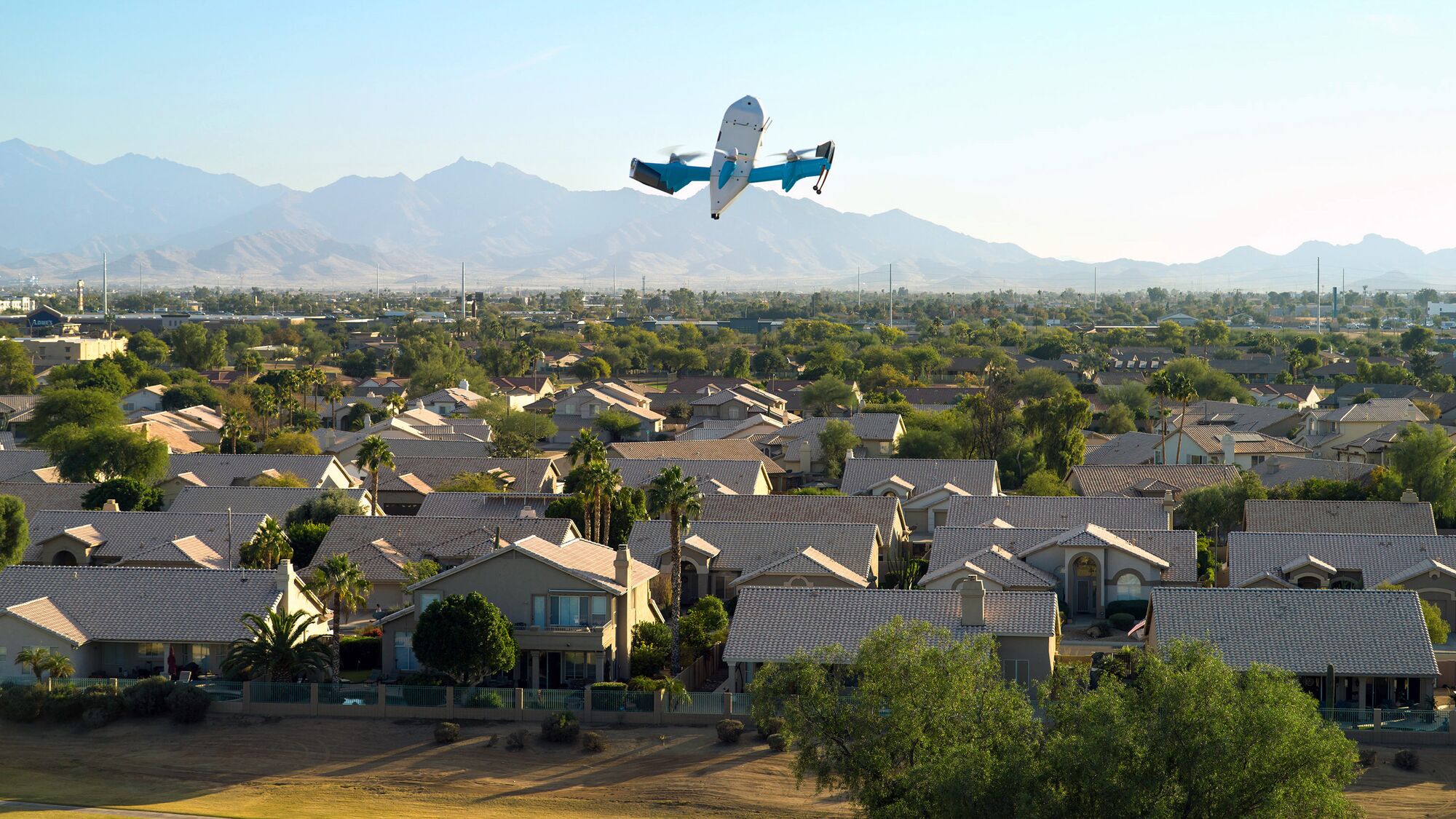
The expansion details matter, and they paint a picture of a service designed for suburbs rather than dense urban cores. The reference to “500 cities and towns” can sound like Amazon is planning five hundred dedicated drone hubs, but that’s not quite what it means. According to the AP report, the number reflects the municipalities that fall within delivery range of a relatively small number of planned Amazon drone hubs. Each hub can cover roughly 175 square miles, which is a huge radius when you think about it. That means a single facility can serve dozens of nearby communities, from established downtowns to far-flung subdivisions. The new metro areas mentioned in the report include Chicago, Atlanta, Cleveland, and Boise, among others, and the flights are expected to be concentrated in suburban areas. The company is deliberately steering clear of downtown high-rises, where airspace is crowded, landing zones are complicated, and the risk of something going wrong is much higher. Instead, Prime Air seems to be targeting the places where drone delivery makes the most sense: neighborhoods with single-family homes, driveways, backyards, and enough open space for a robotic aircraft to do its work safely. That suburban focus is both practical and revealing. It acknowledges that drones are not yet ready to navigate the canyons of a major city or the congestion around a major airport. It also means that the early experience of drone delivery in the United States will be shaped by the specific rhythms of suburban life — kids playing in the yard, dogs barking at the sky, homeowners looking up from their grills as a package descends from above. For many people, that will be their first real encounter with the future that Bezos promised thirteen years ago.
Perhaps the most appealing part of the service is how ordinary it feels. If you’re an Amazon Prime member, you don’t need to do anything special to take advantage of drone delivery on eligible items. Nearly any product weighing five pounds or less and small enough to fit inside a large shoebox qualifies. That may sound limiting, but it actually covers an enormous share of the stuff people buy online: electronics accessories, beauty products, books, small kitchen tools, over-the-counter medicines, pet supplies, office materials, and countless other everyday purchases. Amazon CEO Andy Jassy made exactly this point in his annual letter to shareholders earlier this year, noting that Prime Air would offer “a much larger selection of items inside a half hour” than any of the company’s other fast-delivery options. That’s a bold claim, but it makes sense when you think about the economics and convenience of instant delivery. Instead of waiting for a courier to gather your items, get in a vehicle, and drive through traffic, a drone can be loaded and launched from a nearby hub, traveling directly to your address in a fraction of the time. The pricing is structured to encourage membership and larger orders. Drone delivery is free for Prime members on orders of fifty dollars or more. For Prime orders under that threshold, there’s a $2.99 fee. Customers who don’t belong to Prime pay $4.99. Those prices are not outrageous, but they’re also not nothing — and they will likely make people think carefully about whether they really need a phone charger in thirty minutes or whether they can wait a day and get it shipped for free. That decision-making process is part of what makes this feel human rather than futuristic. It’s not about replacing all delivery. It’s about adding another option, one that works best for small, urgent, or spontaneous purchases that don’t warrant a trip to the store.
Amazon is not going to own the skies alone. Walmart and Alphabet’s Wing have been steadily building what they describe as the largest drone delivery network in the United States, and they are not slowing down. In June, they added seven new markets, including Phoenix, Philadelphia, and the Bay Area. Their goal is to reach 270 stores and more than 40 million people by next year. That’s a clear signal that drone delivery is becoming a competitive industry rather than a novelty experiment. When retailers compete over something like this, customers tend to benefit — through lower prices, better coverage, faster service, or all three. But the competition also creates pressure to move quickly, and moving quickly can lead to friction with communities. Local approvals remain one of the biggest hurdles for every company trying to expand drone operations. Residents in some areas have complained about the noise, especially when drones are hovering or making deliveries at odd hours. Amazon has tried to address these concerns by designing quieter aircraft. The company says its drones make less noise than an idling delivery truck during the actual drop-off, and that they sound roughly like a window fan while flying overhead. That may be reassuring in the abstract, but hearing a window fan above your house can still be unsettling, especially if you weren’t expecting it and have no idea why it’s there. Trust is a slow-building thing, and while the technology has advanced, the social acceptance of drones is still very much a work in progress. There is also a larger regulatory issue that remains unresolved: a proposed federal rule that would more broadly allow flights beyond the pilot’s line of sight has not yet been finalized. For now, many drone operations are still constrained by rules that assume someone is watching or supervising the aircraft close by, which limits how many deliveries a single operator can handle at once.
And so, as Amazon and its rivals push forward, the promise of drone delivery is finally beginning to collide with the realities of everyday life. This is the moment when a decade of hype meets the mundane details of zoning laws, homeowner associations, weather patterns, and the simple question of whether people actually want a drone buzzing around their neighborhood. For every person who greets the prospect with excitement and immediately imagines ordering a last-minute birthday present, there will be someone else who looks up at the sky with suspicion and wonders about privacy, safety, and noise. That tension is unavoidable, and the companies involved seem to understand that they need to win public trust as much as regulatory approval. The fact that after all these years, Amazon is expanding to nearly five hundred cities and towns by the end of this year is genuinely remarkable — not because it happened overnight, but because it happened at all. Thirteen years ago, the idea of an Amazon drone landing in your backyard seemed like an elaborate publicity stunt, a dream from a company that loved to announce things years before they were ready. Now, it is becoming a service with prices, coverage areas, and practical limitations. The drones themselves are smaller, quieter, and smarter than the prototype Bezos showed to Charlie Rose back in 2013. Yet the fundamental promise remains the same: to make delivery so fast and so seamless that the future feels less like science fiction and more like the way things were always meant to be. That future won’t happen everywhere at once, and it won’t be perfect. But it is coming, and soon, many more people will have to decide how they feel when they hear the faint hum of a small aircraft above their home and look up to see a package drifting down toward their driveway.