


The Evolution of Real Estate Through Technology
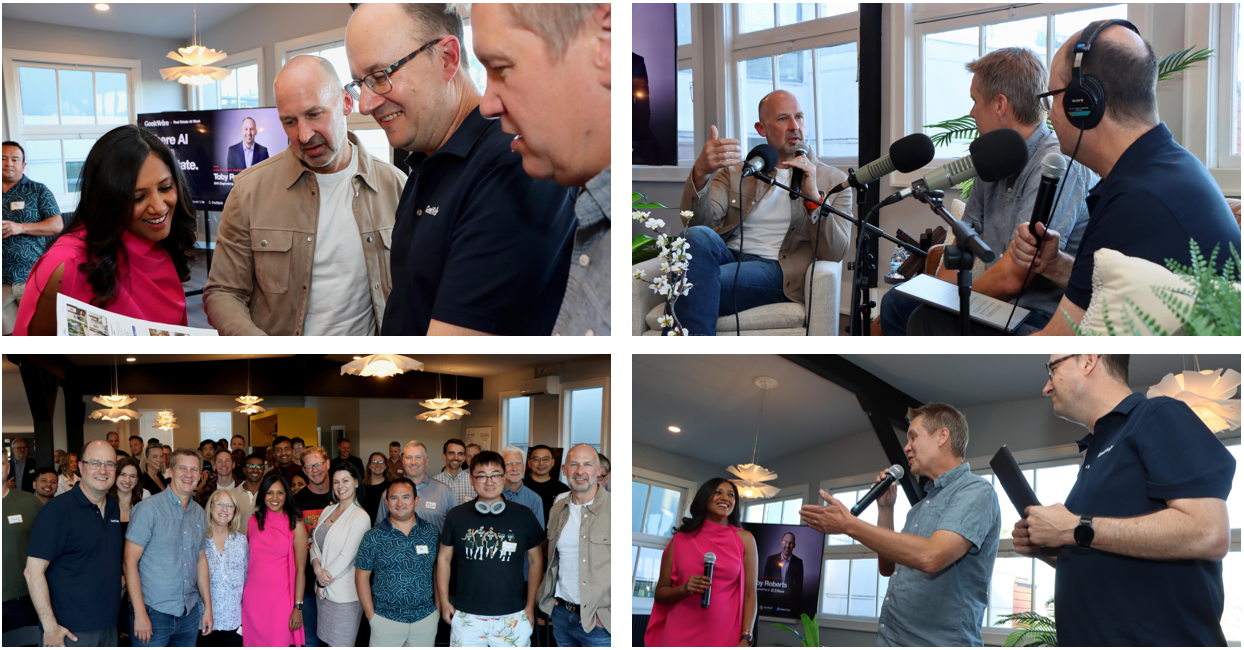
Twenty years have passed since Zillow first entered the real estate landscape, and throughout that time, technology journalists have chronicled every twist and turn of the Seattle-based company’s journey. Now, as the platform celebrates two decades of existence, the intersection of artificial intelligence and property transactions has become the most fascinating frontier yet. To explore this convergence, a special live recording of the GeekWire Podcast took place at Atmosphere Seattle, offering panoramic views of Lake Union as a backdrop for the discussion. The event was co-presented with Real Estate At Work, a professional networking community founded by Leka Devatha, who brings her own dual perspective as both a broker with Real Residential and the founder of the redevelopment firm Rehabit Homes. The room was filled with an engaged audience of brokers, investors, and technology enthusiasts, all eager to hear from Toby Roberts, Zillow’s Senior Vice President of Engineering, about what the future holds for an industry that touches nearly every American family at some point in their lives.
The conversation opened with a bold proclamation from Roberts, who described artificial intelligence as a “complete watershed moment” that has fundamentally transformed the entire ecosystem of buying and selling homes. This perspective carries weight coming from someone who oversees Zillow’s core technology initiatives and manages a team of more than 650 engineers. Rather than viewing AI as a threat to the traditional real estate profession, Roberts painted a picture of collaboration between human agents and their digital counterparts. He envisions AI agents functioning as copilots alongside real estate professionals, handling the administrative heavy lifting while freeing up humans to focus on what truly matters in the transaction. To illustrate this point, he described the work already happening within Zillow’s customer relationship management system, where AI generates conversation summaries and proactive follow-up prompts—reminding agents about loan statuses, outstanding document submissions, and recommended next steps for their clients. This practical application demonstrates how technology can handle the logistical complexity while humans maintain the personal touch.
Despite the increasing sophistication of these digital tools, Roberts emphasized that real estate remains profoundly human at its core, citing a striking statistic that half of all homebuyers cry at some point during the purchase process. This emotional dimension makes perfect sense when considering that for most people, buying a home represents the largest financial transaction they will ever undertake, carrying enormous personal significance alongside the monetary stakes. The stress, joy, fear, and excitement that accompany such a significant life event cannot be adequately addressed by algorithms alone. Roberts argued that by delegating more of the mundane grunt work to AI systems, real estate agents can dedicate their energy to fostering the human connections that become essential during what he aptly described as “this really scary transaction.” This vision presents technology not as a replacement for human judgment and empathy, but as an enabler that allows professionals to be more present and attentive to their clients’ emotional needs throughout the journey.
The discussion then shifted to a pressing concern that has emerged with the proliferation of AI-generated content: the integrity of property listings. John, one of the podcast hosts, referenced a recent New York Times investigation that exposed listing sites becoming cluttered with images of fake fireplaces, artificially enhanced views, and virtual landscaping that misrepresented the actual state of properties. Roberts acknowledged the validity of these concerns, firmly stating that listings should accurately represent the condition of the home. Interestingly, he pointed out that the practice of deceiving buyers through image manipulation predates modern AI, noting that agents have been using Photoshop to add fake fireplaces for years. Zillow had already articulated its position in July, pledging to support clear disclosure when artificial intelligence is used to materially alter listing images and advocating for consumers to view original content alongside any AI-modified versions. However, Roberts distinguished between deceptive alterations and legitimate uses of generative AI on the buyer’s side, where shoppers can voluntarily restyle a listing photo to envision a room in different ways. This distinction hinges on consent—the buyer actively chooses the restyling rather than being presented with a pre-altered version of reality.
Zillow’s foray into the world of AI chatbots represents another fascinating development, as the company was among the launch partners in OpenAI’s app store. To test the integration, John triggered a tour request through ChatGPT for a property on Whidbey Island, and within two minutes, receive a phone call from a human agent who had no idea the lead originated from a chatbot interaction. Roberts acknowledged that these chatbot-driven connections are still in their early stages, but he noted that people who discover properties through ChatGPT tend to be genuinely serious about purchasing. Zillow constructed its own interactive map system within ChatGPT, complete with property pins, and these leads flow to agents through the same channels as those originating from Zillow’s native applications. However, implementing this integration presented significant technical challenges, particularly around security and permissions. Zillow connected to ChatGPT using the Model Context Protocol, which allows chatbots to interface with external services, but when the company initially began this work, the standard was still nascent, particularly regarding authentication and authorization mechanics. Zillow had to develop several components from scratch. Furthermore, because the company originates mortgages, they must maintain strict compliance with fair housing and fair lending regulations, which Roberts characterized as “an absolute must” in the implementation process.
Within Zillow’s internal operations, the adoption of AI has transformed how software is developed, yielding impressive productivity gains across the engineering organization. With over 650 engineers under his leadership, Roberts shared some remarkable statistics about their AI-assisted coding initiative: 97% of engineers now use these tools, and code reaches production approximately 40% faster than before the implementation. Interestingly, this acceleration has created a new bottleneck, as the increased output means other engineers must review more code submissions. Roberts identified this code review process as the next frontier for optimization within Zillow, warning that without improvements, developers would become inundated with reading an endless stream of code reviews day after day. Rather than adopting a wholesale restructuring into small, self-contained teams as some industry analysts predicted, Zillow has chosen a different approach, embedding AI champions throughout all parts of the organization and creating internal communities where employees share successes and failures. This collaborative model extends to the creation of shared AI skills, allowing different teams to use identical, verified implementations for common operations rather than running multiple divergent versions of the same calculation. This ensures consistency and prevents the confusion that would arise from conflicting mathematical approaches across the company, and creates a culture of continuous learning and improvement as the technology evolves. As the podcast concluded, the audience was invited to participate in a trivia challenge testing their ability to distinguish real listings from AI-generated deepfakes, a fitting end to a conversation about the increasingly blurred line between human creativity and artificial intelligence in the modern real estate landscape.