




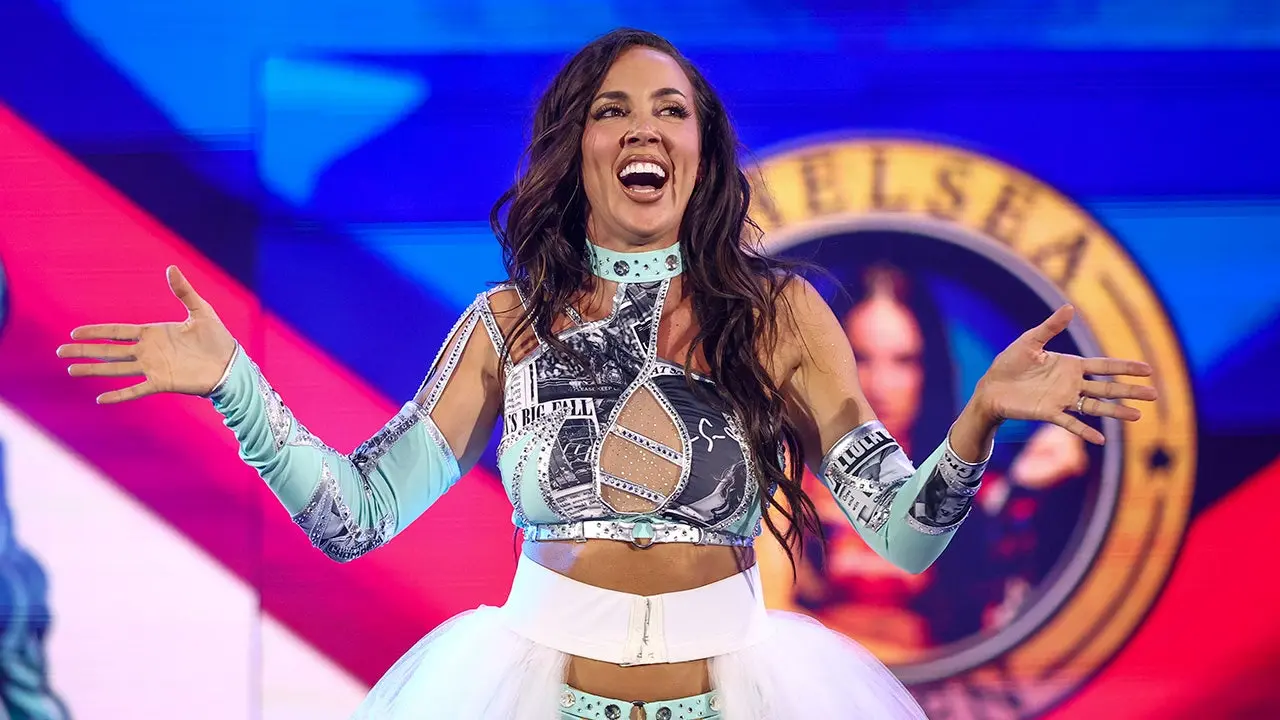
The glittering world of professional wrestling often looks like a superhero comic book brought to life, with larger-than-life characters performing gravity-defying feats under blinding arena lights. Yet, behind the theatrical grandeur, the spectacular costumes, and the deafening cheers of thousands of fans lies a grueling, bone-shattering reality. The athletes of World Wrestling Entertainment (WWE) push their bodies to the absolute limit, enduring grueling travel schedules and constant physical impact. For Chelsea Green, this demanding lifestyle has been both her greatest passion and the source of her most profound struggles. The journey to the top of the women’s division is rarely a straight line, but Green’s path has been uniquely fraught with obstacles that would have broken a lesser competitor. Over the past twelve months, her body has been subjected to a relentless gauntlet of injuries, none more terrifying than a sudden cardiac scare that hospitalized her and required an invasive medical procedure to correct. To face a life-threatening heart issue and still possess the mental fortitude to step back inside a wrestling ring is a testament to Green’s extraordinary courage. She refused to let her career be defined by fear, fighting her way back to peak physical condition with a singular, unwavering goal: to prove that she belonged among the elite.
That relentless drive culminated in a career-defining triumph just last weekend at SummerSlam, one of the most prestigious events on the WWE calendar. In a high-stakes, physically punishing ladder match that pushed all five competitors to their absolute limits, Green outlasted her opponents to claim the interim WWE women’s championship. Climbing a cold steel ladder to retrieve a title belt suspended high above the ring is a terrifying endeavor, requiring split-second timing and nerves of steel. For Green, reaching the top of that ladder was a moment of pure vindication, a symbolic ascension after a year of physical torment and self-doubt. This victory was not just a personal milestone; it was a crucial lifeline for a women’s division that had recently been thrown into disarray. The reigning champion, Rhea Ripley, had been forced to undergo major knee surgery, leaving a massive void at the top of the roster that would take months to heal. By capturing the interim title, Green became the focal point of the division, entrusted with carrying the torch and maintaining the momentum of the women’s roster. Standing in the center of the ring, championship belt clutched tightly to her chest as the crowd roared, Green finally seemed to have put her string of bad luck firmly in the rearview mirror.
However, in the volatile world of sports entertainment, the line between absolute triumph and devastating heartbreak is razor-thin. Just days after her monumental victory, Green stepped into the ring on Friday night for a high-profile tag team match, teaming up with the charismatic Tiffany Stratton to face off against the formidable duo of Fallon Henley and Lainey Reid. What was meant to be a showcase of Green’s new status as champion quickly transformed into a nightmare under the unforgiving glare of live television. In a live broadcast, there are no second takes, no safety nets, and no room for error; the physical exchanges are real, and the consequences of a single misplaced strike can be catastrophic. During the chaotic, high-impact bout, a routine exchange went horribly wrong, resulting in a severe impact to Green’s face. While the show went on and the athletes finished the match with professional resolve, the damage had been done. The immediate aftermath of the match saw Green rushed from the arena to a local emergency room, the celebratory high of her SummerSlam victory instantly evaporating into the sterile, cold reality of a hospital corridor.
The true gravity of the situation became clear the following day when Green took to her Instagram account to share a raw, deeply personal update with her devastated fanbase. Speaking directly to the camera with a vulnerability that contrasted sharply with her confident on-screen persona, Green revealed that she had suffered a broken orbital bone. “I did get injured last night. Stuff happens. It’s live television. It’s wrestling. It’s an occupational hazard,” she explained, her voice carrying a heavy mixture of professional acceptance and profound personal disappointment. Looking at her face, which she noted with dark humor looked “pretty amazing all things considered” despite feeling absolutely awful, she confessed the heavy emotional toll this latest setback had taken on her mental well-being. Unlike past minor injuries that she could playfully integrate into her narcissistic on-screen character, this fracture felt entirely different, carrying a weight of frustration that was difficult to shake. “I feel like if I didn’t have bad luck, I’d have no luck at all,” she admitted, capturing the heartbreaking fatigue of an athlete who feels as though the universe constantly conspires to pull the rug out from under her just as she reaches the mountaintop.
A broken orbital bone is a highly complex and painful injury, particularly for a professional athlete whose performance relies on flawless spatial awareness and peripheral vision. The bones surrounding the eye socket are delicate, and fractures can lead to severe swelling, double vision, nerve damage, and potential long-term complications if not allowed to heal properly. Furthermore, the head trauma associated with such an impact requires careful monitoring to ensure there are no lingering concussions or neurological issues. Green acknowledged that she would need to take a step back to properly process the physical and emotional trauma of the injury, taking her recovery day by day. Yet, even in her moments of deepest frustration, the indomitable spirit that has endeared her to millions of fans refused to be entirely snuffed out. She defiantly declared that her quest for “world domination continues” and characterized this devastating injury as merely a “minor blip” on her journey. This incredible resilience is precisely why Green has transitioned from a standard performer into a deeply human, highly relatable figure; her willingness to share her pain and her determination to fight through it mirrors the everyday struggles of her audience.
As Green begins her arduous road to recovery, the WWE women’s division is once again cast into a state of profound uncertainty. With both the official champion, Rhea Ripley, and the newly crowned interim champion, Chelsea Green, sidelined with severe injuries, the future of the division’s top prize remains shrouded in doubt. It remains to be seen whether WWE management will be forced to strip Green of her newly won interim title, a heartbreaking prospect that would parallel Ripley’s own forced hiatus. This circular tragedy highlights the unforgiving, cyclical nature of professional wrestling, where physical sacrifice is the currency required to chase greatness. Yet, regardless of whether she is forced to relinquish her championship belt, Chelsea Green has already proven something far more valuable than gold. Through her courage in the face of cardiac scares, her triumph at SummerSlam, and her raw honesty in the wake of her latest facial fracture, she has cemented her legacy as a symbol of ultimate perseverance. When she eventually makes her return to the ring, she will do so not just as a champion, but as a survivor who refuses to let her dreams be broken.