





There is a sacred, highly emotional, and almost mythic quality to Madison Square Garden when the stakes are at their absolute peak, a place where sports history is not merely recorded but physically felt in the deep rumble of the floorboards and the collective, anxious inhalation of thousands of hopeful souls. On this particular evening, during the high-octane, suffocating pressure cooker of the NBA Finals, that legendary arena threatened to become a tomb of crushed expectations for the New York Knicks and their fiercely loyal fan base. Falling behind by a staggering 29 points in the first half, the hometown crowd sat in a stunned, heavy silence as the San Antonio Spurs executed a masterclass in clinical, unforgiving basketball that made the championship look entirely out of reach. The dream of capturing the franchise’s first championship since 1973 seemed to be evaporating into the high rafters of the arena, leaving a bitter taste of what-ifs and familiar disappointment in the mouths of the New York faithful who have waited decades for glory. But the true beauty of professional sports lies in its deeply unpredictable, theatrical nature, and on this night, the catalyst for the greatest comeback in NBA Finals history arrived not from a whiteboard tactical adjustment during intermission, but from the raw, cultural heartbeat of the city itself. During the halftime intermission, local legendary hip-hop icons the Wu-Tang Clan took to the center court, unleashing a raw, pulsing, and nostalgic energy that seemed to shake the very physical foundations of the Garden and remind everyone in the building of the city’s identity. It was a sonic awakening, a visceral reminder of the raw grit, stubborn resilience, and undeniable swagger that defines New York City when its back is against the wall. When the Knicks players finally emerged from the locker room for the second half, they looked like a completely different group of human beings, playing with a ferocious, chaotic, and urgent energy that utterly overwhelmed their stunned opponents. Outscoring the Spurs by an astonishing 28 points in the brilliant aftermath of that legendary halftime performance, the Knicks defied gravity, modern basketball logic, and the crushing psychological weight of their own historic drought to complete a miraculous turnaround that sent the arena into absolute, unbridled hysteria, forever turning a looming sports tragedy into an immortal triumph of human will.
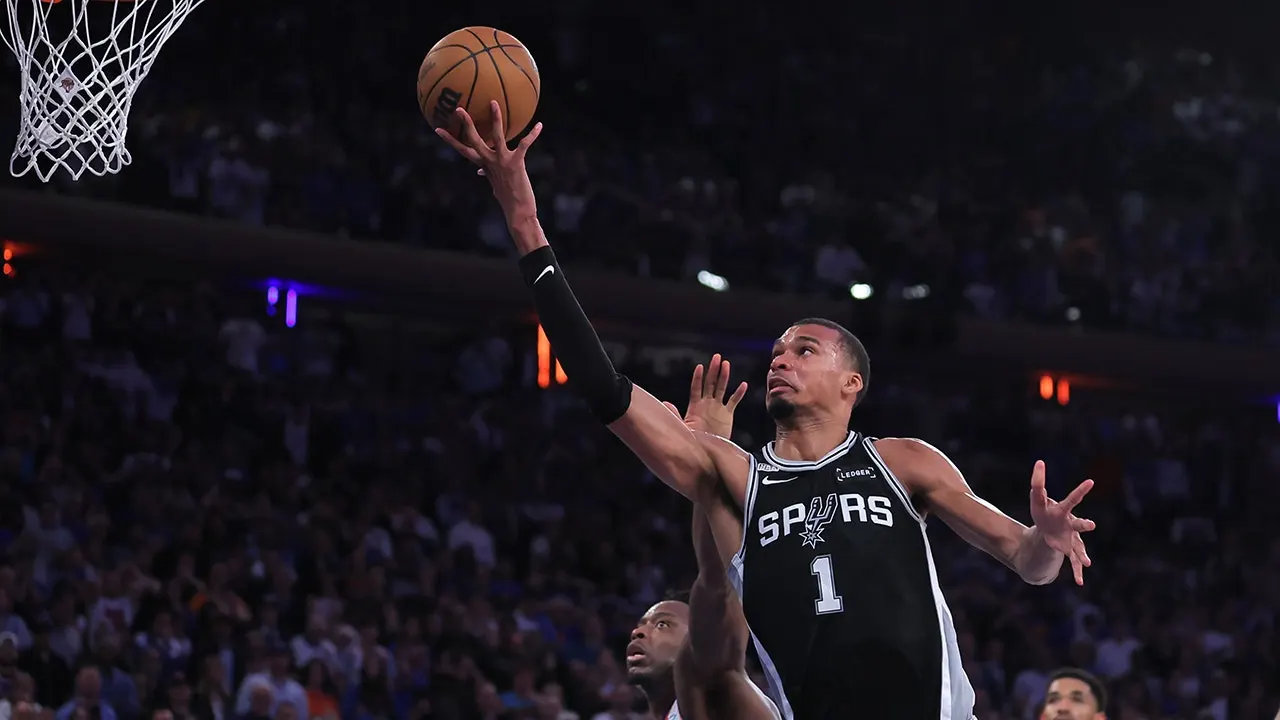
At the epicenter of this swirling, emotional storm stood Victor Wembanyama, the imposing French basketball prodigy who has quickly learned that to play in New York is to step directly into a ruthless gladiatorial colosseum where any sign of vulnerability is eagerly devoured by the masses. From the very moment his towering frame stepped onto the famous hardwood, Wembanyama was cast as the evening’s ultimate villain, greeted by a deafening wall of boos during player introductions and subjected to a relentless, deeply personal barrage of colorful expletives from the passionate New York crowd. Every single touch of the ball by the young star was met with overwhelming hostility, and even a minor moment of controversy—such as when an initial defensive foul called against him was overturned upon official review to an offensive charge—drew the intense, mocking ire of an unforgiving audience. Yet, rather than shrinking under the immense weight of this hostile sensory onslaught, Wembanyama appeared to actively feed on the animosity, transforming the anger of the crowd into his own personal source of competitive fuel and motivation. The peak of this high-stakes psychological warfare occurred when Knicks center Mitchell Robinson was assessed a flagrant foul for a highly physical, high-impact hit on the young rookie that sent a shockwave through the court. Instead of being deterred by the physical escalation of the game, Wembanyama rose from the court with a defiant, knowing smirk, locking eyes with the hostile crowd and his opponents alike as television cameras captured him muttering a chillingly confident phrase: “I’m in your head!” For the first two quarters of the game, it was impossible to argue with his bold assessment, as he and his teammates played with a clinical, arrogant ease that suggested they had not only ripped the Knicks’ defensive schemes to shreds but had also completely dismantled the collective psyche of the entire city of New York, leaving a trail of quiet despair in their wake.
Yet, the true tragedy of sports is how quickly supreme, almost untouchable confidence can curdle into catastrophic, helpless paralysis, a painful lesson that the young San Antonio Spurs had to learn in the most agonizingly public manner imaginable. What transpired in the second half of this epic contest was not just a clever strategic adjustment by the Knicks’ coaching staff, but an absolute, systemic psychological collapse by a young team that suddenly realized exactly how much they had to lose on the grandest stage. The statistics themselves tell a harrowing story of stagnation and panic: after thoroughly dominating the early stretch of the game, the Spurs managed to score a microscopic 30 points across the entirety of the second half, a figure that is almost unfathomable for an elite NBA offense playing in the championship spotlight. The fluid, beautiful ball movement and sharp decision-making that had defined their early success vanished entirely, replaced by desperate, hesitant possessions that yielded nine costly, self-inflicted turnovers in the final twenty-four minutes of action. A comfortable 20-point cushion in the fourth quarter, which should have acted as a secure physical and mental bridge to victory, instead dissolved like sand in a heavy tide, slipping away in a matter of breathless, terrifying minutes as the momentum shifted. The Spurs’ offense became claustrophobic, with players suddenly hesitating on shots they had easily drained hours earlier, passing up open looks out of fear, and letting the rapidly rising noise of Madison Square Garden dictate their physical rhythm. It served as a stark, humanizing reminder of the incredibly fragile nature of momentum in physical sports; once the Knicks established a tiny toehold of hope, the sheer velocity of the game shifted with a terrifying force, leaving the Spurs trapped in a downward spiral of their own making, unable to stop the bleeding as their historic lead evaporated into thin air.
In the quiet, somber aftermath of the visitor’s locker room, the weight of what had just slipped through their fingers hung heavily in the air, a thick, suffocating fog of disappointment that coach Mitch Johnson did his best to articulate to the gathered media. “To put as much good work into that first half as we did and get the lead that we had and not finish the job, it’s disappointing to say the least,” Johnson remarked, his quiet voice carrying the heavy exhaustion of a mentor who had watched his young pupils falter at the absolute worst possible moment. In his candid post-game analysis, Johnson pointed directly to the intangible, human qualities of the game—the subtle but deadly shift in attitude that occurs when a team stops actively pursuing victory and begins trying to passively protect a lead. He lamented that his squad had abandoned the specific, identity-defining brand of basketball that had allowed them to build such an imposing lead in the first place, trading their early aggression and freedom for a tentative, survival-oriented style of play. This sudden loss of conviction proved fatal in an environment as historically unforgiving as Madison Square Garden, where any sign of vulnerability is immediately exploited by both the opposing players and the roaring crowd. Johnson observed that as the Knicks began making their difficult, contested shots and riding the emotional wave of the arena, his own team lacked the internal fortitude to respond, failing to conjure the few essential, “tough-minded plays” that are required to close out a championship-caliber opponent on their home floor. It was a brutally honest, humanizing assessment of a young team’s limitations when pushed to the absolute extreme under the blindingly bright lights of the grandest stage in basketball.
For Wembanyama, the reality of the defeat was a visceral, deeply painful wound, representing a stark and humbling contrast to the swaggering, youthful bravado he had displayed when he boasted about being inside the heads of his opponents just hours earlier. “It was painful, of course. It feels like we worked too hard and give up our leads. It’s as simple as that. It just hurts,” the young French star confessed in the post-game press conference, his previous exuberance replaced by the sobering, quiet maturity that only a devastating loss can bring to a competitor. There is a specific kind of athletic heartbreak in knowing that you have played nearly perfect basketball for half a game, only to watch the fruits of that intense, physical labor vanish because of a collective lapse in focus and psychological execution. The loss is made even more agonizing by the larger, historical context of the series; by letting this victory slip away, the Spurs have placed themselves in an incredibly perilous position, with absolutely no margin for error moving forward. History now stands as a formidable, looming adversary, as San Antonio must somehow summon the emotional strength to win three consecutive games against a suddenly revitalized New York squad that is riding a wave of unprecedented momentum. For the Knicks, a championship has been an elusive, generational white whale since their last triumph in 1973, and this historic comeback has brought them to the very precipice of ending that fifty-year drought, turning the remaining games of this series into an absolute crucible of emotional and physical pressure for both franchises.
Confronted with the stark, unforgiving reality of their situation, Wembanyama and the young San Antonio Spurs now find themselves standing at a critical cultural and emotional crossroads that will ultimately define the character and legacy of their young core. “It’s going to go one of two ways: a bad one and a good one. The bad one will be giving up. The good one will be getting stronger through this, getting more together and that’s what we’re going to do,” Wembanyama declared, drawing a firm line in the sand for his teammates and challenging them to rise above the despair of the moment. He emphasized that the path to redemption does not lie in tactical adjustments or physical conditioning alone, but in a profound human commitment to connection, absolute personal accountability, and a refusal to indulge in the destructive temptation of pointing fingers in the face of public failure. By openly discussing the necessity of tight communication and mutual support, the young leader is trying to forge a localized culture of emotional resilience that can withstand even the most brutal psychological blows that the game of basketball can deliver on its biggest stage. While this young group has never faced adversity of this magnitude before in their careers, Wembanyama remains fiercely convinced that his team possesses the internal architecture and character required to survive this trial by fire. Ultimately, this devastating, historic collapse will either break the collective spirit of the young Spurs or serve as the painful, necessary catalyst that binds them together into a true championship unit, proving once again that in the theater of professional sports, the deepest wounds often pave the way for the most enduring and beautiful human legacies.