





The Great Baseball Money Debate: Are the Dodgers Really Ruining the Game?
The passionate arguments about money in Major League Baseball have reached a fever pitch, with fans and analysts alike pointing fingers at the Los Angeles Dodgers as the sport’s great disruptors. There’s no denying that the Dodgers have become the talk of the baseball world, and not just because of their back-to-back World Series championships. When Shohei Ohtani signed that staggering $700 million contract—with most of it deferred to future years—it sent shockwaves through the sport. Then came the signing of Edwin Diaz, the most sought-after relief pitcher on the market, followed by Kyle Tucker’s historic deal that gave him $60 million annually, the richest contract ever for a position player. It’s easy to see why some fans feel like the Dodgers are playing a different game entirely, one where financial muscle trumps everything else. The team has become the favorite to win a third consecutive championship, and for many, this level of dominance feels less like excellence and more like monopoly. The narrative has become so pervasive that it’s almost accepted as fact: the Dodgers have somehow broken baseball, and the sport may never recover from their financial might.
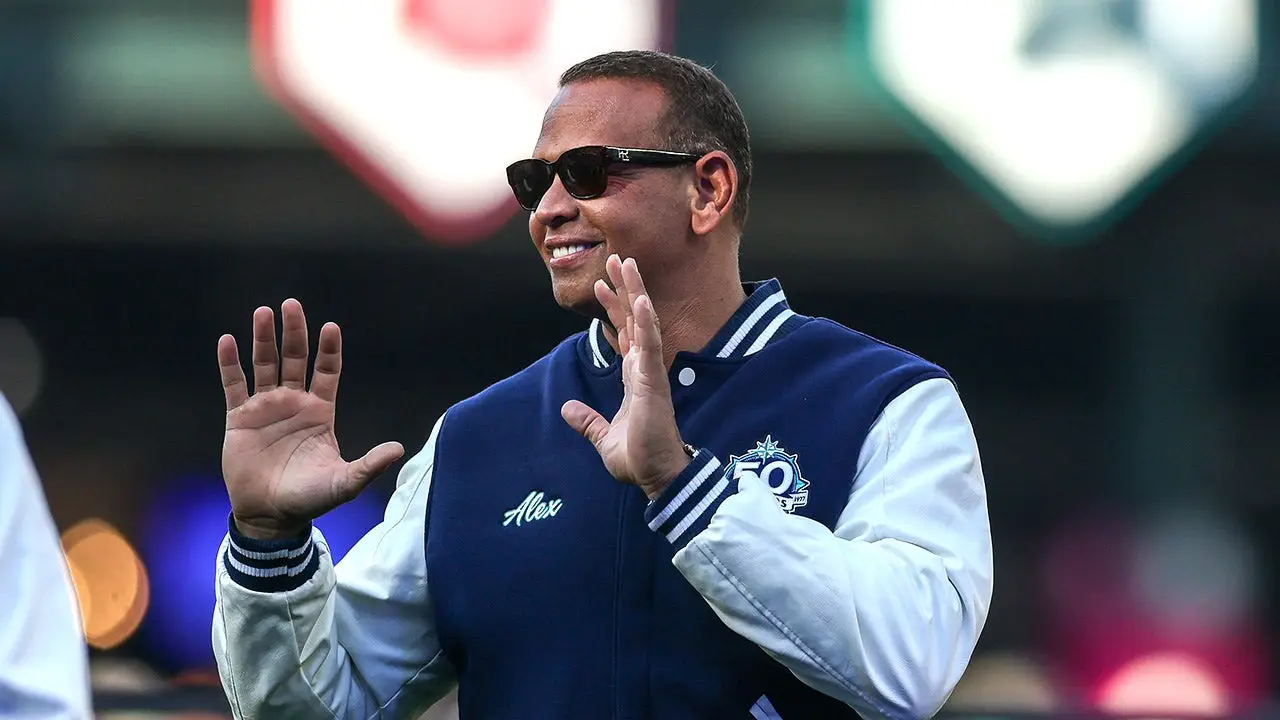
But former baseball superstar Alex Rodriguez begs to differ, and he makes a compelling case that hits close to home for anyone who remembers the late 1990s and early 2000s in the Bronx. Rodriguez points out that the outrage toward the Dodgers feels remarkably similar to the criticism the New York Yankees faced when they were flexing their financial muscles decades ago. He reminds us that in 2005, the Yankees’ payroll of $208 million was nearly double that of the next highest team, the Boston Red Sox at $123 million. The Mets were the only other team even approaching nine figures. Back then, it was the Yankees who were supposedly destroying baseball with their checkbook, signing stars like CC Sabathia, Mark Teixeira, and A.J. Burnett, and adding Johnny Damon to an already stacked roster. Rodriguez argues that we’d all be hypocrites to criticize the Dodgers for doing what the Yankees did so successfully in their era. The game has always had teams with deeper pockets, and the Yankees proved that spending big could lead to championships while also fueling the sport’s popularity and drama. The question isn’t whether big-market teams should spend—it’s whether the current structure creates an unfair playing field or simply rewards smart organizations that know how to use their resources effectively.
What’s particularly interesting about the current situation is that the Dodgers’ financial strategy is actually more nuanced than simply throwing money at every available star. Yes, they’ve committed massive amounts of money to elite talent, but they’ve done so through clever contract structuring, with deferrals and bonuses that reduce their immediate payroll obligations. When you look at the actual tax payroll figures, the Dodgers aren’t as far ahead of the competition as the headlines suggest. The Mets, Philadelphia Phillies, and Toronto Blue Jays each have tax payrolls exceeding $300 million, putting them in the same conversation as Los Angeles. The real difference, as Rodriguez astutely points out, isn’t just about how much money a team spends—it’s about how wisely they spend it. He specifically called out players like Trent Grisham and Ryan McMahon, who are combining for $38 million in salary this season while hitting just .215 with poor on-base numbers. Those are the kinds of bad contracts that can sink a franchise, regardless of how deep their pockets are. The Dodgers have been successful because they’ve made smart decisions about who to pay and how much to pay them, not just because they have access to more cash than other teams.
Rodriguez’s argument about the importance of developing talent from within adds another layer to this complex debate. He points to the Yankees’ glory days, when general manager Gene Michael held onto homegrown stars like Bernie Williams, Derek Jeter, and Jorge Posada, building a championship core from the farm system before supplementing it with high-priced free agents. This philosophy, Rodriguez suggests, is the true key to sustained success in Major League Baseball. The teams that win consistently aren’t necessarily the ones with the biggest budgets—they’re the ones that can identify talent early, develop it effectively, and then make strategic acquisitions to complement their homegrown stars. The Dodgers followed this exact blueprint, developing players like Clayton Kershaw and Corey Seager before adding pieces like Mookie Betts and Shohei Ohtani to complete their roster. This approach requires scouting acumen, player development expertise, and organizational stability, not just a fat wallet. The most successful franchises understand that money alone can’t buy championships; it takes a complete organizational commitment to excellence at every level.
Perhaps the most compelling evidence that the Dodgers haven’t actually broken baseball comes from looking at the standings this season. The Milwaukee Brewers, with a tax payroll of just $153 million that ranks 19th in the league, own the best record in all of Major League Baseball. The Tampa Bay Rays, who rank 27th in payroll, have the second-best record in the sport. Even the AL Central-leading Chicago White Sox are finding success despite ranking 26th in spending. Meanwhile, three of the top five payrolls—the Mets, Phillies, and Blue Jays—are currently on the outside looking in when it comes to postseason contention. This statistical reality suggests that baseball hasn’t become purely about financial resources. Smart teams can still compete with smaller budgets, and wealthy teams can still underperform despite their advantages. The game remains beautifully unpredictable, with underdogs rising and favorites falling each season. The Dodgers’ success isn’t purely a function of their spending; it’s a result of organizational excellence that many deep-pocketed teams have failed to replicate.
As the current collective bargaining agreement expires in December, and players insist they’ll never accept a salary cap—the first such proposal since 1994—the debate over baseball’s economic structure will only intensify. But perhaps we should step back and consider whether the Dodgers are truly ruining the sport or simply excelling within the existing framework. The Yankees dominated baseball in the late 1990s, the Red Sox and Cardinals had their moments, and now the Dodgers are having theirs. Baseball has always been a game of haves and have-nots, of dynasties rising and falling, of smart organizations finding ways to succeed regardless of their financial constraints. The current competitive balance—with small-market teams like Milwaukee and Tampa Bay thriving while big spenders in New York and Philadelphia struggle—suggests that the sport is healthier than the doomsayers would have us believe. The Dodgers’ success story is actually a testament to the enduring appeal of baseball: a team can build a winner through a combination of smart drafting, player development, and strategic acquisitions, even if they have more resources than their competitors. The real question isn’t whether the Dodgers are ruining baseball—it’s whether the sport’s economic disparities prevent talented players from showcasing their skills and dedicated fans from seeing competitive games. As long as teams like the Brewers and Rays can compete with the biggest spenders, perhaps there’s room for everyone in this great game after all.