






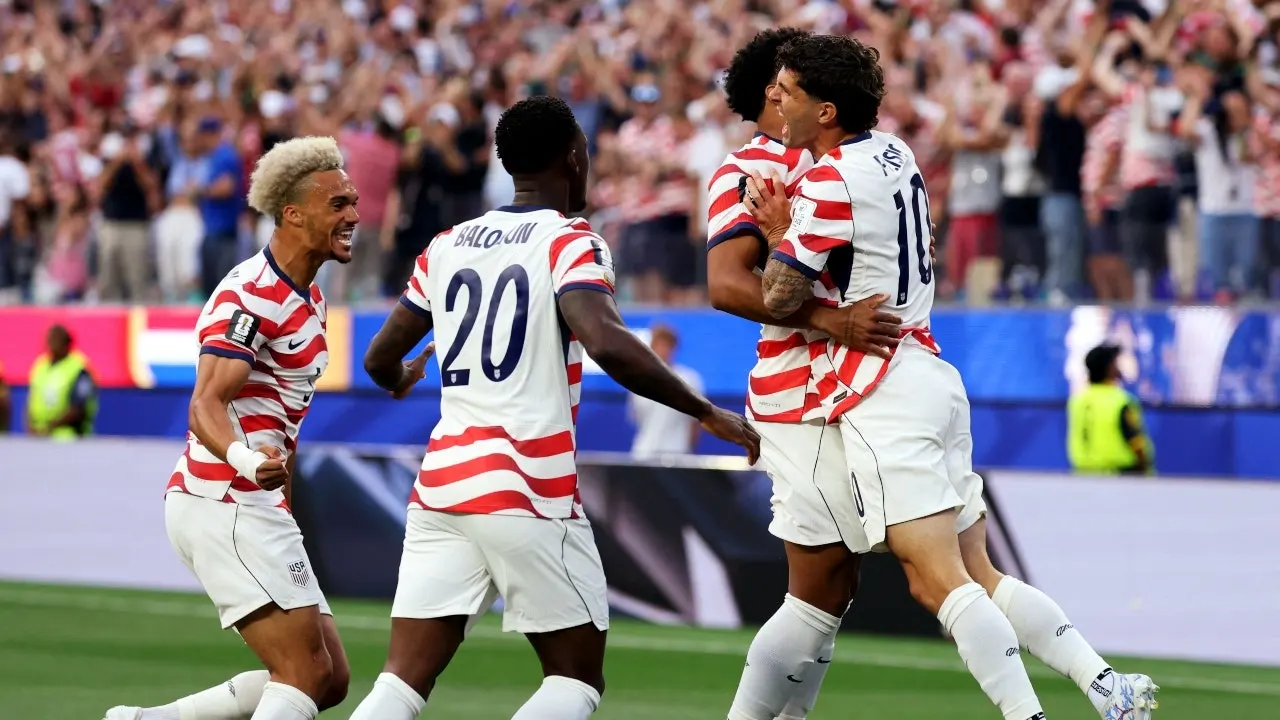
There was an unmistakable magic in the damp Pacific Northwest air on Friday afternoon as Lumen Field in Seattle transformed into a roaring cauldron of red, white, and blue. The United States Men’s National Team did not just win a soccer luxury match; they carved out a historic milestone that bridged the gap between modern American soccer and the sport’s pioneering days. By defeating a rugged Australian squad 2-0, the Americans clinched a highly coveted spot in the World Cup knockout stage after winning their first two consecutive matches of the tournament. The feat carries an incredible historical weight: it marks the first time since the very first World Cup in 1930 that an American men’s team has opened the group stage with back-to-back victories. For a fan base long accustomed to fingernail-biting calculations and agonizing group-stage math, this dominant start feels less like a fortunate streak and more like the arrival of a highly disciplined, mature national program ready to make a deep run on the world’s biggest stage.
The match itself began with a stroke of fortune that seemed to suggest the soccer gods were wearing the Stars and Stripes. In only the 10th minute of play, Flo Balogun burst down the flank, unleashing a sharp, dangerous pass into the penalty box. In a desperate attempt to clear the danger, Australian defender Cameron Burgess inadvertently redirected the ball into his own net, sending the stadium into an absolute frenzy and gifting the United States an early lead. This sudden breakthrough etched another bizarre record into the tournament’s history books, marking the first time in World Cup history that a country has benefited from own goals in consecutive matches. While some critics might dismiss the opener as pure luck, the field remained heavily tilted in favor of the Americans, who monopolized possession and choked out Australia’s counter-attacking lanes. Paradoxically, despite absolute dominance on the ball, the United States incredibly failed to register a single official shot on goal for the next forty-three minutes, weaving a tapestry of elegant passing sequences that lacked the final, lethal touch in the opposing box.
Just as frustration began to creep into the stands before the halftime whistle, the Americans broke the drought with a moment of breathtaking athletic theater that introduced a new hero to the world. At the tail end of the 43rd minute, a contested free kick was lofted into the box, sparking a chaotic scramble in front of the Australian goal. Amidst the sea of jerseys, 21-year-old Alex Freeman—the youngest player on the American roster and the son of former NFL wide receiver Antonio Freeman—leaped with the same gravity-defying grace his father once displayed on the gridiron, powering a brilliant header into the back of the net. The joyous celebration was briefly silenced when match officials initially ruled the goal offside, but a tense, silent VAR check eventually reversed the call, confirming the goal was clean and sending Lumen Field into sheer ecstasy. It was Freeman’s first-ever World Cup goal, signaling not only a brilliant individual milestone for the young prodigy but also providing the crucial cushion that allowed the United States to control the remainder of the match with supreme tactical confidence.
The composure displayed by this young American roster was even more remarkable considering the devastating pre-game announcement that talisman and undisputed leader Christian Pulisic would not play due to a calf injury suffered the week prior. In years past, the loss of “Captain America” might have triggered a tactical panic, but this resilient squad barely missed a beat in his absence, showcasing a deep bench and a collective identity that refuses to rely on a single superstar. Led by a relentless midfield that suffocated any attempt at an Australian buildup, the United States commanded over 60% of the ball’s possession compared to Australia’s meager 30% through the first 71 minutes of play. This overwhelming dominance kept the Socceroos chasing shadows and preserved a legendary statistical trend, as the United States improved their historic record to an admirable 11-2-1 when scoring first in World Cup matches. With six total goals already scored in group play, this high-octane team has tied its all-time group-stage scoring record, proving they possess the offensive firepower to threaten any defensive unit in the world.
With this flawless 2-0 record, the United States sits comfortably in first place in Group D with six points, while Australia remains in second place with three points. The winless underdogs of the group, Paraguay and Turkey, face off in a late-night clash that will ultimately decide the mathematical destiny of the group, though the Americans can now afford to watch the drama unfold with a sense of calm security. If Paraguay manages to pull off a victory or secure a tie against Turkey, the United States will officially clinch the Group D title, securing a highly favorable draw in the upcoming Round of 32. Interestingly, from a strategic perspective, even a loss by Turkey might work to the United States’ long-term benefit; it would allow the coaching staff the absolute luxury of resting key starters—especially the healing Pulisic—in their final group game, utilizing a rotated squad to keep players fresh for the grueling knockout rounds while potentially shaking up the tournament’s overall bracket.
No matter how the remaining group stage matches play out, the atmosphere surrounding the national team has transformed from cautious hope to genuine, sweeping football fever. Under the current tournament rules, the top two teams from each of the 12 groups advance, alongside the eight best third-place finishers, meaning the Americans are playing with house money as they prepare to take the pitch again. Next Thursday, the squad will travel south to Los Angeles to face off against Turkey, playing in front of another expectedly sold-out headlining crowd of passionate supporters. This dream run has captured the imagination of casual and hardcore sports fans across the nation, humanizing a team of young, charismatic athletes who are redefining what American soccer can be. As they head to Southern California with wind in their sails, the message to the rest of the footballing world is crystal clear: this American team is young, hungry, deeply united, and they are just getting started.