




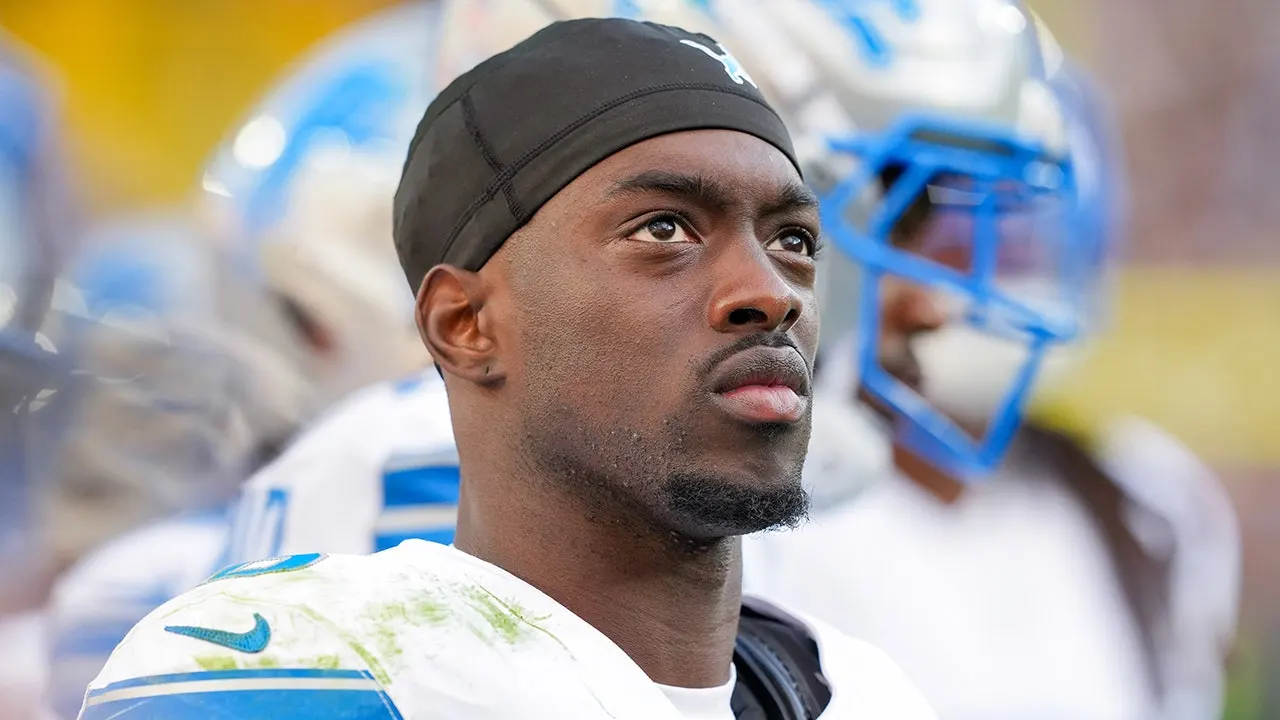
For a young athlete, the transition from college stardom to the massive stage of the National Football League is supposed to be the achievement of a lifelong dream—a golden ticket to security, fame, and historic legacy. For Terrion Arnold, who was selected as the 24th overall pick in the 2024 NFL Draft by the Detroit Lions, that dream seemed to be unfolding in real-time, despite the challenges of a rookie season cut short by a severe shoulder injury. Yet, the glittering lights of Ford Field have suddenly been eclipsed by the stark, sterile reality of a Florida jail cell. On a quiet Wednesday night, the 23-year-old cornerback surrendered himself to authorities at the Orient Road Jail in Hillsborough County, trading his team jersey for a mugshot. Charged with four counts of kidnapping and four counts of armed robbery, Arnold now faces a devastating legal battle that threatens to permanently derail his promising career and alter the course of his young life forever.
To understand how a first-round NFL draft pick ended up in handcuffs, one must look back to a chilly February in Largo, Florida, where Arnold had been renting an Airbnb. The property, intended to be a comfortable retreat shared with a close-knit circle of friends and associates, quickly became the breeding ground for a chaotic sequence of events. On February 1st, a massive security breach occurred when the residence was burglarized, resulting in the theft of more than $250,000 worth of personal belongings belonging to Arnold and his companions. Paranoia, anger, and a desperate desire for retribution quickly poisoned the atmosphere. In the wake of the devastating financial and personal loss, Arnold and his associates reportedly took matters into their own hands, zeroing in on three innocent local teenagers whom they baselessly suspected of executing the heist—a tragic error in judgment that police would later confirm was entirely unfounded, as the boys had absolutely no connection to the theft.
The vengeance that followed was not just swift; it was calculated, intimate, and deeply terrifying for the unsuspecting victims. On February 4th, the three teenagers, all in their late teens, believed they were simply heading out to meet two young women, Arianna Del Valle and Jasmine Randazzo, at a local Tampa apartment. Instead, they walked directly into a meticulously prepared trap. Waiting in the shadows of a bedroom closet were Christion Williams and Lyndell Hudson II, who suddenly burst out with firearms drawn. What was supposed to be a casual social encounter instantly dissolved into a waking nightmare. The boys were violently ambushed, battered, and pistol-whipped, their sense of safety shattered as they were held at gunpoint, helpless against their attackers.
What elevates this alleged crime from a sudden burst of violence to a calculated act of cruelty is the digital detachment with which it was reportedly managed. As the three young victims were being beaten and terrorized inside the apartment, the horror was allegedly streamed live via FaceTime to Arnold and his companions as they drove toward the scene. To make matters worse, investigators recovered a highly incriminating group chat where Arnold and his co-defendants supposedly coordinated the assault in real-time, giving specific play-by-play directions to the assailants inside. Upon arriving at the apartment around 1:00 AM, Arnold allegedly took charge, directing his group as they systematically stripped the battered, terrified teenagers of their remaining personal belongings, transforming a personal quest for vigilante justice into a chaotic, armed robbery.
After a grueling forty minutes of physical abuse and psychological torment, the bleeding and traumatized teenagers were finally escorted from the apartment, forced into their vehicle, and ordered to flee. Bruised, battered, and carrying scars that will likely take a lifetime to heal, the young men eventually found the courage to contact the Tampa Police Department. Their detailed accounts and identification of the suspects initiated a massive, months-long investigation. As detectives painstakingly pieced together the evidence—from digital footprints to eyewitness testimonies—they gradually uncovered a complex, multi-person conspiracy. Remarkably, investigators ultimately concluded that Arnold, the high-profile professional athlete who had everything to lose, was not just a participant, but the primary organizer and mastermind behind the entire violent scheme.
As the legal system begins its slow, deliberate process, the sports world has been left in a state of absolute shock and heavy silence. The Detroit Lions have remained tight-lipped, while an NFL spokesperson offered only a brief acknowledgment that they are aware of the situation and are monitoring the development. It is a sobering, tragic contrast: only months ago, sports broadcasters were praising Arnold’s grit on the field, celebrating his first career interception against the Minnesota Vikings, and mapping out a triumphant return from his shoulder surgery. Today, his name is spoken not in connection with rookie statistics or defensive strategies, but as a cautionary tale of a young star who allegedly let anger, bad company, and a thirst for street justice dismantle a multimillion-dollar future in a single, devastating night.