




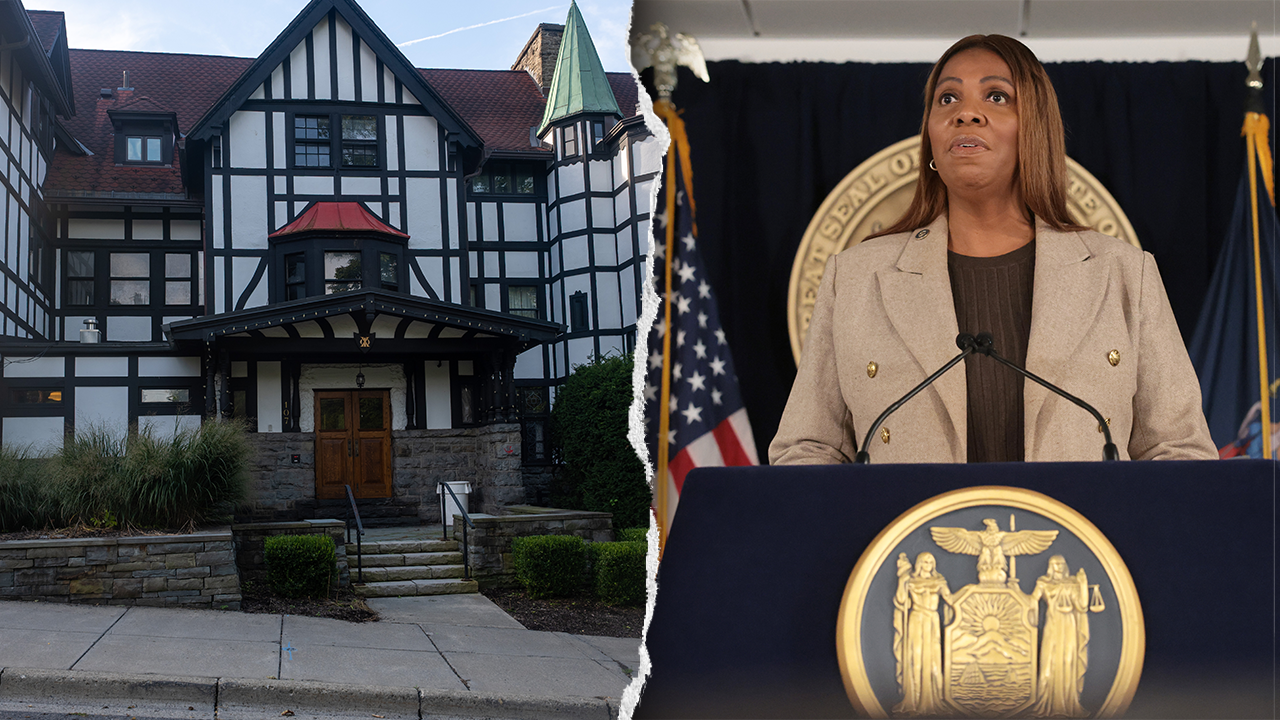
Perhaps no legal controversy is ever truly just about the law. At its center are people whose lives are forever changed by a single night, a single accusation, a single investigation. That is certainly true of the story unfolding in upstate New York, where New York Attorney General Letitia James now finds herself at the center of a delicate and emotionally charged battle. It began with a young woman, identified in court papers as Jane Doe, who has said she was drugged and sexually assaulted at Cornell University’s Chi Phi fraternity house in October 2024. Her complaint names seven former fraternity members, along with the university, fraternity entities, her sorority, and a local bar, arguing that too many people failed to protect her. The seven men deny the allegations, with some claiming the sexual activity was consensual and others insisting they were not involved at all. No criminal charges have been filed. But now that Governor Kathy Hochul has handed the investigation to James’s office, replacing Tompkins County District Attorney Matthew Van Houten, the Attorney General is facing a passionate call to step aside because of comments she made before taking over the case. It is a situation filled with tension: the need to believe survivors, the presumption of innocence, and the fragile trust that the public must have in those who hold the scales of justice.
The controversy centers on Andrew Miltenberg, an attorney for one of the accused students, who argues that James’s earlier public statements raised an “avoidable question about the appearance of impartiality.” James had spoken about what the alleged victim had “been forced to endure” as “horrific and unacceptable,” and she addressed the young woman directly, saying, together with “all survivors,” that “we stand with you.” To Miltenberg, those words were not merely compassionate; they suggested that James had already accepted the facts of the allegation before any criminal investigation had been completed. His concern is not political, he insists, and it in no way diminishes the seriousness of sexual assault. Rather, it is about confidence. “The concern is whether the public can have confidence that the investigation begins without any predetermined view of the facts,” he said. He is careful to acknowledge an important boundary: “There is nothing improper about expressing compassion for someone who reports a sexual assault.” But he draws a line between supporting a person who makes an allegation and appearing to accept the truth of that allegation before the evidence has been examined. When asked directly about her Facebook post at a news conference, James declined to engage, saying, “I will not comment on a Facebook post.” She has insisted that her office’s investigation will be guided by “the facts and the law,” but for Miltenberg, that assurance is not enough.
The deeper story behind this legal wrangling reveals a case that has already gone through notable twists. The woman’s civil lawsuit was filed on September 16, nearly two years after the alleged assault, and it immediately revived public interest in an investigation that had initially gone nowhere. Tompkins County District Attorney Matthew Van Houten had declined to pursue criminal charges, explaining that the signed statement his office received from Cornell University Police did not establish a crime under New York law. He added that prosecutors assumed Jane Doe’s account was true and that her credibility was “never in question.” So why did he decline? His decision seemed puzzling at first, but then came a startling revelation. CBS News presented Van Houten with a fuller transcript of Doe’s police interviews, and the district attorney admitted he had never seen it. “That wasn’t information that I had,” he said, adding that its existence “changes the landscape for me.” That revelation became one of the major reasons the case was reopened and why Governor Hochul eventually decided to appoint a special prosecutor. But it also raises a deeply troubling question: why did the original investigation fail to gather the complete record before making such a consequential decision? Criminal defense attorney and Fox News contributor Donna Rotunno has publicly wondered the same thing. “The real question is, why didn’t the DA ask for every piece of information that the campus police gathered?” she said on Fox News’ “The Big Weekend Show.” It is the kind of question that lingers in the minds of anyone who wants to believe that justice is being done fairly and thoroughly.
Now, with James leading the investigation, the debate has shifted from why the case was dropped to whether the new prosecutor is truly impartial. Rotunno has been blunt about her concerns. “But it should be fair. It should be impartial. And it should not be from someone who’s already made a public statement on Facebook about it,” she argued. She also warned against letting public emotion replace evidence. “We are watching the court of public opinion take over here when we don’t know the facts,” she said. That warning touches on one of the hardest tensions in modern American life: social media amplifies outrage, but justice cannot be performed in a media echo chamber. The same desire for accountability that led to the appointment of a special prosecutor also demands that the process remain fair to all involved. Miltenberg is asking James to do something simple but potentially awkward: recuse herself personally while allowing senior prosecutors in her office, who have not publicly commented on the merits of the case, to handle the investigation. He argues that such a move would not weaken the probe. “It would strengthen it,” he said. He pointed out that the very reasons that prompted the appointment of a special prosecutor—namely, independence and public confidence—should also apply to the person leading the replacement investigation.
Throughout this unfolding drama, Cornell University has taken its own steps to address the allegations. The university has agreed to an independent review of its handling of the case. President Michael Kotlikoff acknowledged that the university’s disciplinary process resulted in two expulsions and two suspensions of at least two semesters. One student graduated before any disciplinary action could be imposed, while two students were found not responsible for sexual misconduct. These disciplinary proceedings are separate from the criminal investigation, and Cornell has said it “fully supports” the appointment of a special prosecutor and remains committed to an independent external review of all aspects of how the university handled the matter. The existence of these internal measures is a reminder that even when the criminal legal system stumbles, institutions are still expected to examine their own failures. It is also a reminder that universities are not courts. Their determinations are based on different standards and serve different purposes. But for the young woman at the center of this case, those proceedings may feel like a small measure of recognition, even as the criminal system remains uncertain. For the accused, those same proceedings may feel like a trial in miniature, with reputations and futures at stake. What everyone seems to agree on is that the process must be transparent and should be seen as fair.
In the end, this is not just a legal story; it is a human one. A woman says she was violated and abandoned by the very institutions that should have protected her. Seven men say they are innocent and that their lives have been upended by an accusation they believe is either mistaken or false. An Attorney General says she will follow the facts and the law. A defense attorney asks for a small but significant concession: that the person leading the investigation remove herself from it out of respect for the appearance of impartiality. “I am not suggesting that Attorney General James does not believe she can be fair,” Miltenberg said. But he added that the simplest way to remove any question about fairness is for her to recuse herself and allow an uncommitted prosecutor within her office to lead the investigation. That is a reasonable request, and it speaks to a fundamental principle of justice that predates any single case: justice must not only be done, it must be seen to be done. The path forward is uncertain. There are no easy answers, and there is no clean ending. But perhaps the most compassionate thing we can all do is to hold space for both the survivor and the accused, to demand that every voice be heard, and to insist that those entrusted with power take every step to make sure that the scales of justice remain balanced, not because any one side deserves victory, but because the public’s trust in the system depends on it.