




On a warm Sunday morning in the small South Georgia town of Vienna, what should have been a joyful neighborhood block party dissolved into chaos, terror, and unimaginable loss. More than a thousand people had gathered in the streets, many of them young, many of them simply looking for a moment of connection and celebration during homecoming weekend for Dooly County High School. But just after 1:25 a.m., the sound of music and laughter was torn apart by the crack of gunfire. In a matter of moments, two young men lay dead, dozens more were bleeding or scrambling for safety, and a community that had been full of life was left staring into the face of a tragedy it never saw coming. The shooting unfolded on the 900 block of Pine Street, a residential area that would normally be quiet at that hour, but on this night it was the scene of a gathering that had drawn people from across the region. According to Dooly County Sheriff Craig Peavy, deputies were already on patrol nearby when the first shots rang out. They had requested assistance from the Georgia Bureau of Investigation, and the response was immediate. Yet even with law enforcement present, the violence was not over. More gunfire erupted about a block away, sending people running in every direction and leaving officers themselves in a perilous position, uncertain whether the bullets were aimed at them or at someone else in the crowd.
The scene that followed was one of pure pandemonium. Sheriff Peavy described how people were “going every direction,” their panic palpable in the darkness as they tried to escape the hail of bullets. More than fifty shots were fired across at least two locations, a staggering display of firepower that left two people dead at the scene from gunshot wounds. The injured numbered thirty-five, and the toll was brutal. Most of those hurt had been shot, their bodies struck by bullets that had no regard for age, intention, or innocence. Others were injured in the desperate scramble to flee, struck by cars or suffering falls and other wounds as the crowd surged away from the danger. The ages of the injured ranged from just fourteen to fifty-one, a heartbreakingly wide span that underscores how a community event can touch people of every generation. Their conditions ranged from stable to critical, meaning that even as the sun rose over Vienna, families were still waiting in hospital corridors, praying for news, bracing for the worst. Sheriff Peavy, speaking at a press conference later that day, did not hide the gravity of the moment. He admitted that officers on the scene had no idea whether the second burst of gunfire was directed at them or at someone else. “You just have to keep doing what you’re doing and hope you don’t get hit by gunfire,” he said, a stark reminder that the men and women sworn to protect this community were themselves caught in the crossfire of an act of violence that seemed to have no boundaries.
The two lives lost were identified as Jaquevion Jackson, twenty-one, of Cordele, and Macaleb Jackson, twenty-three, of Hawkinsville. They were young men with their whole lives ahead of them, sons, brothers, friends, and members of a wider community that now has to reckon with the senselessness of their deaths. Their names will be remembered, but so too will the faces of the dozens of others who were wounded, some of whom may carry physical and emotional scars for the rest of their lives. The fact that this happened during homecoming weekend for Dooly County High School adds another layer of sorrow. Homecoming is supposed to be a time of school spirit, reunions, and celebration, a moment for alumni to return and for students to feel pride in their school and their town. Instead, it will now be remembered as the weekend when violence stole the spotlight, when a block party turned into a war zone, and when the promise of a festive occasion gave way to the reality of emergency sirens and hospital waiting rooms. The superintendent of the Dooly County School System, Sherrod Willaford, was quick to clarify that the shooting was not at a school-sponsored event. But he also acknowledged that the impact would reach many students, families, and staff members. In a statement, he expressed the deep sense of recognition that this tragedy would ripple through the school community, and he announced that schools would open on Monday with additional safety measures in place. That decision to reopen, to try to restore a sense of normalcy, is a difficult one, but it also speaks to the resilience of a community that knows it cannot let terror shut down the future of its children.
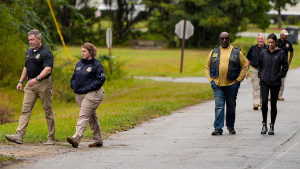
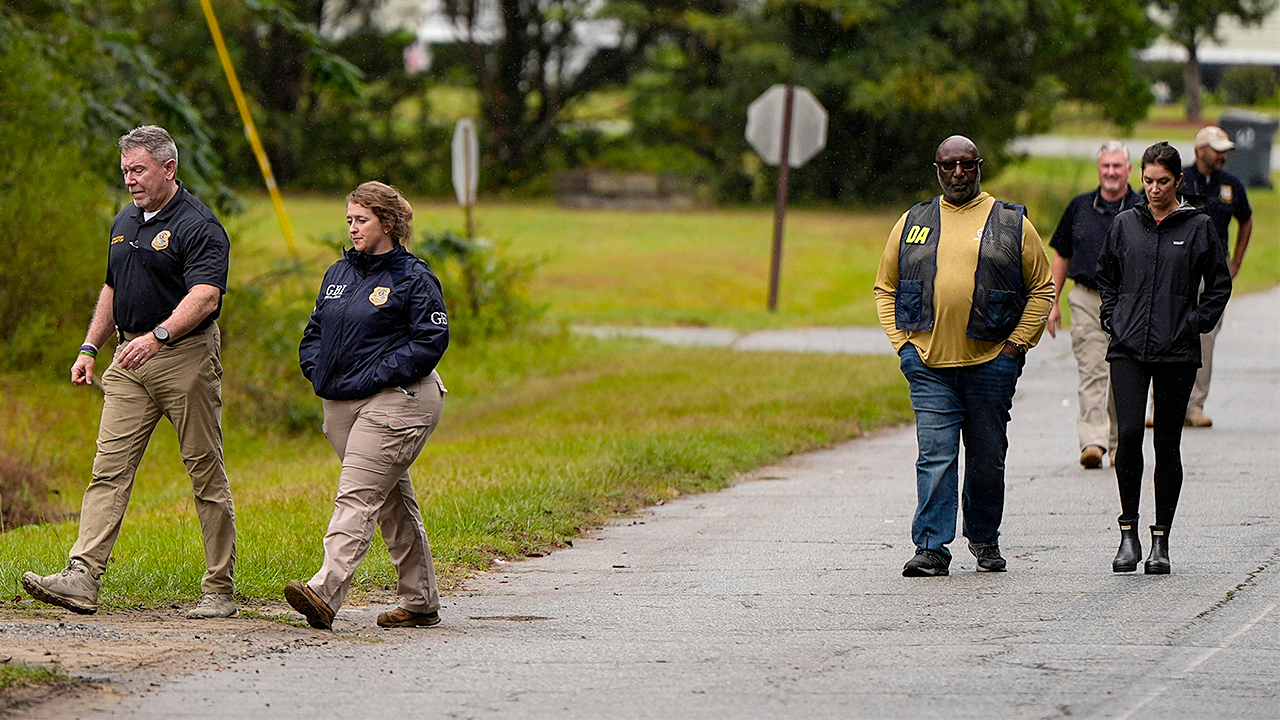
Vienna’s mayor, Eddie Daniels, added another troubling detail: the city had not issued any kind of permit for the block party. He did not know whether it was a homecoming party or simply an informal gathering that had grown far beyond what anyone expected. The lack of a permit raises questions about oversight, about how such a large event came to be, and about whether anything could have been done to prevent the violence. But those questions are easier to ask in hindsight. In the moment, a thousand people were simply trying to enjoy a Saturday night, and no one could have predicted that the evening would end in bloodshed. As investigators from the Georgia Bureau of Investigation and the Dooly County Sheriff’s Office continued their work, they had no arrests, no identified motive, and no clear sense of how many shooters were involved. The absence of answers only deepens the pain. Families want to know why their loved ones were taken. Survivors want to know if they are safe. The community wants to know who among them could have done such a thing. Sheriff Peavy made a direct appeal to those responsible, asking them to turn themselves in. “Please turn yourself in, because we’re doing everything we can to find out who you are,” he said. It was a plea that carried both the weight of authority and the desperation of a man who knows that every hour without an arrest is another hour of fear and grief for his community.
This shooting did not happen in a vacuum. Vienna is about 130 miles south of Atlanta and roughly a fifty-mile drive south of Macon on the Interstate 75 corridor. And in Macon, just a week earlier, twelve teenagers had been wounded by gunfire during a confrontation at a birthday party in a city park. That incident, too, had shocked the region and raised alarms about the prevalence of gun violence among young people. Now, two communities in the same part of Georgia are grappling with the same painful reality: that gatherings which should be safe, which should be filled with laughter and music, have become targets for violence. The proximity of these events is more than a coincidence; it is a pattern that demands attention. It speaks to a broader crisis that cannot be solved by law enforcement alone. It requires community leaders, parents, schools, and young people themselves to confront the culture of violence that has taken hold. It requires a willingness to have difficult conversations about conflict resolution, about access to guns, and about the despair or anger that leads someone to open fire in a crowd. But for now, in the immediate aftermath, the focus is on the victims, on the families who are mourning, and on the survivors who will carry this trauma with them. The investigation remains open, and authorities have promised to pursue every lead. But even as they work, the people of Vienna are left to pick up the pieces, to comfort one another, and to find a way to move forward.
In the days ahead, the community will hold vigils, not just for the two young men who died, but for all those who were injured and for everyone whose sense of safety was shattered. There will be prayers, tears, and moments of silence. There will be calls for justice and demands for answers. But there will also be acts of kindness, neighbors checking on neighbors, strangers offering support, and a quiet determination to not let this tragedy define them. The road to healing will be long. For the families of Jaquevion and Macaleb, it will be a journey of grief that may never fully end. For the injured, it will be a path of recovery that includes not only physical healing but also the slow, painful work of processing what they witnessed. For the young people of Dooly County, it will be a lesson in fragility, a reminder that life can change in an instant. And for the broader community, it will be a call to action, a challenge to find ways to prevent the next tragedy before it happens. The block party on Pine Street was supposed to be a celebration. Instead, it became a scene of horror. But even in the darkest moments, there is a glimmer of hope in the way people come together, in the way they refuse to let fear win. The investigation will continue, and perhaps one day there will be justice. But the true test for Vienna, and for all of Georgia, will be whether this moment of grief can become a turning point, a catalyst for change that honors the lives lost and protects the lives that remain. For now, the community holds its breath, mourns its losses, and clings to the belief that out of this tragedy, something better can emerge.