


Paragraph 1: The Unsettling Shake-Up in the Dodgers’ Universe
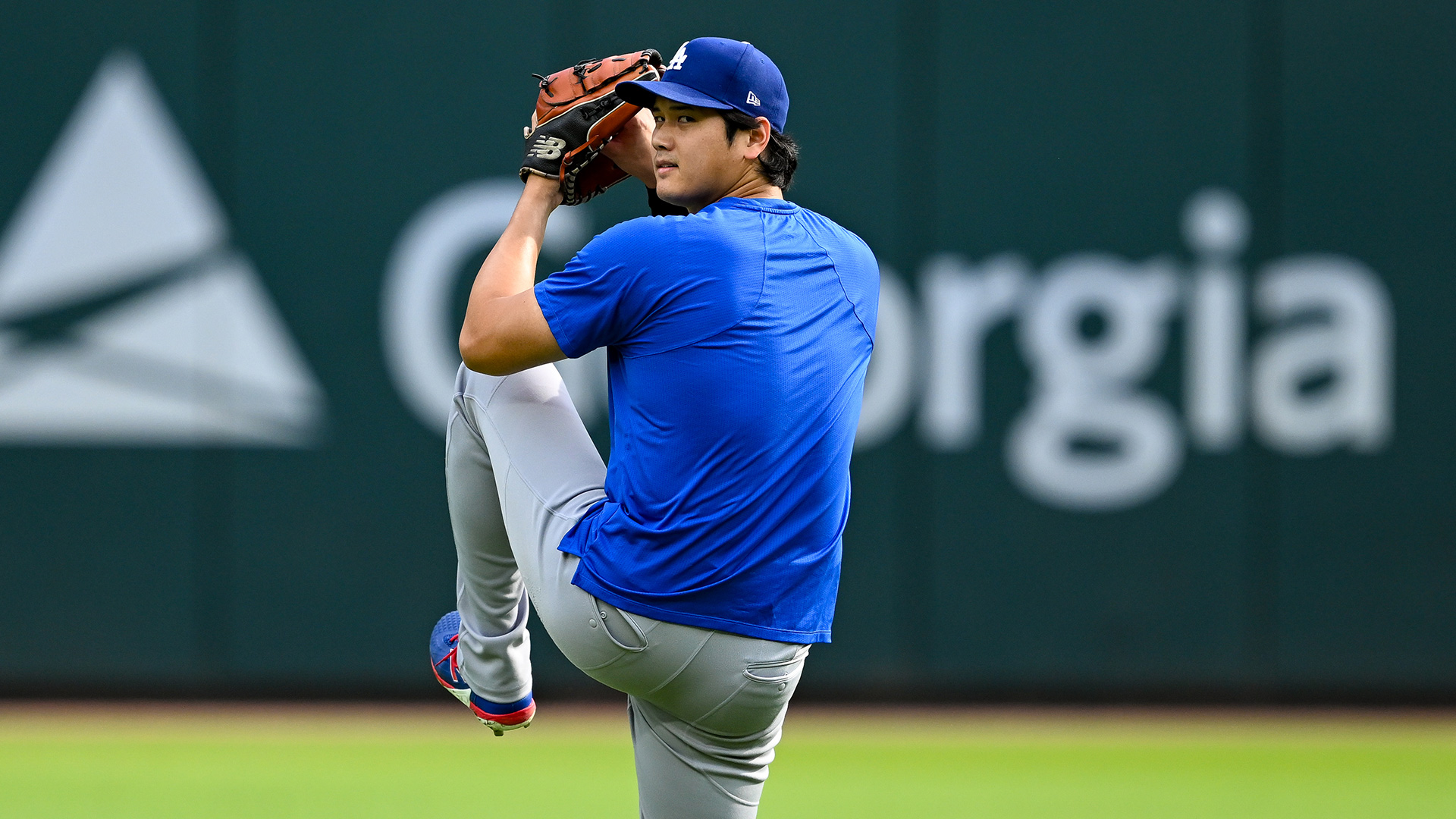
The stifling Los Angeles heat settled over Dodger Stadium like a weighted blanket on that Saturday evening, but the chilling news emanating from the clubhouse had nothing to do with the weather. The Dodgers had just dropped a tightly contested 2-1 game to the Detroit Tigers, yet the scoreline felt almost like a footnote to the grim bulletin that followed the final out. Shohei Ohtani, the transcendental two-way superstar whose very presence rearranges the gravitational field of Major League Baseball, would not be taking the mound the following day. The initial spark of concern was his knee—an appendage that had been nagging him during a routine Friday bullpen session. But as manager Dave Roberts addressed the media with the weary cadence of a man delivering difficult news, the specifics grew murkier and more alarming. It wasn’t just the knee; there was also a whisper of trouble in his biceps, the same muscle group that had betrayed him earlier in the season. The man who had captivated the baseball world by redefining the boundaries of human athletic endurance was now a tangled question mark of soft tissue and cartilage. The Dodgers had built their entire championship-contending identity around the assumption that Ohtani would be their dual-threat anchor, a cyborg capable of launching 450-foot home runs and carving up opposing hitters with unhittable splitters in the same week. Now, they were facing the stark reality that their most precious asset was fragile, and the carefully calibrated machine that was their pitching staff had suddenly lost its most important gear. The typically boisterous stadium felt hollow, and the fans filing out carried not just the sour taste of a one-run loss, but the existential dread of a season threatening to unravel at its core.
Paragraph 2: The Anatomy of an Aching Superstar
To understand the gravity of this development, one must appreciate the brutal physics of what Ohtani asks of his body. Pitching is an explosive, unnatural motion that torques the knee and slings immense tensile stress through the arm’s kinetic chain. The bicep, in particular, acts as a critical decelerator after the ball is released; any irritation there is a red flag that could signal the fraying of a labrum or the shadow of a more sinister elbow issue. Dave Roberts, a man who has navigated the delicate egos and aching bones of superstars for years, offered a glimpse into the medical conundrum during his pre-game press conference. He confirmed that Ohtani’s knee “still isn’t pain free,” a statement that immediately sent seismometers across the sports world into high alert. The added detail—that the biceps had been bothering him “earlier in the inning” during that Friday bullpen—painted a picture of a body desperately fighting itself. There is an inherent cruelty in expecting a man who throws over 100 miles per hour to also sprint 90 feet on a compromised joint, only to then explode another 90 feet of bat speed in the batter’s box. For any other player, the protocol would be simple: shut it down, get an MRI, rest until the inflammation subsides. But for Ohtani, the calculus is infinitely more complex. He is not just a pitcher or just a hitter; he is a brand, a flag bearer for an entire nation’s pride, and a financial investment of nearly seven hundred million dollars. Roberts’ language was carefully hedged, refusing to offer definitive timelines, instead mumbling about the team “trying to figure out” the exact scope of the discomfort. The manager’s deep-seated frustration was palpable, echoing the sentiment of millions who had tuned in hoping to see two sporting spectacles in one night, only to be left with an empty highlight reel and a persistent, gnawing ache of uncertainty.
Paragraph 3: The Pitching Carousel Spins in Desperation
The immediate fallout from this announcement was a frantic reshuffling of the rotation, a domino effect that sent ripples through the entire Dodgers pitching staff. Originally, the plan had been to use Ohtani as a relatively short “opener” or a piggyback starter on Sunday, with the expectation he would only pitch an inning or two before handing the ball over to the bullpen. It was a conservative plan, designed to preserve his arm while integrating him back into a starting rhythm following his last real outing—a triumphant six-inning effort against the San Diego Padres on July 3rd, where he secured a 4-3 victory. That win felt like a turning point, a signal that the second half of the season would feature a fully unleashed Ohtani. Instead, the baton has been forced into the capable but suddenly overburdened hand of Tyler Glasnow. Glasnow, the towering right-hander with his own extensive medical history, now finds himself bearing the weight of the entire rotation on his surgically repaired elbow. Pushing Glasnow up a day or altering his schedule is a dangerous game; it risks buckling the very support beam the Dodgers were leaning on. The team now faces the horrifying prospect of a rotation that is essentially Glasnow and a collection of fill-ins, relying on rookies and journeymen to shoulder innings that Ohtani was supposed to carry. The word “up in the air” used by Roberts regarding Ohtani’s next pitching appearance was chilling in its vagueness, a term often used in the sport as a euphemism for “we have no idea if we’ll see him pitch again this season.” The front office’s carefully laid plans for October have been torn up and thrown into the wind, forcing them to pivot to a triage mode that prioritizes survival over dominance.
Paragraph 4: The Relentless Hitter Defies the Pain
Yet, even amidst the orthopedic dread, there remains a flicker of defiance in the form of his bat. It is almost absurd that a man physically unable to repeat his pitching motion with confidence can still terrorize opposing pitchers. Ohtani has managed to separate the two compartments of his baseball existence with a brilliance that borders on the supernatural. Since that last start against the Padres, he has continued to take the field as the designated hitter, posting a formidable batting line of .274 with 12 home runs and a litany of run-producing hits across 45 games. One would never know from his gaudy stats that he is operating with a knee that aches with every swing and a bicep that twinges whenever he takes a violent hack. This is the purest form of human stubbornness, a refusal to let physical decay dictate his output. Hitting a baseball is an art of timing and torque; doing it on a leg that can barely support him while sprinting down the first-base line is a testament to his otherworldly pain tolerance. Yet, we must wonder about the long-term cost of this. Every slide into second base, every check swing, every explosive rotation of the torso risks aggravating the bicep or further destabilizing the knee. The Dodgers are trapped in a bittersweet paradox: they need his bat to win games, but every at-bat threatens to sabotage the entire rest of his career. There is a quiet heroism in watching him trot to the plate, seeing the grimace behind the batting helmet, and yet still catching up to a 98-mph fastball and sending it into the bleachers. He is doing what he loves, but the love is clearly beginning to hurt.
Paragraph 5: The Skubal Safety Net and a New Strategy
In the front office, the anxiety has been mitigated, at least partially, by the aggressive maneuvering of general manager Brandon Gomes. The addition of Tarik Skubal—a dominant, Cy Young-caliber left-handed ace—has fundamentally altered the Dodgers’ roster philosophy. In years past, an Ohtani injury would have spelled immediate doom, forcing the team into a desperate scramble for innings from unproven arms. But now, with Skubal and Glasnow anchoring the top of the rotation, the Dodgers possess a luxury that few other franchises can fathom: they can actually afford to be patient with Ohtani’s pitching. The acquisition was a stroke of brilliance in hindsight, a proactive insurance policy that now looks like a masterstroke of foresight. It has made winning without Ohtani on the hill eminently more plausible. While Ohtani’s presence in the batting order is still indispensable, the pitching staff no longer hinges on his return. This allows the medical team to take the hardest-road approach, potentially shutting him down from pitching entirely for the regular season to allow the inflammation to fully subside, aiming for a potential return as a reliever in the postseason. The psychological relief within the clubhouse is tangible. Players know that the burden is no longer solely on the shoulders of their fragile superstar. The trade has effectively turned Ohtani from an essential engine part into a coveted luxury upgrade—one they desperately want but no longer strictly need to survive. It is a strategic shift that turns a potential catastrophe into a manageable inconvenience, buying time for the ultimate prize in October.
Paragraph 6: The Human Heart Behind the Superhuman Myth
And yet, stripping away the statistics and the strategy, we are left with the singular, fragile human being at the center of this storm. Shohei Ohtani carries the weight of a billion expectations. He is the hero of an entire nation, the face of the game, and the latest patient in a long and harrowing history of pitchers who have sacrificed their elbows and shoulders for glory. The fear that grips the Dodger fanbase is not just about losing a game; it is about the possibility of witnessing another chapter in the tragic saga of torn UCLs and shoulder surgeries. Every time he grimaces, millions wince. Dave Roberts’ plea—questioning whether it is worth giving him an inning just to build him up if his body is not 100 percent—is a profound, philosophical lament about the nature of professional sport. It is a question of valuation: Is a single regular-season start worth risking the next decade of a career? The answer, rationally, is an emphatic no. But rationality rarely applies when dealing with a competitor of Ohtani’s caliber. He will fight to be out there, because sitting is a form of defeat to him. As the dog days of summer roll into the pressure cooker of September, the Dodgers must be the adults in the room, forcing restraint upon the most unstoppable force in the game. The narrative arc of this season now hinges less on their record and more on the tender, aching recovery of a knee and a bicep. Baseball’s greatest showman is riding a wave of pain, and while his bat rages on, the looming shadow of the disabled list whispers a haunting refrain: even superheroes need a day off, and sometimes, the hardest decision is the one that protects the hero from himself.