






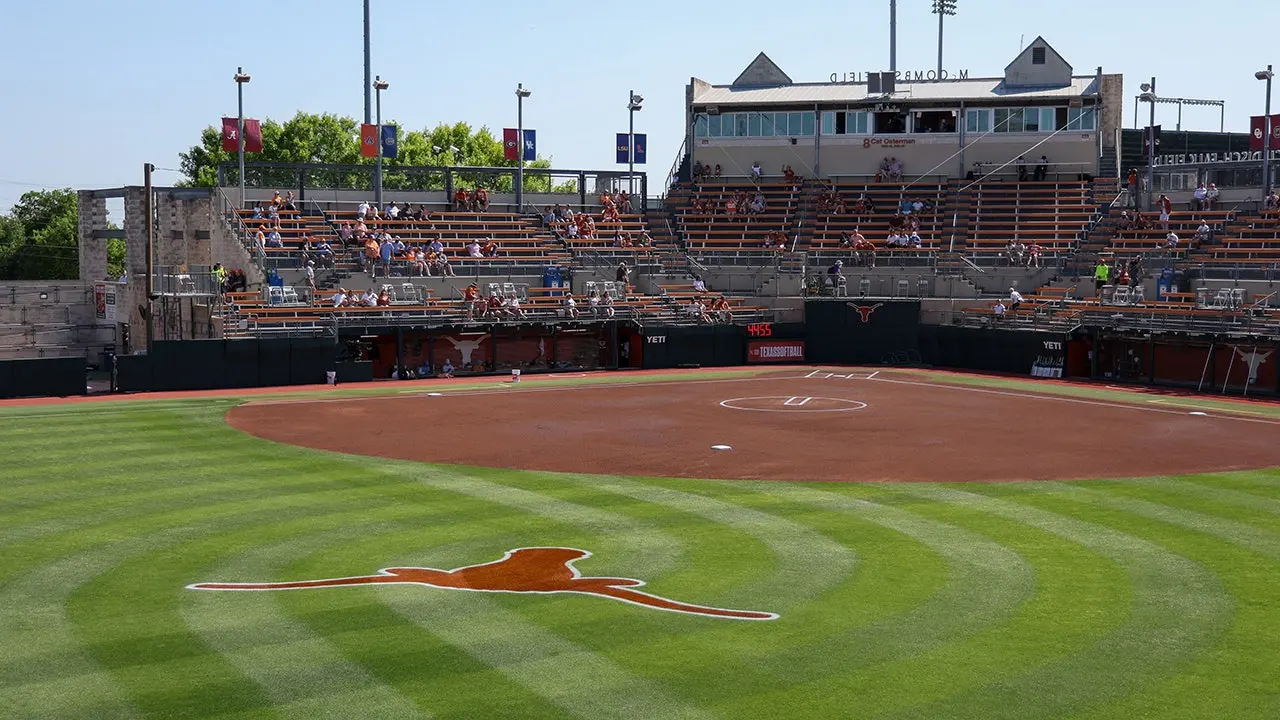
Under the blinding, sweltering canopy of a typical Texas afternoon, the second-ranked Longhorns softball team stepped onto the pristine red clay of Red & Charline McCombs Field, carrying not just the heavy, expectant hopes of their passionate Austin fanbase, but the collective weight of an entire year’s worth of grueling preparation, relentless practice, and shared sacrifice. The Austin Super Regional is never just another series of games; it is an emotional and physical crucible where seasons are either immortalized in triumph or abruptly shattered in a matter of innings. On this momentous Sunday, the Longhorns put on a masterclass in athletic excellence, securing a dominant 5-0 victory over a resilient, hard-fighting Arizona State squad to punch their highly coveted ticket to the prestigious Women’s College World Series in Oklahoma City. The atmosphere in the stadium was a living thing—an overwhelming symphony of chanting fans, clanging cowbells, and the sharp, satisfying pop of softball meeting leather that reverberated through the warm air. At the absolute center of this defensive masterpiece was the sensational freshman pitcher Teagan Kavan, who handled the pressure with the seasoned, ice-cold composure of a tenured veteran. Every riseball and changeup she unleashed was a testament to thousands of hours of solitary bullpen practice, blocking out the deafening roar of the stands as she systematically dismantled the Sun Devils’ batting order. As the final out was recorded and the stadium erupted into a sea of joyous burnt orange, the triumph felt total, a beautiful culmination of athletic synergy. Yet, as the players embraced in an ecstatic huddle, the raw purity of their hard-fought victory was momentarily intertwined with the unpredictable, hyper-scrutinized world of modern sports media, illustrating that even the most perfect sporting moments must coexist with the messy, unfiltered reality of live television.
In our hyper-connected digital age, the invisible barrier separating the sacred battleground of the playing field from millions of viewers sitting in their living rooms has become incredibly thin, a reality that was starkly and awkwardly illustrated during a brief lull in Sunday’s broadcast. ESPN’s highly sensitive field microphones, strategically placed to capture the visceral, intimate sounds of the game—the heavy breathing of the batter, the rustle of the catcher’s shin guards, and the subtle strategy whispers of the infield—accidentally intercepted an unidentified voice uttering a highly explicit, vulgar remark. The whisper, which slipped through the broadcast’s audio filters just as Kavan got ahead in the count with a confident 1-0 pitch, stood in jarring, uncomfortable contrast to the family-friendly, high-spirited nature of collegiate sports. For a fleeting moment, a wave of collective awkwardness rippled through the home viewing audience, a sudden reminder of the chaotic and uncontrollable elements of live television and the constant risks of modern media. However, the true brilliance of professional broadcasting is often revealed not when things go perfectly, but when they go awry. Play-by-play announcer Kevin Brown proved to be an absolute anchor of professionalism, completely ignoring the crude interruption without missing a single beat or acknowledging the slip-up whatsoever. Instead, he smoothly transitioned back into his commentary, focusing on Arizona State manager Megan Bartlett’s exceptional, highly respected track record of mentoring and developing her coaching assistants. It was a remarkable demonstration of poise under pressure, showcasing how seasoned commentators must act as steady captains of the ship, navigating through unexpected technical storms to ensure the spotlight remains rightfully fixed on the dedication and triumphs of the student-athletes rather than the errant noises behind the scenes.
This particular tournament season has been defined by these deeply human, emotionally charged narratives, proving that the world of collegiate softball is far more than a cold collection of statistics, batting averages, and scoreboard results; it is a vibrant tapestry of personal journeys, family legacies, and redemptive story arcs. Long before the Longhorns secured their path to Oklahoma City, the broader college softball community was already buzzing with intense energy from a parallel drama unfolding halfway across the country. One of the most compelling and relatable human stories of the postseason took place during a fiercely contested matchup between Texas Tech and the Florida Gators, a game where the intense competitive drive of the athletes collided head-on with the raw, protective, and sometimes over-exuberant passion of family ties. Collegiate athletics are, at their very core, a deeply cooperative family endeavor. Behind every player on that field is a network of parents, siblings, and mentors who have invested years of their lives traveling to early-morning tournaments, sitting through freezing rain and scorching summer heat, and riding every emotional wave of success and failure. When these young athletes finally reach the grandest stages of their careers, the emotional stakes for their families are unimaginably high, occasionally leading to moments of profound, unbridled passion that test the boundaries of stadium decorum and illustrate just how deeply bound the hearts of parents are to the performance of their children. The transition from childhood little leagues to prime-time television does not lessen the intensity of parental love; instead, it magnifies it under the glowing stadium lights, turning supportive families into highly visible participants in the grand spectacle of athletic achievement.
This volatile, beautiful mixture of paternal pride and competitive tension reached a spectacular boiling point during the Texas Tech clash with Florida, revolving around the legendary former NBA champion guard Jason Williams. Known affectionately to basketball fans worldwide as “White Chocolate” for his flashy, streetball-inspired play style and audacious court vision, Williams found himself in a completely different kind of high-stakes arena on this day—not as the superstar performer, but as a deeply invested, nervous father watching his daughter, Mia Williams, forge her own unique athletic pathway. Mia, a talented infielder for the Red Raiders, was carrying an immense amount of psychological pressure as she stepped up to the plate against her former team, the Florida Gators, a high-stakes scenario tailor-made for sports cinema. In a moment of pure, cinematic redemption, Mia connected with a pitch, launching a towering, majestic two-run home run over the outfield wall that not only propelled the Red Raiders past her former teammates but also triggered a seismic explosion of raw emotion in the stands. Witnessing his daughter’s triumphant moment of vindication, Jason Williams’ celebration transcended the typical boundaries of parental support, bursting into an intense, uncontained display of emotion that ultimately resulted in his swift ejection from the stadium by game officials. It was a fascinating, deeply human moment that perfectly captured the complicated nature of modern youth sports: a legendary professional athlete, who had spent his own career under the brightest lights, completely losing his composure out of sheer, unadulterated pride for his daughter, proving that no amount of professional experience can fully prepare a parent’s heart for the overwhelming joy of watching their child succeed against all odds.
Amidst the viral social media clips, the talking-head analyses, the controversies of hot microphones, and the dramatic headlines of parental ejections, the true, beating heart of what makes college softball so incredibly captivating is the astonishing mental fortitude of the young women who actually play the game. To compete at this elite level is to exist in a constant, disciplined state of absolute, hyper-focused mindfulness, where an athlete must construct a mental firewall to block out all external noise, whether that noise is a crude whisper captured by television cameras or the chaotic, protective energy of parent-driven stands. When Teagan Kavan stands on the pitcher’s mound, staring down a dangerous batter, or when Mia Williams locks her eyes onto a spinning yellow ball traveling at seventy miles per hour, their worlds contract down to a singular, localized point of existence. In those high-pressure seconds, there is no past, no future, no television contract, and no external drama; there is only the ball, the target, and the flawless execution of physical movements they have practiced tens of thousands of times since childhood. The 5-0 shutout engineered by the Longhorns was not merely a physical victory of pitching and fielding; it was a profound psychological triumph, highlighting the extraordinary capacity of these young women to compartmentalize the surrounding circus and execute their strategy with flawless, icy precision. It reminds us that while casual observers might get distracted by the surrounding entertainment and human errors, the athletes themselves are engaged in a quiet, beautiful pursuit of mastery, where success is defined by who can maintain their focus the longest when the world is watching, showing a level of maturity that far outstrips their collegiate years.
Now, the temporary distractions, media blunders, and sideline dramas fade into the background as the eyes of the entire sports world turn decisively toward the hallowed grounds of Oklahoma City, where the Texas Longhorns will step onto the biggest stage of all for the double-elimination round of the Women’s College World Series. Their journey begins with a highly anticipated, monumental clash against the formidable Tennessee Volunteers, a matchup that promises to deliver another chapter of elite competition and raw emotional intensity. For the seniors who have poured their hearts, souls, and physical health into their university programs for four long years, and for the ascending freshmen like Kavan who are just beginning to write their names in history, this tournament is the ultimate culmination of a lifetime of dedication, late-night bus rides, and quiet moments of self-doubt overcome by sheer willpower. As these elite squads prepare to battle under the bright stadium lights of Devon Park, they carry with them the lessons of a wild, unpredictable postseason, proving that the true spirit of softball is not defined by the fleeting controversies that occasionally capture the public’s attention, but by the relentless grit, passion, and unbreakable sisterhood of the athletes who leave everything on the dirt. When the first pitch is thrown on Thursday, the noise will quiet down, the hot mics will go silent, and the game will once again belong entirely to the players, writing their own legacies one swing at a time in the sacred dust of Oklahoma.