





A Renaissance Dream in the Heart of Spain
Imagine wandering through a medieval Spanish village, stone streets bathed in golden light, and stumbling upon a palace that looks as if it were lifted from a storybook. This is the scene that awaits at Palacio de Avellaneda, the latest jewel in the luxury hotel group Castilla Termal’s crown—a stunning, fully restored Renaissance palace in the historic village of Peñaranda de Duero. The moment you step inside, you are no longer just a traveler checking into a hotel; you are a guest in a centuries-old mansion that has quietly witnessed the passing of time. After more than three years of meticulous restoration, the palace has been reborn as an 80-key five-star retreat that invites you to sleep, dine, and heal among its tenderly preserved stone walls. It is a place where the past is never just preserved but breathed into—a delicate fusion of modern comfort and the 456-year-old architecture that gives the property its timeless soul. The experience begins at the door, and it does not let go; a night in September starts at €314.60, a price that feels like a small investment for an encounter with Spanish history.
The story of this palace starts in the hands of the noble Zúñiga and Avellaneda family, forest and tradition who commissioned this grand residence in the 16th century. For centuries, its walls witnessed the daily rituals of a Spanish aristocracy deeply embedded in the power and culture of their era. Time, however, is not always kind to old grandeur. As the fortunes of noble families shifted and political landscapes changed, the palace’s purpose, too, transformed. It was officially declared a historic monument in 1923, an important acknowledgment of its artistic and cultural value, and exactly seventeen years later, in 1940, the building passed into state hands. That stewardship likely protected it from worse decay, but it also marked a period when the building’s future was uncertain. The reopening of Palacio de Avellaneda is thus a magnificent twentieth-first century chapter—one that returns its halls to a life that is both approachable and relevant to today’s traveler. It is impossible not to be moved by the weight of all those years as you stand under the stonework: every antique beam, every arched doorway, and every chapel corridor seems to speak quiet, resonant stories of another age.
Walking inside, it looks as though the old Spain has been artfully enfolded in the arms of modern luxury. Guest rooms and suites are designed as calm, airy spaces full of contrasts; here, clean contemporary furnishings and soft, plush textiles complement original sixteenth-century architecture, and the result feels as coherent as a love letter to the past. Every detail has been thought about with care, from the high ceilings that echo the palace’s original construction to the actual placement of your bed. There are no dissonant notes, only visual harmony. The hotel treats the building’s bones not as a limitation, but as the opportunity to create a truly atmospheric stay. For those who crave the added lounge of a separate sitting area, the Junior Suite offers generous space and direct views over the Plaza de los Duques de Miranda, a plaza that is all stone fountains and human-scaled quiet. But if you want the full picture, the larger suite takes you one step further and offers frontal views of the same charming square—a privileged vantage of the rhythm of the village below. Nonetheless, the real magic lies in those small details: an old restored window opening to the cool interior, or the small signs of patina and centuries, integrated into a design that feels embracing and alive.
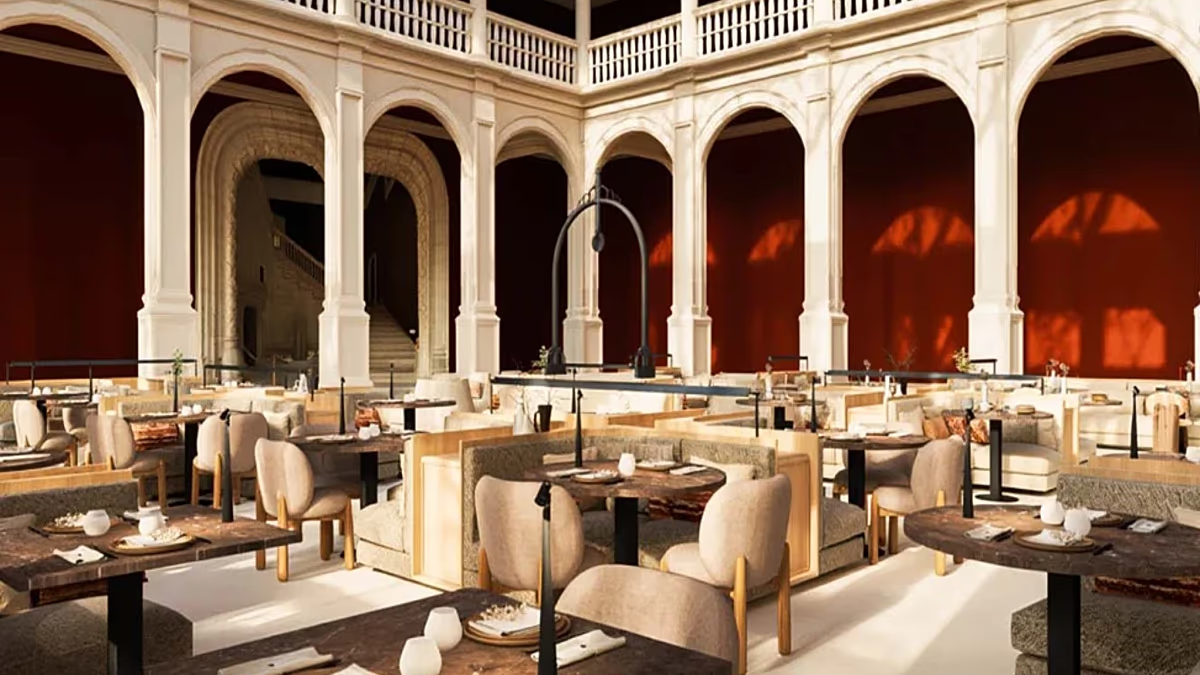
Refreshment in this enchanting setting is an experience in its own right. The hotel is preparing to tempt you with two dining spaces, each with a different personality. The first and centre-piece, called Los Zúñiga Restaurant, sits within the palace’s 16th-century Renaissance cloister. Instead of a typical, stuffy dining room, you eat beneath graceful arches, drifting from the interior to a hidden courtyard where sparrows and the scent of lavender might reach your table. The menu celebrates everything local and seasonal; the kind of food that searches, honors, and then shares the land of Castile and León. Lunches and dinners are deliberately convivial, designed for sharing around a table: an elegant board of local cheeses with quince paste and dried fruit, fresh fish or unsurprisingly local meat, a colorful salad, and a selection of sweet treats to finish. The second option, Condes de Miranda Gastrobar, will appear in due time, offering a more casual place and a menu that will probably play with your expectations. Food comes here is never just sustenance; it is a continuation of the palace’s timeless hospitality.
But with all this history, you may need to unwind. Palacio de Avellaneda is more than just a beauty sleep retreat. In fact, guests are to have a place to restore body and mind, powered by something old and deep: the water. Long, slow-flowing through the heart of this village have been officially declared oligometallic mineral-medicinal and thermal by the Regional Government of Castile and León/Escaña’s authorities. That’s not a random classification; it means that there are real, traditional properties in the water that have been used for centuries to help heal. The spa will make full use of this treasure, offering body all types of body scrubs, an entire landscape for massages, and facials designed to revitalize your skin. It is easy to close one’s eyes and imagine the rest feel leaving your body as the spa therapists work their magic. There are also already in process plans for a thermal pool and a contrast circuit — a more immersive play of carefully cold and warm water that will raise both circulation and mood. For the suddenly health-minded traveler, this means the hotel is not only for lovers of the old distant, but also highly familiar to anyone seeking sanctuary, renewal, and holistic wellbeing.
Also, this sense of care is not limited to the humans. In a very delightful detail, the palace is also a place for four-legged guests—fur-stained family souls. Are you traveling with your dog? No problem. One dog is allowed per room, as long as you book him in in advance. The hotel will treat a welcome pad for sleeping, and there is a dedicated area for walking, ensuring your companion is as happy as you are. There is even a specific dedicated pet menu, with duck, chicken and lamb dishes—food that your dog probably never had in this specific room. It’s these little touches that turn Palacio de Palacio de into a destination, not just a hotel: Five-star luxury is sometimes about great architecture, glossy tiles, or no less; but it is sometimes about personality (even if it is four–pawed). With all of this, what is better in the world than a well-behaved dog lying by your feet in a palace that has survived the centuries? That is a true life experience. This is the story of a Palace that has always existed, waiting for a new digital chapter, and now it is him. All you have to do is check yourself chakka and let the story begin again—what is being validated by its waters, its walls, and its perfectly warm welcome.