






# The Hitachinokuni Long Trail: Japan’s Best Kept Hiking Secret
Japan has always rewarded those who look a little deeper, and now there’s a spectacular reason to trade the bullet train for a pair of sturdy walking boots. The Hitachinokuni Long Trail, Japan’s longest continuous loop hiking route, has officially opened its paths to the public. This 320-kilometer wonderland of a trail took seven years to bring to life, with work first announced back in 2019 through a collaborative effort between the Ibaraki Prefecture and the Hitachi Province Trail Club. The patience and effort have paid off beautifully. The trail opened in September, and it’s already being whispered about in hiking circles as a must-do adventure. What makes it even more appealing is that this vast outdoor playground sits less than a two-hour train ride from the bustling heart of Tokyo. It’s the kind of place where you can leave the neon lights and crowds behind in the morning and be utterly immersed in nature by the afternoon. The loop links together six unique communities—Kitaibaraki, Takahagi, Hitachi, Hitachi Ota, Hitachi Omiya, and Daigo—each with their own personality, history, and local flavor. This isn’t just a walk in the park; it’s a deep dive into a part of Japan that most visitors never get to see. The trail weaves through landscapes that the Japanese poetically call “satoyama,” a term describing those liminal rural spaces where human civilization and untamed nature exist in delicate, beautiful harmony. These are not wild, uninhabited wastes but living, breathing landscapes where communities have coexisted with mountains, meadows, ponds, and rice fields for centuries. It’s a reminder that the true heart of Japan isn’t always found in its neon-soaked cities, but often in these quieter, more contemplative corners.
Now, for those who might feel intimidated by the idea of tackling a 320-kilometer trail, there’s a lot to feel good about. The Hitachinokuni Long Trail isn’t about extreme altitude or battling harsh conditions. The elevation is surprisingly manageable—this isn’t a mountaineering expedition; it’s a hiking holiday. The region’s geography also means heavy snowfall is rarely a problem, making this a genuinely year-round destination. You can walk this trail in spring when cherry blossoms paint the mountainsides in shades of pink and white, in summer when the greenery is so vibrant it almost hurts your eyes, in autumn when leaves turn the hills into a tapestry of red, gold, and amber, or even in winter when a light dusting of snow adds a touch of magic without bringing the trail to a standstill. However—and this is worth repeating—this trail demands respect. It’s not without its challenges. Refuelling points, those essential spots where you can grab a bottle of water, stock up on onigiri rice balls, or take a much-needed restroom break, are few and far between. This isn’t a trail where you can casually pop into a convenience store every few kilometers. You need to plan your supplies carefully and think ahead. Some sections are rugged and rocky, testing your concentration and footing. Then there are the steep slopes that will get your heart rate up in a way no gym workout ever could. It’s a proper challenge, but that’s exactly what makes it so rewarding. There’s a certain satisfaction that comes from conquering a demanding stretch of trail, and this route offers plenty of opportunities for that. It’s a place to test your limits, discover your inner strength, and connect with a side of Japan that feels a world away from crowded tourist hotspots.
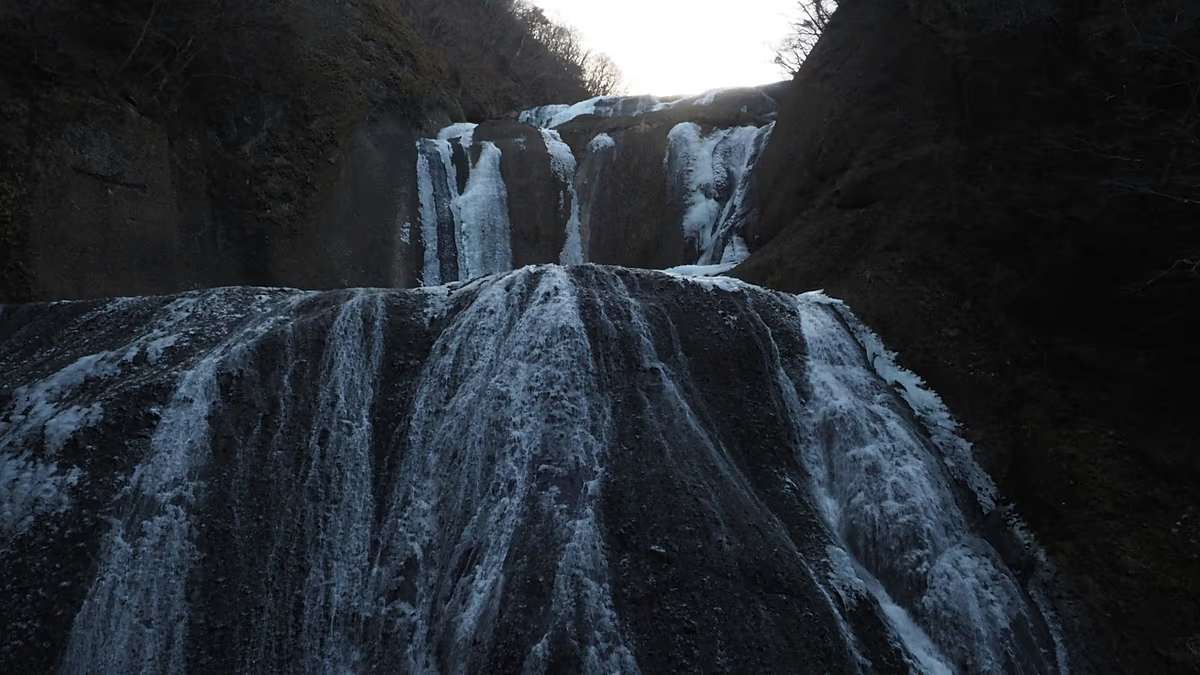
The beauty of the Hitachinokuni Long Trail lies in its flexibility. Because it’s a loop, you can start anywhere, finish anywhere, and tailor the experience to your fitness level, interests, and schedule. The trail is roughly divided into five distinct areas, each with its own character. If you’re an experienced hiker looking for a proper physical test, the Central Area should be your focus. This is widely considered the most challenging section of the entire trail—a relentless series of steep ascents and descents that will have your legs burning and your lungs gasping for air. Located in the Yazimo mountain range on the northern edge of the town of Daigo, this section is not for the faint of heart. It demands stamina, agility, and a good sense of balance. But the effort is amply rewarded. From the heights, you’ll be treated to breathtaking views of the Fukuroda Falls, one of Japan’s most spectacular waterfalls, where water plunges dramatically into the gorge below. You’ll see the rocky peaks of Okukuji Nantaiyama, which jut into the sky like ancient guardians watching over the land, and you’ll wind your way through the Ryujinkyo Gorge valley, where crystal-clear waters have carved their way through rock over millions of years. It’s a landscape that stirs the soul. Meanwhile, the Northeastern portion of the trail offers a completely different flavor. Here, the terrain transitions from mountain to coast. You’ll climb the high peaks of Eizomuro and Hanazono Yama, then descend to the coast where the Kohama and Sasaki beaches offer a welcome opportunity to dip your toes in the water and take a well-earned break. But this area is more than just beaches and mountains. It’s also a journey through time. You’ll walk along the ancient Salt Road, a historic trade route vital to the region’s economy in days gone by, and you’ll encounter the Jikkoku Canal, an engineering feat that has been in continuous use since the Edo period, which lasted from 1603 to 1868. It’s amazing to think you’re walking in the footsteps of traders, travelers, and pilgrims who made this same journey hundreds of years ago.
The Southeastern area, which first welcomed visitors back in 2024, has a slightly more recent but equally fascinating story. This section begins with a climb up the Hananuki Valley, a lush, green sanctuary that feels a world away from everything else. From there, you’ll ascend Mount Tsuchidake, and trust me when I say the view from the top is worth every drop of sweat. The sweeping panorama takes in the surrounding countryside—a patchwork of green fields, meandering rivers, and distant mountains that seem to stretch on forever. The area is also marked by a series of spectacular waterfalls, each one more beautiful than the last, and dotted with historic sites that hark back to a bygone era. One highlight is the Kitadaimon Castle ruins, a site that offers a glimpse into the region’s feudal past and sparks the imagination. What was life like for the samurai who once called this fortress home? What battles were fought here? What stories do these ancient stones have to tell? As you stand among the ruins, you can almost hear the echoes of history. The trail eventually ends at the Kuji River, one of the region’s most important waterways, where the gentle flow of the water provides a calming soundtrack to the final stretch. Then there’s the Southwest area, located in the city of Hitachiomiya. This section takes hikers through mountains teeming with life. The region is a biodiversity hotspot, home to an incredible variety of flora and fauna, including the rare and beautiful Iwauchiwa flowering plants that cling to the rocky slopes. Keep your eyes peeled and you might spot some local wildlife going about their daily business. But the Southwest has a more recent claim to fame too. This area was once home to a thriving gold mining operation, and the remnants of that era add a fascinating historical dimension to the hike. You can almost feel the weight of history as you walk through this landscape, imagining the miners who came here in search of their fortunes over a century ago. It’s a humbling reminder that this land has been important to humans for a very, very long time.
Finally, we come to the Northwest area, centered around the majestic Mount Yamizo. This is a place where history and nature come together in a beautiful and profound way. As you make your way up the mountain, you’ll encounter a series of sacred sites steeped in spiritual significance. The most famous is the Yamizomine Shrine, a place of worship thought to date all the way back to the 1st century. Think about that for a moment. This shrine has been a place of pilgrimage and prayer for nearly two thousand years. Generations upon generations of people have made this journey before you, seeking solace, guidance, and a connection to something greater than themselves. When you walk this trail, you’re not just a tourist; you’re following in the footsteps of countless souls who have found meaning in this sacred landscape. The atmosphere is palpable. You can feel the centuries of devotion that have soaked into the very soil. At the summit, your efforts are rewarded with an unexpected surprise: a castle-shaped observation deck offering truly panoramic views. From this vantage point, you can see all the way to the mountains of Fukushima and Tochigi prefectures—a seemingly endless expanse of peaks and valleys stretching to the horizon. On a clear day, the views are simply awe-inspiring. It’s one of those moments that makes you feel small in the best possible way, a reminder of the vastness and beauty of the natural world. This castle-shaped structure adds a touch of whimsy to the experience, a reminder that hiking doesn’t always have to be serious and grueling. It can also be fun. It can be playful. It can surprise and delight you. And that’s the real magic of the Hitachinokuni Long Trail. It’s not just a physical challenge; it’s a journey through the heart and soul of Japan. It’s an opportunity to connect with nature, delve into history, and discover a side of this incredible country that most tourists will never see.
So, who is the Hitachinokuni Long Trail for? Honestly, it’s for anyone with a sense of adventure and a willingness to step out of their comfort zone. It’s for the seasoned trekker looking for their next great challenge, yes. But it’s also for the casual walker who dreams of doing something a little more ambitious. It’s for the nature lover, the history buff, the photography enthusiast, the soul-searcher. It’s for anyone who has ever looked at a mountain and wondered what lies on the other side. The key, as with any great adventure, is preparation. Before you set out, make sure you’re properly equipped. Invest in a good pair of walking boots that are broken in and comfortable. Bring plenty of water and high-energy snacks, because refuelling points are sparse. Pack a rain jacket, because mountain weather can be unpredictable, and dress in layers so you can adapt to changing conditions. Most importantly, let someone know your plans. Tell them where you’re going and when you expect to be back. But above all, take your time. Don’t rush. The Hitachinokuni Long Trail isn’t a race; it’s a journey to be savored. Stop to smell the flowers. Take a moment to listen to the birdsong. Chat with the locals you meet along the way. Watch the sunset paint the sky in shades of orange and pink. This is what the trail is all about. It’s about slowing down, unplugging from the relentless pace of modern life, and reconnecting with the things that truly matter: nature, history, and the simple joy of putting one foot in front of the other. So, the next time you find yourself in Japan and the crowded streets of Tokyo or Kyoto start to feel overwhelming, remember that there’s a different Japan waiting for you. A Japan of green mountains and rushing rivers, of ancient shrines and timeless traditions, of peaceful beaches and welcoming communities. It’s just a short train ride away, and it’s calling your name. Lace up your boots, pack your bags, and answer the call. The Hitachinokuni Long Trail is open, and it’s waiting for you.