






1. The New Face of Luxury: From Marble to Meaning
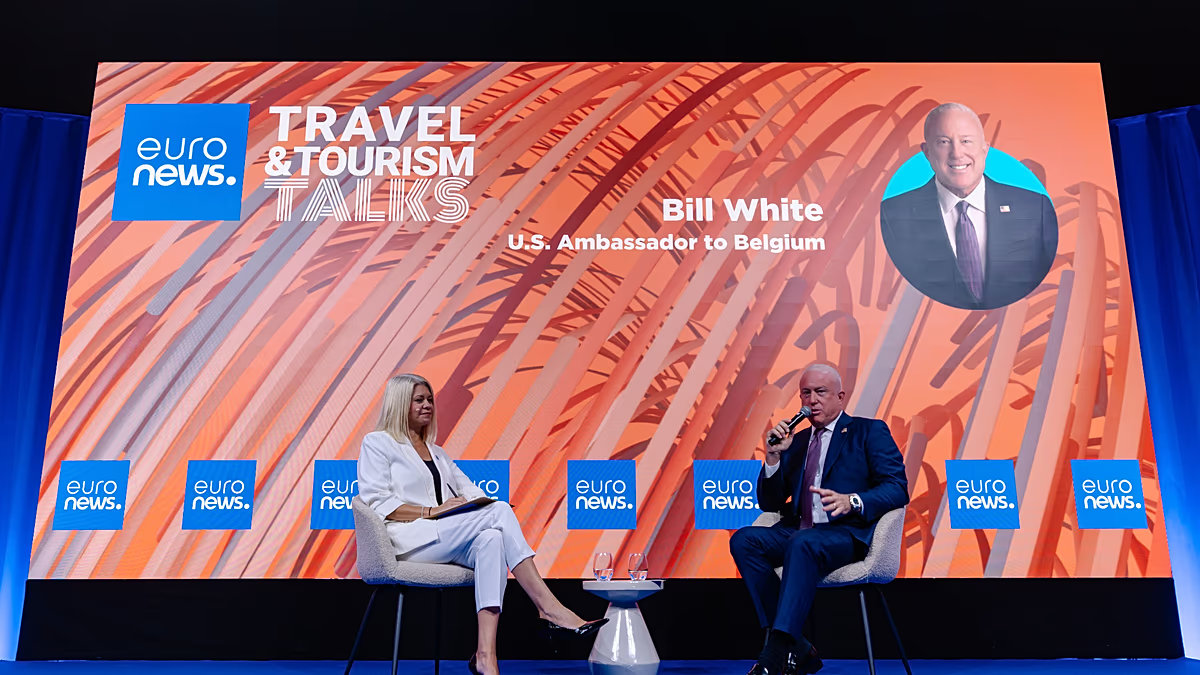
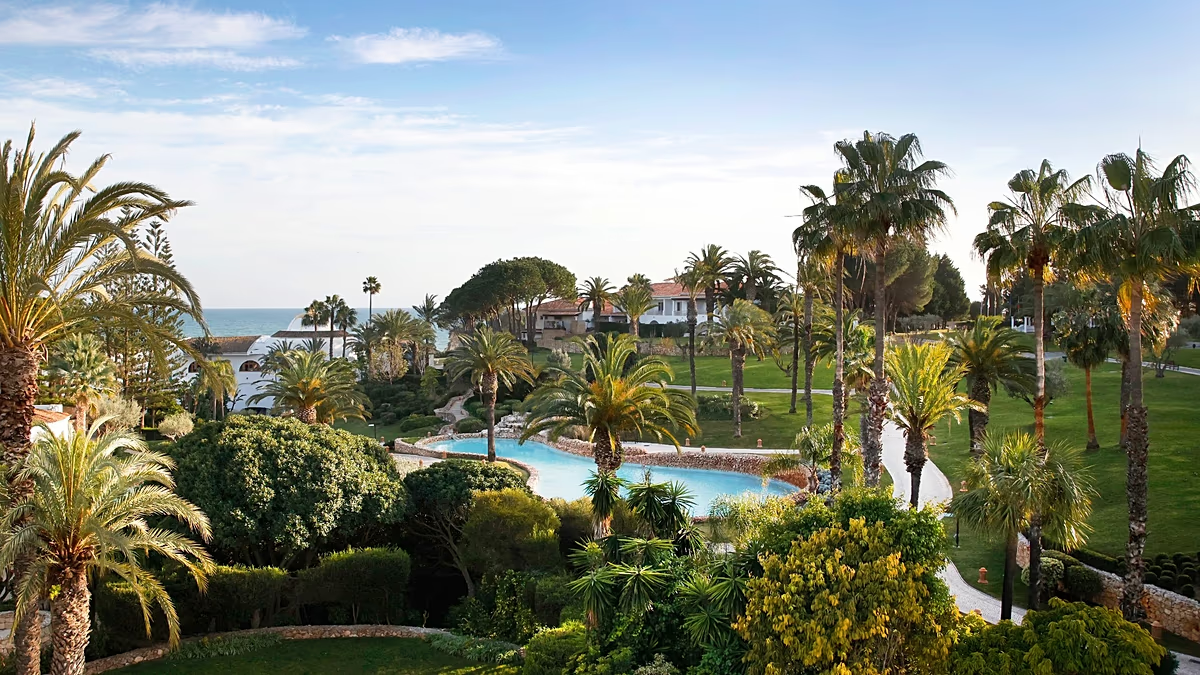
For decades, the very idea of luxury travel conjured images of gilded lobbies, crystal chandeliers, and bathrooms carved from enough marble to build a small Roman temple. It was about excess, grandeur, and the kind of opulence that whispered—or sometimes shouted—”you have arrived.” But if you ask the people who actually define and curate high-end hospitality today, they will tell you that this old-fashioned vision is rapidly fading into memory. At the Euronews Travel & Tourism Summit 2026 in Brussels, Marie-France Perrel, Head of Business Development, Hotels at Michelin Guide, delivered a refreshingly honest message: luxury has changed, and it is no longer about the number of rooms in a property or the square footage of polished stone in a suite. Instead, the new luxury is far more elusive, more personal, and more connected to the world around us. “Luxury today is completely different than what it was,” Perrel said. “It’s no longer the sort of standards of opulence that we had in mind. It’s no longer about the amount of marble you have in a bathroom or the number of rooms in one property.” What travellers now crave is something far more meaningful: a sense of place. They want to stay in properties that feel rooted in their surroundings, that tell a story, that offer a genuine connection to the local culture, landscape, and community. Perrel described this as a “whole ecosystem,” where the hotel, its environment, its food, its people, and its atmosphere all work together to create something holistic and unforgettable. It is a shift from showing off to feeling deeply, from consuming luxury to experiencing it.
2. Food as the Heartbeat of Modern Travel
One of the most powerful forces driving this transformation is food. For years, eating and travelling were treated as two separate pleasures: you went to a destination to see the sights, and then you found a nice restaurant to refuel. But that distinction is dissolving. Today, visitors increasingly consider dining and travel as one seamless experience, and Michelin is seeing this change play out in real-time data. Perrel noted that users searching for hotels in Northern Europe were simultaneously searching for nearby restaurants in the same session, revealing a new kind of traveller who plans their stay around what they will eat. “Before, they were lived as two separate experiences, whereas now we’re seeing that as one experience,” she explained. Beyond simple convenience, there is a rise in what Perrel calls “intentional travel around food.” People are booking entire trips specifically to taste a particular dish, visit a legendary market, or sit down at a restaurant they saw on a television show. They want to walk the streets on food tours, bite into the same authentic pizza they watched someone devour on screen, and immerse themselves in the culinary soul of a place. Food has become a gateway to culture, a way of understanding a destination from the inside out. It is no longer just fuel; it is the main event. This fusion of gastronomy and hospitality is reshaping the hotel industry itself, pushing properties to invest in dining experiences that are not just good, but essential to the identity of the stay. A hotel without a remarkable restaurant, a thoughtful breakfast, or a connection to local chefs now feels incomplete. In the new luxury, the meal is not an afterthought—it is the heartbeat.
3. A Century of Guidance, Reinvented
Michelin’s relationship with travel is not a recent experiment. It goes back more than a hundred years, to 1900, when the first Michelin Guide was published in France. The original purpose was wonderfully practical: encourage motorists to hit the road by giving them useful information about where to eat and sleep along the way. In 1926, Michelin began awarding stars to restaurants, and those stars quickly became the global benchmark for culinary excellence. Hotels have appeared in the guides for decades, but in 2024, Michelin took a bold step forward by introducing the “Michelin Key” distinction—a dedicated methodology designed to identify and celebrate outstanding hotel experiences. It was a recognition that the world of hospitality had evolved beyond the traditional star system, and that travellers needed a new kind of guidance to navigate the increasingly diverse landscape of luxury. The 2026 global selection is a testament to that vision. It includes 2,832 Michelin Key hotels across 79 destinations, with 2,020 receiving one key, 657 receiving two keys, and 155 achieving the rare and coveted three keys. This year alone, 470 hotels joined the selection, and 18 received three keys for the first time. These numbers reflect not just the expansion of the program, but the growing complexity of what makes a hotel truly exceptional. Michelin’s inspectors are looking beyond surface-level amenities, evaluating everything from architecture and design to service, authenticity, and the emotional resonance of the stay. The result is a guide that feels both authoritative and deeply human, a road map for travellers who want more than a place to sleep—they want a place to feel.
4. The Meaning of the Keys: A Spectrum of Extraordinary
For those unfamiliar with the system, the Michelin Keys are designed to be intuitive and aspirational. One key represents a “very special stay,” a hotel that stands out for its character and quality. Two keys signify an “exceptional stay,” where the experience is elevated to something memorable and distinct. Three keys are reserved for the highest level—an extraordinary stay that provides the ultimate experience. Perrel described it vividly: “This is like the trip of a lifetime type of situation.” But what makes these keys so refreshing is that they do not impose a single definition of luxury. Michelin’s hotel portfolio ranges from grand, historic palaces to independent boutiques and secluded retreats. There is no cookie-cutter template, no checklist of required amenities. “What I love about it is that it’s not cookie-cutter,” Perrel said. “Luxury doesn’t look one way. It’s a broad spectrum.” A tiny eco-lodge in the mountains can be just as worthy of a key as a five-star resort on the coast, as long as it delivers an experience that is authentic, immersive, and deeply felt. This is a profound shift in how we think about high-end travel. It democratizes luxury, making it accessible not only to those who can afford opulence, but to those who seek meaning. It also challenges hotels to be more than just beautiful spaces—they must be storytellers, curators, and hosts who understand that true luxury is about how a place makes you feel, not how it looks in a brochure. The key is not a stamp of approval for extravagance; it is a recognition of soul.
5. A Simple, Radical Piece of Advice
At the end of her session at the Euronews summit, Perrel was asked for one piece of advice for travellers choosing a hotel for their next holiday. Her answer was simple, yet surprisingly radical: look at the trip “backwards.” Instead of choosing a destination and then finding a hotel, she suggested choosing the hotel first. “Try to think of your next trip in a different way and instead of choosing a destination, choose a hotel first,” she said. “You don’t look at the destination, but look at a hotel that speaks to you and then go to that place.” This advice flips the traditional travel planning process on its head, and it makes perfect sense in the context of the new luxury. If a hotel is truly a destination in itself—a place with its own personality, its own culinary identity, its own connection to the surrounding landscape—then it deserves to be the starting point of the journey. You are no longer just picking a place to stay; you are choosing an experience, a mood, a way of being. A hotel that “speaks to you” might be a restored farmhouse in Tuscany, a minimalist retreat in the Japanese countryside, or a historic townhouse in Lisbon. When you let that connection guide your travel, the destination becomes a secondary character in a story led by the hotel. This is the essence of intentional travel: not checking off sights, but curating moments. It is an invitation to slow down, to listen to your own instincts, and to trust that the right place will lead you to the right experience. In a world of endless choice and overwhelming information, it is a refreshingly human way to decide where to go next.
6. The Future of Luxury Is Personal
So what does all this mean for the future of travel? It means that luxury is no longer a fixed standard, but a deeply personal experience. It means that the most valuable currency in hospitality is not gold or silk, but authenticity and emotional connection. Travellers today are more discerning, more curious, and more willing to spend on experiences that enrich their lives rather than simply impress their peers. They want to come home with stories, not just souvenirs. They want to feel that they have touched something real—a culture, a landscape, a community, a cuisine. This is why food has become so central, why wellness is no longer just a spa add-on, and why the best hotels are those that act as portals to their destinations rather than insulated bubbles of comfort. The rise of the Michelin Key is a signal that the industry is paying attention, that excellence is being redefined around the qualities that actually matter to modern travellers. It is also a reminder that the old rules no longer apply. You do not need marble to be luxurious. You do not need a hundred rooms to be grand. You need a point of view, a sense of place, and the ability to make a guest feel seen, welcomed, and transformed. As Perrel’s advice suggests, the journey begins with a feeling—a hotel that speaks to you. And if you listen, that feeling will guide you to places you never expected to find, and perhaps, to a version of yourself that is more open, more connected, and more alive. In the end, that is the true luxury: not the destination, but the way it makes you feel along the way.