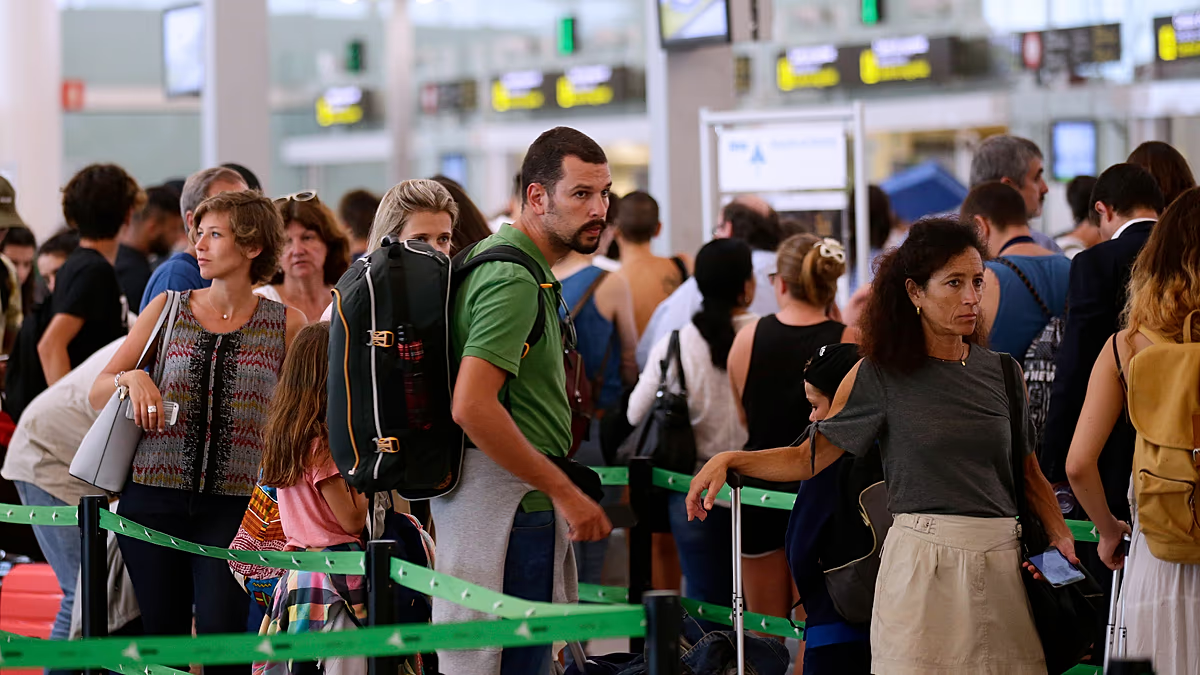







Imagine stepping off a long-haul flight to New York, exhausted and eager to begin your American adventure. The last thing you want is to stand in a long, slow-moving customs line, clutching your passport and wondering if you will ever make it to your hotel. That familiar travel stress could soon be a thing of the past for Belgian travelers. At the Euronews Travel & Tourism Summit 2026 in Brussels, the United States Ambassador to Belgium, Bill White, made a genuinely exciting announcement during a one-on-one conversation with summit host Jane Witherspoon. Belgians are on track to join the Global Entry program, a trusted traveler initiative that allows pre-approved, low-risk passengers to move through U.S. customs and border control much faster. Ambassador White revealed that President Donald Trump had personally approved the move, and the ambassador did not hide his enthusiasm. “I’m very happy about it,” he said. He also explained that the next step is completing the necessary paperwork with Belgian authorities. Foreign Minister Maxime Prévot is personally leading the effort, and White expressed confidence that everything could be finalized by the end of 2026. For ordinary travelers, this is more than good news — it is a promise that the very beginning of a trip to the United States can feel calm, welcoming, and even enjoyable. No more frantic digging for documents, no more watching the minutes tick by, no more exhaustion before the journey has truly begun. Instead, Belgian visitors may soon experience the kind of smooth, efficient arrival that makes a trip feel special from the moment they land.
For those unfamiliar with Global Entry, the benefits are substantial. Operated by U.S. Customs and Border Protection, the program is designed for people who have already been vetted and approved as low-risk travelers. Instead of waiting in the regular customs line, members use automated kiosks at major U.S. airports, answer a few quick questions, scan their fingerprints, and walk through. The process takes minutes rather than hours. A membership costs $120 and lasts for five years, and it also includes access to TSA PreCheck, which makes domestic flights easier by allowing travelers to use faster security lanes without removing shoes, belts, or light jackets. Currently, the program is available only to American citizens and permanent residents of the United States, so opening it to Belgians would be a significant step forward. It would put Belgian travelers on the same footing as citizens of a few other trusted countries, recognizing their reliability and strengthening the ties between the two nations. Ambassador White said he is working closely with the Belgian government to get the paperwork in order, and he made it clear that the political will is there on both sides. The fact that the foreign minister is personally involved suggests this is not just a technical formality, but a relationship that matters on both sides of the Atlantic. For frequent flyers, business travelers, and families visiting relatives, this change could make all the difference in how they experience the United States.
The announcement came during a summit that celebrated the enormous flow of people between Europe and America. Pedro Vargas David, Chairman of Euronews, opened the event by highlighting a remarkable statistic: last year, 25 million Americans traveled across Europe, setting a new record. In the opposite direction, Ambassador White shared that the United States had welcomed 80 million international tourists. These are not just numbers — they represent family reunions, business deals, student exchanges, honeymoons, and countless moments of discovery. For White, travel is about much more than airports and border control. During his conversation, he spoke warmly about one of the things he loves most about travel: when people get to meet people. “That’s where the magic happens,” he said. It is a simple idea, but a profound one. Governments negotiate treaties, businesses sign contracts, and airlines sell tickets, but the real value of travel lies in human connection. When a visitor from Brussels shares a meal with a family in Texas, or when an American student walks through the streets of Ghent, something changes. Stereotypes fade, curiosity grows, and the world becomes a little smaller and friendlier. In that sense, Global Entry is not just a convenience; it is a diplomatic tool that makes these connections easier, smoother, and more accessible to ordinary people.
Ambassador White also shared his personal philosophy about where to go once you arrive. While he acknowledged the appeal of New York, Washington, D.C., and Los Angeles, he encouraged travelers to look beyond the famous landmarks and discover the real America. He said he loves when visitors venture off the beaten path and explore places that are not overcrowded with tourists. His advice was delivered with typical American warmth: “Take a hike in Utah — you’ll be happier than when you went to New York.” It may sound like a cheeky comment, but his point was genuine. Utah’s red rock landscapes, national parks, and wide-open spaces offer a kind of beauty that cannot be captured in a postcard from Times Square. He also reminded the audience that Belgium is much more than waffles and chocolate. The country, he said, is full of hidden gems, charming towns, and rich culture that deserve more attention. His appreciation for the smaller, quieter wonders of travel made his message feel personal and heartfelt. He was not just speaking as a diplomat promoting his host country; he was speaking as a traveler who genuinely believes that the best experiences often happen when you leave the guidebook behind and follow your curiosity. Whether it is a desert trail in Utah or a village café in the Ardennes, the magic of travel lies in letting yourself be surprised.
Looking ahead, White turned his attention to the future of the United States as a host of major global events. He said he was excited about the 2028 Olympic and Paralympic Games, which will take place in Los Angeles, and he welcomed the opportunity to see the Games return to American soil. He did, however, laugh about the city’s notorious traffic, a small confession that made him more relatable. It is easy to imagine him shaking his head at the thought of gridlocked freeways, despite his enthusiasm for the event. He also reflected on the recent FIFA World Cup 2026, which the United States co-hosted with Mexico and Canada. That tournament gave visitors from around the world the chance to experience American culture firsthand, in all its messy, vibrant, and joyful forms. White recalled a viral video of a visitor happily enjoying an American hot dog during the tournament. It was a small, unremarkable scene, but it captured something essential about travel: the pleasure of trying something new, laughing with strangers, and going home with a story that does not exist in any guidebook. These events, he suggested, are not just sporting competitions. They are invitations for the world to come and see what America is really like, beyond the headlines and the stereotypes. And for Americans, they are opportunities to learn from the world in return.
The promise of Global Entry, then, is about much more than skipping a line at the airport. It is a signal of trust, a gesture of friendship, and a recognition that travel should feel human. Ambassador White’s announcement at the summit was delivered with genuine warmth, and his confidence that the program could be finalized by the end of 2026 offers real hope to travelers who have grown tired of airport chaos. He left no doubt that the approval from President Trump, combined with the personal involvement of Belgium’s foreign minister, means this is a priority on both sides. But beyond the logistics and the paperwork, there is a deeper story. Every time a traveler passes through customs quickly and easily, the world feels a little more open. Every time someone discovers a place they had never considered before, a hidden trail or an unfamiliar city, they become a kind of ambassador themselves. White captured this beautifully when he said that meeting people is where the magic happens. In the end, travel is not just about moving from one place to another. It is about arriving somewhere with an open heart, ready to connect, explore, and be changed. And if Global Entry can make that arrival a little smoother, it is a welcome step in the right direction for Belgians, Americans, and everyone who believes that the journey is just as important as the destination.