





Paragraph 1: The Fall from Grace and the Lonely Grind
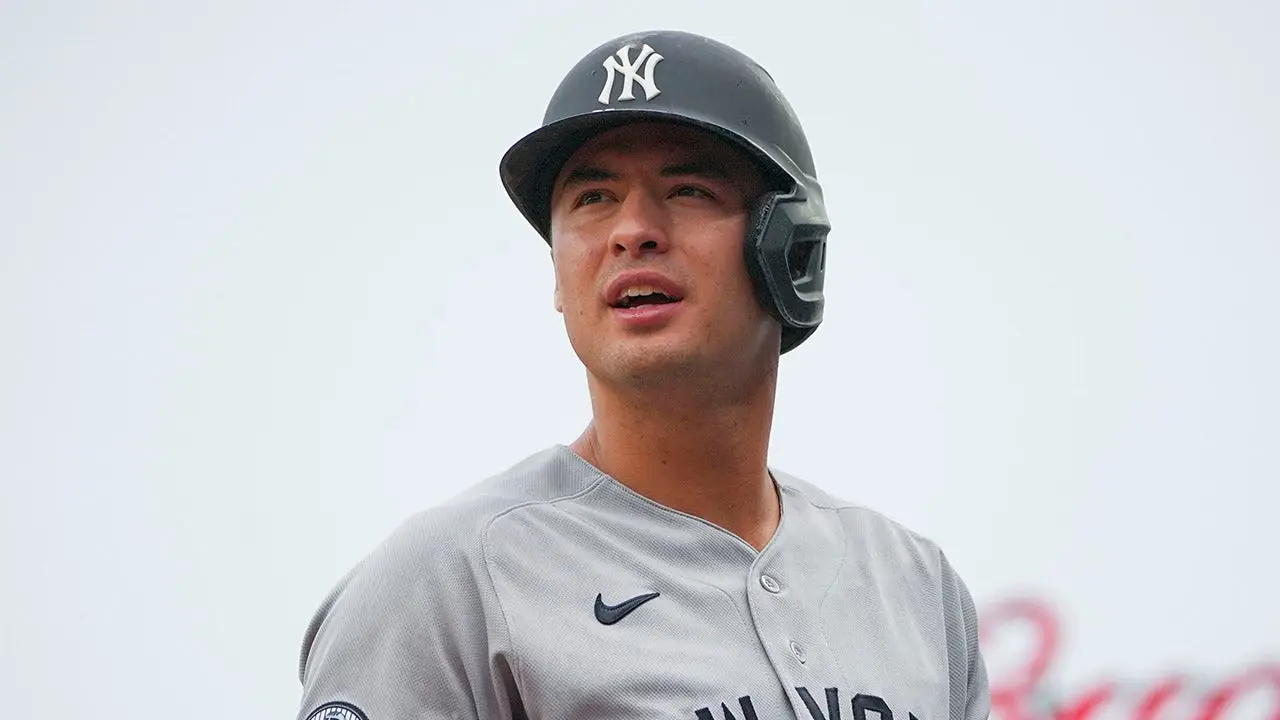
The air in Scranton smells different than it does in the Bronx. Gone are the roaring crowds, the bright lights of Yankee Stadium, and the weight of a legacy that comes with wearing the pinstripes. In their place are the humid, quiet afternoons of Triple-A baseball, where the grass is still green, but the stakes feel oddly both lower and unbearably higher for those who have tasted the big leagues. Anthony Volpe, the once-anointed heir to the shortstop throne in New York, is currently navigating this lonely, humbling landscape. His recent demotion was not just a statistical adjustment; it was a profound psychological gut punch, a stark reminder that potential fades quickly when results don’t follow. He arrived in Scranton with a chip on his shoulder and a fire in his belly, desperate to prove that his early-season struggles were a fluke, a mere blip in an otherwise promising career. On the surface, he has been making a compelling case for a swift return. He has been raking since his arrival, tallying an impressive seven hits in twenty-three at-bats, including a double, a triple, and a home run, with at least one hit in every game he has played. The numbers scream that he belongs in the majors, that his bat is waking up. Yet, beneath those stats lies a fragile mental state, a bubbling cauldron of anxiety and frustration that is threatening to boil over at any moment. The game on Wednesday against the Lehigh Valley IronPigs, a team with a name that sounds like a discount butcher shop, served as a brutal microcosm of his entire season—a confusing mixture of patient discipline, catastrophic judgment, and the cruel, unforgiving irony of baseball’s new automated ball-strike (ABS) system. It was a day that exposed the raw, unfiltered humanity of a young man fighting against his own expectations, the organization’s doubts, and the ticking clock of his own career.
Paragraph 2: The ABS Meltdown—A Catastrophic Spiral
The disaster of Volpe’s night began, appropriately, at the very start of the game, in his very first at-bat. He watched the first three pitches sail by, each one missing the zone, and felt a wave of confidence wash over him. The pitcher was wild, and Volpe, a player who had actually managed to maintain a healthy walk rate even during his major league struggles, knew he had the discipline to wait for his base. Then came pitch number four. It was borderline, perhaps clipping the outer black, but Volpe was convinced it was off the plate. He held his ground, trusting his eyes, and felt a surge of satisfaction as the ball hit the catcher’s mitt. But the umpire’s call was a strike. Volpe’s disbelief turned to instant, searing frustration. Without hesitation, he tapped his helmet, the universal signal for a challenge, desperate to get the call overturned and start his night on the right foot. The replay, that cold, unfeeling machine, stared back at him. The pitch had just clipped the corner. He was wrong. The challenge was lost. Now, on the very next pitch, Volpe was in a mental quagmire. The pitcher threw an offspeed pitch that looked even more egregiously outside—a ball so obvious that a Little Leaguer would have taken it without blinking. But in the split-second chaos of his mind, Volpe froze. He couldn’t swing, terrified of missing a bad pitch and looking foolish. Yet he also couldn’t take the risk of letting another pitch go and being called a strike, fearful that the umpire was now squeezing him after the challenge. He watched the ball float by, motionless, paralyzed by indecision. The umpire’s voice rang out: “Strike three!” Volpe was incredulous. He pointed at the dugout, tapped his helmet again, and issued a second challenge, a desperate gambit born of pure panic. The replay confirmed what everyone else already knew: the pitch was laughably outside the zone. He had lost his second challenge, and the umpire, with a cold mechanical tone, signaled that the RailRiders had exhausted their challenges for the entire game. In the span of a single, excruciating at-bat, Volpe had not only struck out and made a farce of his discipline, but he had also wiped out his entire team’s ability to contest any other call for the rest of the night. It was a catastrophic failure of judgment, a perfect storm of emotion and panic that highlighted his current fragility better than any stat sheet ever could.
Paragraph 3: The Aftermath, A Fleeting Redemption, and the Weight of Inconsistency
The walk back to the dugout was an exercise in silent agony. The sparse crowd in Scranton didn’t boo him, but the oppressive silence felt worse, a judgment on his pathetic sequence. He had not just struck out; he had surrendered. He let his anger and fear dictate his actions, resulting in an embarrassing display that would be replayed across sports highlight shows, not for his athletic prowess, but for his mental collapse. He had one shot to redeem himself in the game, and he managed to fire a triple into the gap later in the night, a flash of the elite athleticism and raw talent that made him a top prospect. For a moment, the world made sense again. But the baseball gods are cruel. The RailRiders were blown out, losing 11-3, rendering his impressive triple completely meaningless in the grand scheme of the game. Yet, if we step back and look at his overall production since the demotion, the picture is confusingly rosy. A .304 batting average in his five games back is objectively excellent. However, this statistical comfort only deepens the psychological mystery of his major league failures. In the big leagues this year, he was hitting a mediocre .240, but his on-base percentage was a career-high .325, indicating that he was seeing the ball well and taking his walks. But the power had completely evaporated. His slugging percentage was an abysmal .322, the worst of his career, and he had managed to hit only one home run in fifty-six games. It is maddening for a hitter who once projected as a five-tool player. He is caught in a no-man’s-land between being a disciplined table-setter and a feared run-producer, and he is currently neither. He is a puzzle with missing pieces, trying to jam the wrong shapes into the wrong slots, and the frustration of that struggle is suffocating him, leading to moments like the ABS debacle where he tries to force an outcome that simply isn’t there.
Paragraph 4: The Cruel Contrast with Lombard and the Shifting Tides
Adding a layer of sadistic irony to Volpe’s misery is the glowing ascendancy of his replacement, George Lombard Jr. The Yankees, deciding that Volpe’s inconsistent bat wasn’t worth the defensive stability he provided, sent him down to make room for their new shiny object. Lombard is currently living the dream, hitting a scorching .320 with a jaw-dropping .953 OPS in his first seven Major League games. He carries the swagger and effortless pop that Volpe displayed in spring training years ago, before the weight of expectation crushed him. The baseball universe has a sick sense of humor, and it was on full display just a couple of nights prior to Volpe’s catastrophe. In a game, Lombard faced two strike-three calls he didn’t agree with. He challenged both, won both challenges, and extended his at-bat, eventually drawing a walk. The contrast is blinding. The new kid is being rewarded for his aggression and confidence, while the former prodigy is being punished for his hesitation and paranoia. For Volpe, watching this narrative unfold from the obscurity of Scranton is a psychological gauntlet. He sees the headlines praising “the next generation,” watches the Yankees’ social media accounts celebrate Lombard’s every achievement, and knows, deep down, that his own failures opened the door for his replacement. It isn’t jealousy that consumes him; it’s a profound, paralyzing sense of inadequacy. He begins to question whether he ever truly had the “it” factor, whether the mystique of being the Yankee shortstop was simply too heavy a burden. While Lombard is meeting the moment with effortless grace, Volpe is stuck in a minor league dugout, fighting his own demons, losing to a team ironically named the IronPigs, a moniker that feels like a cruel mockery of his own diminishing status in the organization’s pecking order.
Paragraph 5: A Positional Identity Crisis and the Test of Character
Perhaps the most telling indicator of Volpe’s evolving—and potentially shrinking—future doesn’t come from his bat or his failed challenges; it comes from where he lines up in the field. Since being dispatched to Scranton, Volpe has been diligently taking ground balls at second base. This subtle but significant organizational move is the Yankees screaming their intentions without saying a single word. They are preparing him for a future that may not include the anchor position of shortstop. For a player who has identified himself as a shortstop since he was a child, this is an existential crisis. Shortstop is the glamour position, the domain of legends like Jeter, the leader of the infield who makes the flashy plays look routine. Second base, by contrast, is often viewed as a refuge for solid but unspectacular players, a spot for slap hitters with decent range but weaker arms. The shift forces Volpe to confront a painful question: “Am I no longer good enough?” It chips away at his identity, making him feel as though he is being demoted within a demotion. However, this test also reveals his character. He cannot throw a tantrum, demand a trade, or pout in the corner of the clubhouse. He must swallow his immense pride, strap on the second base glove, and learn the unfamiliar footwork of turning double plays from a different angle. It requires a level of professional maturity that goes beyond his years. The Yankees are gauging his reaction. They want to see if he will be selfish and dismantle under the weight of this perceived insult, or if he will buy into this new plan, embracing utility versatility as a path back to the Bronx. It is a test of adaptability, resilience, and sheer grit. It asks him to accept that his path to the majors is no longer a straight line, but a winding, difficult road that requires him to shed his ego and become a soldier for the team, even if it means sacrificing the dream that once defined him.
Paragraph 6: The Final Reflection—A Long Season of Redemption
Ultimately, Anthony Volpe’s current story is profoundly human, stripped of the glitz of the Major Leagues and exposed for what it truly is: a raw, gritty battle against failure and doubt. The ABS challenge debacle is the perfect metaphor for his entire season. He saw an opportunity, gambled on his own conviction, lost spectacularly, then froze in the aftermath of that loss, leaving himself and his team without any lifelines before the game had even properly begun. But baseball, in its beautiful cruelty, offers immediate absolution—there is always another game, another at-bat, another pitch to try to get it right. His hitting streak since the demotion proves that his talent remains intact. He is not broken; he is rebuilding. He is learning that a career is not a linear ascent but a series of detours and setbacks, and that being sent down does not define his worth, but rather tests his resolve. As fans, we watch these narratives unfold from our couches, often forgetting that athletes are not robots—they are young men wrestling with anxiety, pride, and the deep, primal fear of being forgotten. Anthony Volpe is in the depths of that struggle right now, challenging an automated strike zone with doomed judgment, battling the whispers of his own insecurity, and trying to reconcile the player he was projected to be with the one he is becoming. Whether he returns to the Yankees as a shortstop, a second baseman, or a utility man, one thing is certain: he is accumulating hard-earned wisdom that no spring training can provide. He is learning that the wildest pitches are the ones you watch in the rearview mirror, and that the only way out of a slump is through it. For now, he is just a baseball player trying to survive the night, hoping that the next challenge, and the next pitch, finally goes his way. Follow Fox News Digital’s sports coverage to track how this gritty comeback continues to unfold.