






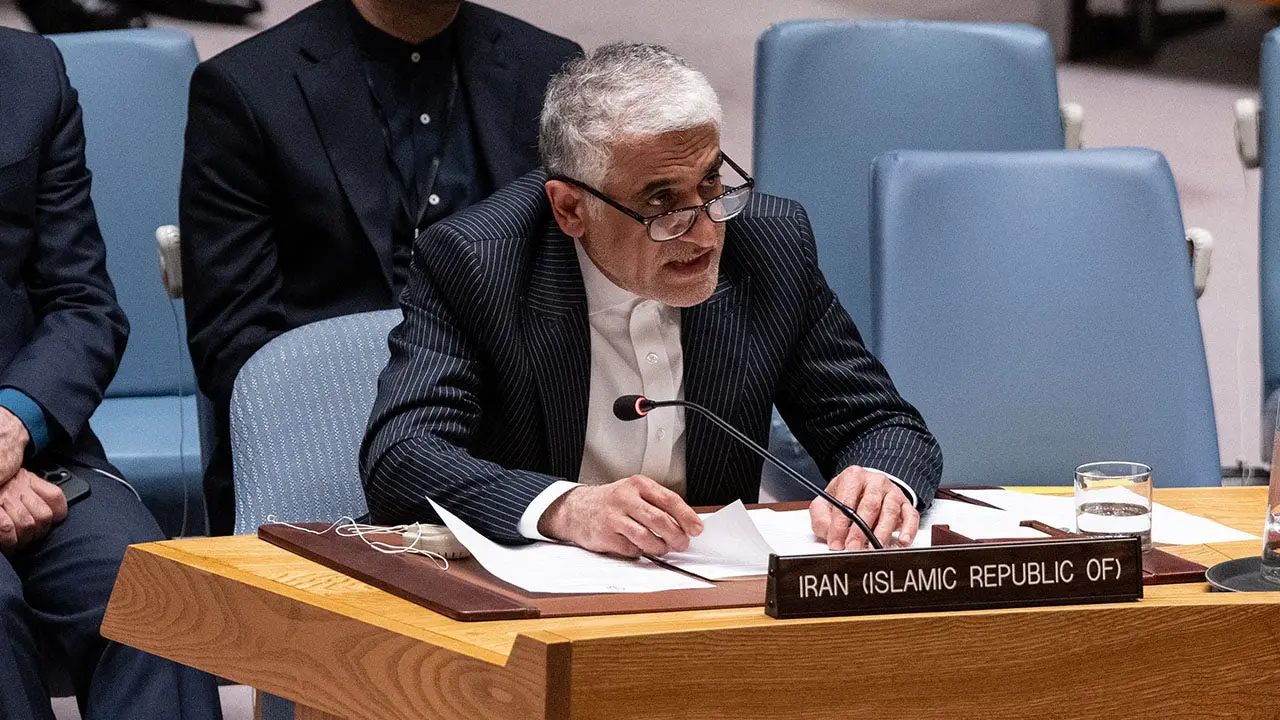
In the rarefied corridors of the United Nations, where the shimmering promise of international cooperation often meets the gritty reality of global power politics, a deeply uncomfortable irony is about to unfold. Later this November, the UN General Assembly will cast its votes to fill seats on the Committee for Programme and Coordination (CPC), a crucial 34-member body responsible for overseeing the UN’s administrative and budgetary frameworks, ensuring that the sprawling organization runs efficiently and that its vast programs—from humanitarian aid to gender equality initiatives—are actually executed as intended. This committee, while not directly drafting human rights treaties or issuing public condemnations of abuses, wields significant behind-the-scenes influence over how the UN’s global operations are ultimately managed and deployed. And poised to take a seat on this influential committee is the Islamic Republic of Iran, a nation that was formally nominated by the UN’s own Economic and Social Council (ECOSOC) after a vote back in April. For critics, diplomats, and human rights advocates, this nomination is not just a diplomatic embarrassment; it is a moral affront that flies in the face of the UN’s founding principles. The expectation that the upcoming vote will pass “as a formality”—a phrase used with weary resignation by those who follow UN procedure—speaks volumes about the current state of the multilateral system. How did a government that hangs protesters in public, suffocates women with mandatory hijab laws, and provides lethal funding to terrorist militias reach this point of institutional acceptance? The answer lies in the quiet arithmetic of bloc voting, where regional solidarity and diplomatic horse-trading outweigh moral outrage. But to fully grasp the gravity of this situation, one must first understand exactly who is being welcomed into this esteemed administrative body and what their documented record on human rights actually looks like.
The Iranian people have endured a decade of escalating state violence, a systematic dismantling of civil liberties that reached its apex during the “Woman, Life, Freedom” uprising that erupted in the autumn of 2022, following the brutal death of Mahsa Amini, a young Kurdish-Iranian woman who was beaten and killed by morality police merely for the audacity of wearing her hijab improperly—for showing a few strands of hair. The regime’s response to these nationwide protests was not measured reconciliation, but rather a ruthless and violent crackdown involving mass surveillance, arbitrary arrests, torture, and a chilling willingness to deploy lethal force against unarmed civilians. The horror of this state-sanctioned brutality was placed in stark relief just recently when two men were publicly hanged, their executions carried out not in secret misery but as grotesque spectacles calculated to terrorize the population into submission. As the hangmen prepared their grim work, security forces fired tear gas at the crowds that had gathered, many of whom cried out “dishonorable!” at the executions—a desperate accusation flung toward a regime that has normalized barbarity. For every individual who was executed, hundreds more remain imprisoned in squalid cells, tortured for the “crime” of demanding basic dignity, and their families live in a constant state of fear of midnight knockings and forced disappearances. Yet, despite this documented history of abuses—which includes state-mandated restrictions on women’s dress, pervasive internet shutdowns to silence dissent, the targeting of journalists, and the persecution of religious and ethnic minorities—the international community now prepares to hand this regime a seat on a body that oversees the very administration of UN human rights programs. The sheer cynicism of this decision is staggering. To place the lives of these victims in perspective, one must consider that Iran’s execution rate is among the highest per capita in the world. In just the past year, hundreds of protesters have been sentenced to death in mass trials held behind closed doors. And yet, despite all of this, the regime smiles, casts its votes within regional blocs, and secures a position of influence over the institutional machinery that is meant to protect the same people it oppresses.
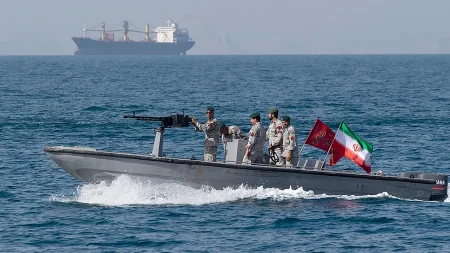
Beyond the appalling domestic record, Iran’s elevation to the CPC would grant international administrative influence to a nation that actively destabilizes its neighbors and bankrolls terrorism across the Middle East. For decades, Tehran has served as the world’s primary state sponsor of terrorism, providing sophisticated weaponry, financial backing, and tactical training to a constellation of proxy militias, most notably Hezbollah in Lebanon and Hamas in Gaza. These groups are not mere political parties; they are designated terrorist organizations by numerous Western governments, responsible for the deaths of thousands of civilians through suicide bombings, rocket attacks, and hostage-taking. Furthermore, Iran has not hesitated to engage in aggressive military actions against neighboring Gulf states and international targets, launching ballistic missile strikes and drone attacks that have threatened regional peace and brought the world to the brink of a wider conflict. The irony is not lost on observers that Iran—a nation that has attacked its sovereign neighbors, ruthlessly shot down civilian aircraft in the past, and repeatedly violated UN Security Council resolutions regarding its weapons programs—now seeks a seat on a committee meant to ensure the smooth functioning of the United Nations’ global programs. Hillel Neuer, the executive director of UN Watch, articulated the absurdity of this situation with cutting precision when he told Fox News Digital that Iran is “the last government in the world that should have any influence.” Neuer’s frustration echoes across the diplomatic community, where many feel that Tehran has transformed its membership in international bodies into a shield for its crimes, using procedural votes to legitimize its aggressive actions while delegitimizing the very institutions it seeks to join. Granting Iran a seat in the CPC sends a deeply harmful message to the region and the world: that human rights abuses and terrorism are not disqualifying factors for holding the reins of UN administrative programs, and that state-sponsored violence carries no institutional consequence.
Neuer’s most striking condemnation of this situation came in a starkly evocative phrase, invoking George Orwell’s dystopian vision of a world turned upside down: “Sadly, at the United Nations today—an organization founded after World War II out of great idealism to bring international peace—it is a case of the lunatics running the asylum.” This bitter observation cuts to the very heart of the crisis facing the international body. Founded on the ashes of the Holocaust and the devastation of a global war, the UN was designed to be the ultimate moral arbiter—a place where human rights are universal and where aggressors are held to account. Yet, year after year, regimes with grotesque human rights records are elected to key committees, their votes often determining the fate of resolutions aimed at protecting vulnerable populations. When a state that forcibly suppresses women is given a seat on a committee that oversees the UN’s gender equality programs, the Orwellian contradiction becomes glaringly apparent. Neuer elaborated further, pointing out the structural rot within the organization itself. He starkly noted the divide between the UN’s aspirational language—which speaks constantly of “human rights, democracy, freedom, equality”—and the actual composition of its membership, asserting bluntly that “at least half the U.N. is made up of dictatorships.” This is not hyperbole; it is a statistical reality. Nations ruled by absolute monarchies, military juntas, revolutionary councils, and autocratic presidents all hold seats and votes, effectively neutralizing the body’s ability to serve as a global conscience. The administration of UN programs, therefore, becomes a bureaucratic exercise in appeasing these autocrats, rather than serving the voiceless. Iran’s pending entry is simply the latest manifestation of this systemic disease—a stark reminder that the machine designed to protect human dignity now routinely grants its most influential levers to the very tyrants who oppress it, turning the promise of “never again” into a hollow echo.
The situation becomes even more galling when one examines the UN’s blatant double standards regarding conflict and human rights across the globe. The organization has repeatedly and severely criticized Israel’s military actions in Gaza, issuing a cascade of resolutions, reports, and legal actions highlighting civilian casualties and alleged human rights violations. Yet, when it comes to Hamas—the designated terrorist group that initiated the current conflict through a brutal massacre of civilians and continues to hold hostages—the UN has historically failed to pass formal condemnations, instead opting for vague calls for “restraint” on both sides. This selective outrage fundamentally undermines the credibility of the body’s human rights machinery. Neuer, who has worked on these issues for decades, highlights this asymmetry as a key driver of the diplomatic rot. When Israel is placed on special blacklists for alleged human rights violations while Hamas is given a free pass, and when Iran executes dissidents and faces no consequences whatsoever, it signals to the world that human rights are not universal principles, but rather political tools wielded arbitrarily against the West and its allies. The fact that Iran sits at the nexus of this dysfunction and is now set to join an administrative body that coordinates these very UN policies is a bitter pill to swallow. It means that the regime will have a direct hand in the procedural execution of UN humanitarian oversight, including potentially shaping how relief is distributed in conflict zones where its own proxies are actively fighting. For the families of victims in Israel, in Gaza, in Iran, and across the entire region, the perception is clear: the UN is no longer a refuge for the persecuted, but rather a stage designed for the persecutors. The organization that was supposed to be the last resort for the world’s most vulnerable has instead become a revolving door for its most brutal oppressors.
So, how does this happen? Logically, Western democracies—who dominate the UN’s financing and profess a deep commitment to human rights—should be the first to block Iran’s bid. Yet, Neuer points to a deeply disillusioning truth: “The short answer is interests, cynicism, politics, dealmaking, and a culture of ‘go along to get along.’ If you are the French, Canadian, or German ambassador, you don’t want to pick a fight with dozens of countries or trigger friction with Iran. They would rather simply avoid it.” This diplomatic cowardice is the ultimate engine driving the UN’s moral bankruptcy. Unwilling to expend political capital, nervous about economic ties, and fearful of retribution from Iranian-allied blocs, Western nations routinely abstain or quietly vote in favor, allowing Iran’s seat to be secured with nary a whimper of public protest. It is a stark betrayal of their own stated values—a cynical calculus that prioritizes diplomatic comfort over the lives of Iranian women who dare to show their hair, over dissidents who dare to speak truth, over innocent civilians caught in regional conflicts fueled by Iranian missiles. This “culture of go along to get along” is the ultimate human failure—an unwillingness to look a fellow human being in the eye and say “no more.” As November approaches, the world watches. Will the UN completely hand over its oversight of humanitarian and human rights programs to a regime that represents the absolute antithesis of those programs? The answer, tragically, is almost certainly yes. This isn’t just a procedural vote; it is a moral test, and the international community is poised to fail it out of sheer convenience, sacrificing principles for politics. For those who still remember the UN’s founding promise of “Never Again,” this stings deeply. But for Neuer, who has spent his life exposing this hypocrisy, it is simply yet another bitter chapter in the ongoing tragedy of an institution corrupted by its own members—a tragedy that the Iranian people, and millions of others suffering under tyranny, are forced to witness every single day.