





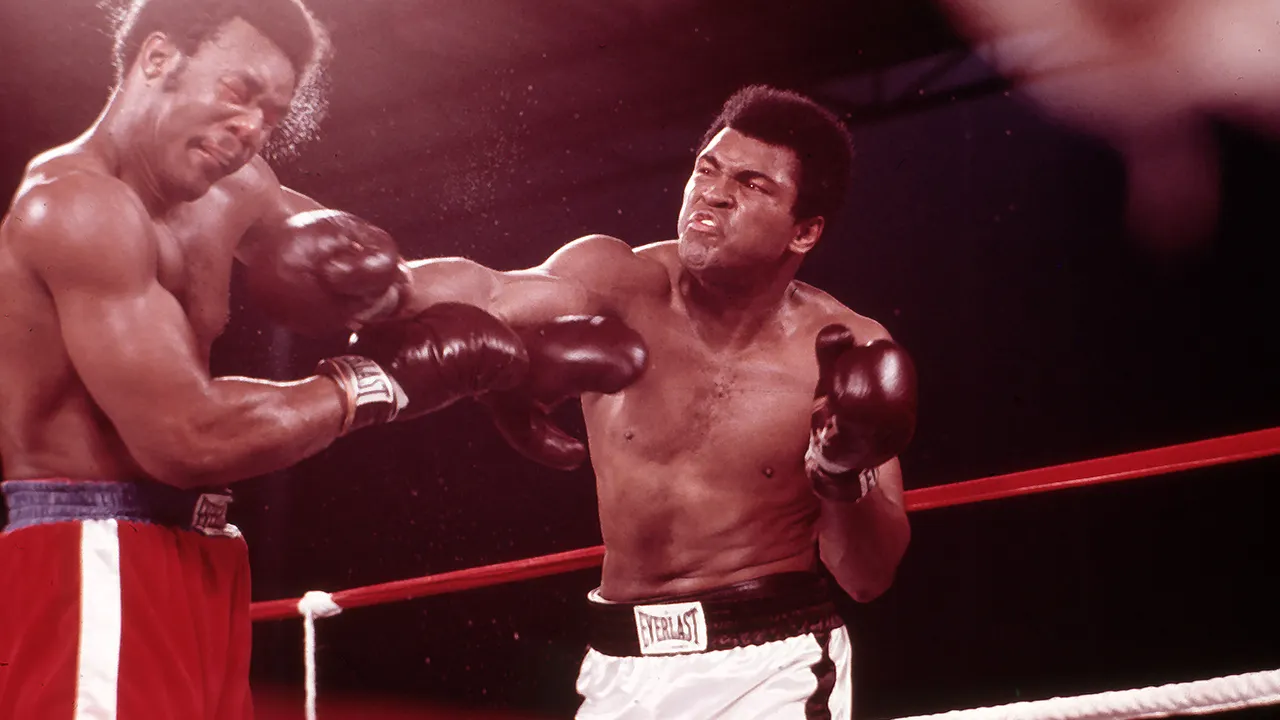
The legacy of Muhammad Ali has never been confined solely to the ropes of a boxing ring. For generations, the name has symbolized a relentless, system-shaking fight for human dignity, civil rights, and the fundamental protection of the vulnerable. Today, that weight of history rests gracefully yet heavily on the shoulders of his grandson, Nico Ali Walsh. A young, rising professional middleweight himself, Walsh does not just carry his grandfather’s iconic genetics; he carries the profound responsibility of protecting the social and legal triumphs that “The Greatest” fought so hard to secure outside the ring. At the heart of this contemporary struggle is the original Muhammad Ali Boxing Reform Act, a landmark piece of federal legislation passed in 2000 and co-sponsored by the late Senator John McCain. Created during an era when professional fighters were routinely exploited, financially cornered, and left with little to no agency over their own careers, the original Act established crucial antitrust protections. It erected a legal firewall that separated those who promote fights from those who manage the fighters, ensuring that athletes would not be systemic casualties of a monopolized industry. Now, a sweeping and highly controversial legislative overhaul known as “The Muhammad Ali American Boxing Revival Act of 2026” threatens to fundamentally alter this landscape, prompting Walsh to step forward not just as a boxer, but as the guardian of his family’s enduring contribution to human rights.
This legislative storm is brewing at a moment of unprecedented corporate consolidation in the combat sports industry, spearheaded by UFC founder Dana White and the powerhouse parent corporation, TKO Group. Through their expanding venture, Zuffa Boxing, White and his allies are pushing hard for a massive structural re-engineering of the sport. The proposed 2026 Revival Act would introduce a highly centralized operational model by legally authorizing the creation of “Unified Boxing Organizations,” or UBOs. Under this new legal framework, a single UBO would possess the unprecedented authority to simultaneously sign fighters to long-term exclusive contracts, promote their matches, control the official ranking systems, and award championship titles all under one corporate umbrella. Supported on a bipartisan basis in Congress, the bill was co-sponsored by Representatives Brian Jack, a Georgia Republican, and Sharice Davids, a Kansas Democrat. It has already swept through the House of Representatives with overwhelming cross-party enthusiasm and was officially referred to the Senate Commerce Committee in late March. While proponents argue that this legislation will streamline a notoriously fragmented and archaic sport, critics see it as an aggressive corporate land grab designed to dismantle the very protections that historically kept promoters from exercising absolute, unchallenged dominion over the athletes who risk their lives for entertainment.
Confronted with the prospect of his grandfather’s name being used to brand a piece of legislation that could systematically dismantle fighter autonomy, Nico Ali Walsh has chosen to address Dana White directly, bridging the gap between historical reverence and modern-day advocacy. Speaking with a maturity that belies his youth, Walsh—the son of Muhammad’s daughter Rasheda Ali and nephew of undefeated boxing pioneer Laila Ali—issued a respectful but firm public invitation to the UFC kingpin. Recognizing that both he and White are prominent figures in the Las Vegas combat sports ecosystem, Walsh has proposed a sit-down meeting, public or private, to discuss the true spirit of the Ali Act and the realities of modern fighter protections. His message to White is deeply personal: while he respects the monumental global business empire White has constructed with the UFC, he firmly believes that the 2026 bill, in its current draft, is antithetical to everything his grandfather stood for and therefore should not bear the sacred Ali name. Walsh’s appeal is a rare moment of vulnerability and courage in a highly commodified sports world, urging one of the most powerful executives in entertainment history to prioritize the human beings inside the gloves over the corporate machinery that profits from their blood, sweat, and tears.
The core of the dispute lies in the precise structural mechanics of the original 2000 Ali Act, particularly the strict firewall designed to prevent catastrophic conflicts of interest. Historically, unscrupulous promoters could simultaneously act as a fighter’s manager, meaning the person negotiating the athlete’s paycheck was the very same person trying to minimize promotional costs—a system that inevitably led to fighters being severely underpaid and trapped in predatory, lifetime contracts. The 2000 Act made it illegal for a promoter to have any direct or indirect financial interest in a boxer’s management, and vice versa. It also prevented promoters from manipulating rank systems to force fighters into unfair agreements. Opponents of the new 2026 Revival Act, including legendary former champion turned mega-promoter Oscar De La Hoya, argue that the proposed UBO framework entirely eviscerates these antitrust safeguards. By allowing a single entity to assume the dual roles of promoter and manager while also controlling titles and rankings, the 2026 Act closely mirrors the structural model of the UFC. While this model has made the UFC a multi-billion-dollar global phenomenon, critics argue it has done so by severely capping fighter pay percentages and stripping athletes of their independent bargaining power, a reality they warn will devastate the economic freedom of professional boxers if imported into their sport.
Yet, Nico Ali Walsh’s opposition is not characterized by mere obstinacy or a refusal to adapt to the changing times; rather, it is defined by a nuanced understanding of the complex realities of 21st-century combat sports. Walsh openly acknowledges that the original Ali Act, having been drafted more than a quarter of a century ago, is overdue for an intelligent, comprehensive modernization. He points out that the 2026 Revival Act does contain several vital, highly progressive measures that the boxing community desperately needs, particularly regarding the enhancement of fighter health benefits, mental health resources, and post-career medical safety nets. Boxing has long been plagued by a tragic lack of long-term healthcare for its retired athletes, many of whom suffer from chronic traumatic encephalopathy (CTE) and other debilitating neurological circumstances later in life. Walsh praises these proactive health proposals as “amazing” and desperately necessary for the safety of fighters. However, he warns that offering improved medical coverage at the front end of a fighter’s career must not be used as a legislative Trojan horse to strip away their fundamental economic rights, independent agency, and antitrust protections on the back end. For Walsh, true modernization means lifting fighters up both physically and financially, rather than forcing them to trade their legal freedoms for basic medical security.
Ultimately, Walsh’s primary mission extends far beyond the legislative chambers of Washington or the boardroom of TKO Group; it is a grassroots campaign to educate, inspire, and empower the global community of combat sports athletes. He expresses deep concern that a vast majority of active boxers, particularly young fighters fighting their way up from poverty, have absolutely no understanding of what the Ali Act is, how it protects them, or what is currently at stake as the 2026 bill advances through the Senate. In a sport where athletes are often conditioned to keep their heads down, train hard, and avoid making waves with powerful promoters, Walsh is urging his peers to find their collective voice, educate themselves on the legal definitions of their rights, and stand up against systemic erosion. The struggle over the Muhammad Ali American Boxing Revival Act of 2026 is, at its heart, a modern manifestation of the identical battle Muhammad Ali fought decades ago: a fight to ensure that the men and women who step into the ring are treated not as disposable corporate commodities, but as dignified, self-determining human beings. By standing firm against the powerful currents of corporate consolidation, Nico Ali Walsh is proving that the most enduring part of his grandfather’s legendary inheritance is not the elegance of his footwork, but the untamed courage of his social conscience.