





In the grand theater of global sports, few figures command the collective breath of humanity quite like Lionel Messi. On a momentous Monday that will be forever etched into the annals of football history, the Argentine maestro did not just play a match; he elevated his legendary status into the absolute stratosphere of sporting immortality. Amidst the deafening roars of the crowd and the blinding flashbulbs of the stadium, Messi captured a record that many sportswriters believed might stand untouched for generations. He became the undisputed king of World Cup goal-scoring, a historic feat that transiently shifted the heavy weight of the world off his shoulders and reminded fans across the globe why they fell in love with the beautiful game in the first place. Yet, behind the flashing scoreboard, the deafening cheers, and the historic triumph lay an intimate, bittersweet story of human vulnerability, sacrifice, and a family quietly navigating the harsh glares of the public eye during a deeply trying personal crisis.
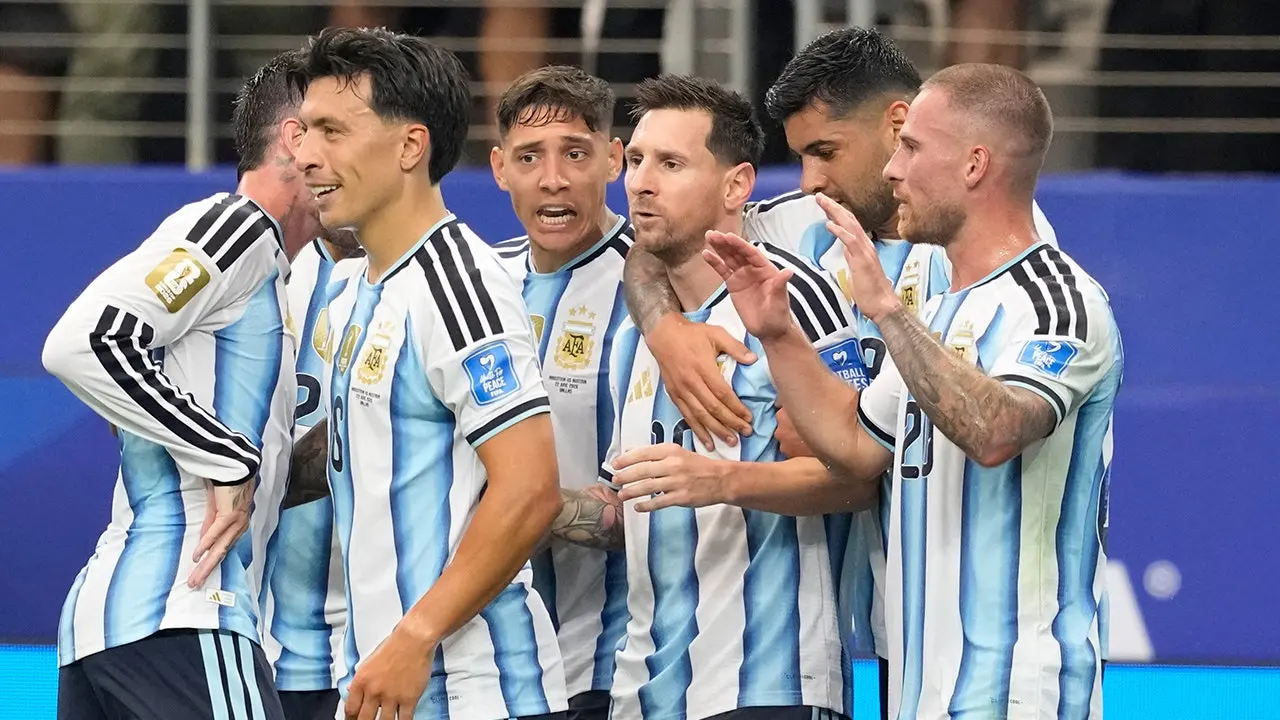
The path to this historic milestone on Monday was a masterclass in psychological resilience, illustrating that even the world’s greatest legends are susceptible to the agonizing pressures of the pitch. Early in the match, in just the eighth minute, Messi stood over a penalty kick—a golden opportunity to claim his crown early and set a comfortable tone for his country. To the shock of spectators worldwide, his shot sailed wide to the right, a rare moment of fallibility that could have easily broken a lesser player’s spirit under such intense global scrutiny. True greatness, however, is defined not by the absence of failure, but by the response to it. In the 38th minute, as Argentina pressed their attack, the Austrian defense suffered a momentary lapse in concentration, losing track of the silent maestro as he stealthily filtered in behind them. Seizing the moment with lethal precision, Messi latched onto a brilliant pass and fired the ball cleanly past the goalkeeper, breaking the deadlock to put Argentina up 1-0 and washing away the ghost of his earlier miss in an instant of pure athletic brilliance.
With that single, decisive strike, Messi secured his 17th career World Cup goal, officially surpassing Germany’s legendary striker Miroslav Klose to stand entirely alone at the pinnacle of international soccer history. This achievement represents far more than a simple numerical milestone; it is a monument to nearly two decades of unparalleled consistency, creative genius, and physical endurance on the world’s most demanding stage. Each of those seventeen goals tells a unique story of a young boy from Rosario, Argentina, who grew up to carry the hopes, dreams, and immense expectations of an entire nation on his shoulders. For millions of fans watching at home and in the stands, seeing Messi claim this record was a poignant, historic reminder that they are witnessing a once-in-a-lifetime phenomenon—a player whose sublime artistry continues to redefine the very boundaries of what is possible in modern athletics.
Yet, the triumph on the pitch stood in stark, somber contrast to the emotional tempest Messi was private-facing behind closed doors. Football, for all its passion and theatricality, is ultimately just a game, and the harsh realities of life have a way of piercing through the illusion of athletic invincibility. Just days prior to this historic match, the Messi family was plunged into deep anxiety as Jorge Messi, Lionel’s father and lifelong guiding light, was admitted for medical treatment regarding an undisclosed illness. In an emotionally charged appeal to the public, the Messi family reached out to the global media, pleading for “humanity” and privacy as they navigated this frightening healthcare crisis together. While the family’s public statement offered some reassurance, noting that Jorge was undergoing medical observation and progressing favorably within his condition, the immense burden of a sick parent weighed heavily on the superstar’s mind as he stepped onto the grass.
The cracks in Messi’s stoic armor had already begun to show a week earlier during Argentina’s opening group-stage match against Algeria. Despite delivering a breathtaking performance that culminated in a stunning hat-trick, it was the raw, unscripted emotion following his first goal of that match that captured the hearts of millions. As the ball hit the back of the net, instead of his trademark celebration, Messi was overcome with emotion, openly weeping on the field in a powerful display of vulnerability that transcended the sport itself. Reflecting on those tears, Messi later explained that his emotional outburst had nothing to do with football, but was rather the release of pent-up anguish from some of the toughest personal days of his life. In a touching display of humility and grace, he expressed his deepest gratitude to his teammates, the coaching staff, and the entire Argentine delegation, acknowledging that their unwavering support was the anchor that kept him grounded through his family’s storm.
Ultimately, Monday’s historic achievements serve as a beautiful, profound testament to the strength of the human spirit. Lionel Messi’s journey reminds us that behind the multi-million-dollar contracts, the glittering trophies, and the legendary records, there beats the heart of a son, a father, and a man who bleeds and hurts just like anyone else. By conquering the pitch while battling grief and worry at home, Messi demonstrated a level of character and mental fortitude that goes far beyond raw athletic talent. As he stands alone at the peak of World Cup history, he does so not just as an unstoppable sporting machine, but as a deeply human figure who triumphed over quiet adversity. It is this rare blend of transcendent talent and profound vulnerability that will forever define his legacy, proving that his true greatness lies not just in how he plays the game, but in how he carries himself through the heavy trials of life.