


The Houston Astros’ 2024 season has been a strange, winding journey, and at the center of its final act stands a man whose future is as uncertain as a knuckleball. Joe Espada, the team’s manager, watched his club scratch and claw their way into the postseason with a record that will be remembered for all the wrong reasons—and yet, there he was on that final day, celebrating an 81-81 finish that somehow placed them atop the AL West. The math was bizarre, the season was a grind, and the atmosphere around the team had been tense since the front office shook things up mid-stretch. But as the Astros prepared to host the Chicago White Sox in the Wild Card Series, owner Jim Crane sat down with the Associated Press and dropped a series of comments that left everyone reading between the lines. Espada’s contract expires after this season, and Crane’s language was careful, deliberate, and anything but a vote of confidence. “All positives are positives,” Crane said, a line that felt more like corporate hedging than baseball conviction. “All negatives are negatives. So I think that would be something to consider when we make the decision.” For a man who has steered the Astros through some of the most scrutinized years in franchise history, those words had to sting.
The backdrop of this story is the sheer improbability of the Astros even being here. After missing the playoffs entirely in 2023, a year that ended with a thud and a mountain of questions, the organization entered 2024 with a clear mandate: return to form, or else. But the season didn’t go according to script. Injuries piled up, the starting rotation was a patchwork of hope and duct tape, and for long stretches, this team looked like it had forgotten how to win. They fell below .500 in April, and by August, there were murmurs that change was coming—just not the kind anyone expected. The Astros were still in the thick of a mediocre AL West race when Crane made the stunning decision to part ways with general manager Dana Brown on August 24. The move was not a dramatic, tear-it-all-down firing; it was a quiet, almost clinical acknowledgment that Brown’s contract wouldn’t be renewed. Crane insisted it was a “courtesy” to give Brown a head start on finding his next job, and he waved off any suggestion that the front-office churn had destabilized the clubhouse. “I don’t think it had a lot to do with what happened, you know, whether we won or we lost,” Crane said. “I made a decision that we weren’t going to renew his contract, so I wanted to give him time to regroup and we knew we had enough coverage from the other three guys.”
Those “other three guys” were assistant general managers Charles Cook, Gavin Dickey, and Connor Huff, along with senior adviser Jeff Bagwell, a franchise icon who stepped into a more prominent role. It was an unorthodox setup, to say the least. Teams rarely part with a general manager in the heat of a playoff race, and the optics of a front office run by committee seemed ripe for disaster. But somehow, against all logic, the Astros steadied themselves. They went on a late-season run that was less about brilliance and more about survival, grinding out close games and capitalizing on the Texas Rangers’ inexplicable collapse. When the dust settled, Houston had finished 81-81, tying for the worst record ever for a playoff qualifier, but making history as the first team in MLB annals to reach the postseason with a record at or below .500. The achievement was so absurd that Crane could only laugh when asked how the front-office juggling act had worked out. “I guess they’re working pretty good—we got into the playoffs,” he said, a smile in his voice. “I think everything’s fine. We’ve got a number of assistant general managers filling in, and so our communication is good. Everything’s running smooth, ready for a win.”
But beneath the owner’s confident tone lay a thin veneer of unresolved tension, especially when it came to Espada. The manager, who had been thrust into the job in 2022 after Dusty Baker’s departure, had already faced his share of criticism. He navigated a minefield of expectations, a roster that was aging but still talented, and a fan base that had grown accustomed to winning. He watched as his predecessor Baker, a Hall of Fame-caliber skipper, had been shown the door despite winning a World Series. Espada knew the business. He knew that his contract situation was a lingering question mark, and he knew that Crane’s “something to consider” was far from a ringing endorsement. The owner’s comments were made in the context of a season that had been defined by instability, but they also hinted at a deeper disconnect. Crane was a man who measured success in championships, and while reaching the postseason was a step forward, it was also a reminder of how far this franchise had fallen from its own lofty standards. The Astros had been to the ALCS seven straight times from 2017 through 2023, and they had won the World Series twice in that span. Anything short of a deep October run would likely be seen as a failure—and Espada, fair or not, would be the one holding the bag.
The human element of this story is impossible to ignore. For all the talk of records and front-office machinations, baseball is a game played by people with emotions, egos, and anxieties. Espada, a soft-spoken but intense leader, had spent the entire season walking a tightrope. He’d managed through injuries to key players like José Altuve and Justin Verlander, had to make split-second decisions in a bullpen that was held together by paperclips, and had somehow kept his clubhouse from fracturing during the darkest days of the summer. He did all of this while knowing that his job security was dangling by a thread, and that every loss would be magnified, every lineup card second-guessed. The fact that he guided the team to a division title under these circumstances was, in itself, a testament to his leadership. Yet, in the hyper-competitive world of Major League Baseball, managers are often the most expendable pieces of the puzzle. Espada wasn’t just fighting opposing teams; he was fighting a narrative that he couldn’t win the big one, that his in-game moves were suspect, that he was simply the beneficiary of a talented roster that would have won in spite of him.
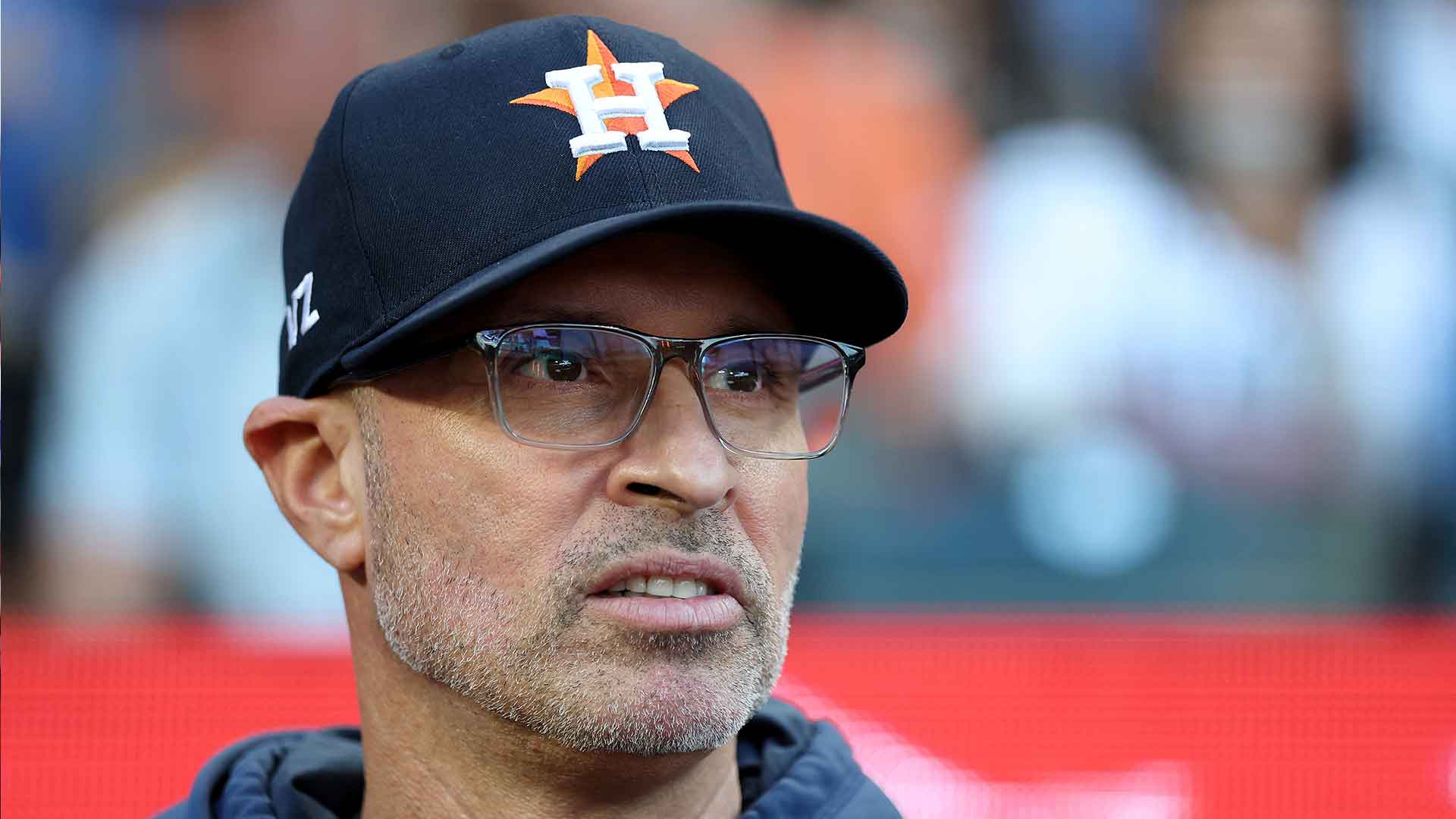
Crane’s decision to table any contract talks until the season’s end only added to the awkwardness. “There have been no discussions about the possibility of a new deal for Espada recently,” he said, and the timing of that revelation was telling. It meant that the manager was, for all intents and purposes, managing for his professional life in every game of this Wild Card series. That kind of pressure can break a person, but it can also forge a certain kind of resolve. Espada had been here before, of course. He’d spent years as a bench coach, watching other managers navigate the fires, and he’d learned that in Houston, the standard was not just winning—it was winning in a way that demanded respect. He didn’t have the vocal bravado of A.J. Hinch or the grandfatherly calm of Dusty Baker. He was his own man, and he’d earned the right to be judged on his own terms. But as he stood in the dugout for the first game of the playoffs, his face a mask of concentration, he had to feel the weight of every decision he’d ever made, every lineup he’d ever written, every bullpen move that had worked out or blown up in his face.
The Astros’ opponent in the Wild Card Series, the Chicago White Sox, was a team that had somehow stumbled into the playoffs themselves, and the matchup felt almost surreal. Two clubs that had no business being here, by the numbers, were about to face off in a best-of-three with a trip to the American League Division Series on the line. The games would be played in Houston, in front of a crowd that had seen its share of playoff drama, but there was a different energy this time. This wasn’t the juggernaut Astros of old, the ones who would roll into October with a swagger and a 100-win season behind them. This was a scrappy, flawed, and utterly human team that had refused to quit, even when everyone had counted them out. And at the center of it all was Espada, a man who had been handed a fragile roster and a front-office firestorm, and had somehow kept the ship from sinking. He didn’t ask for sympathy, and he wasn’t going to get any from the owner’s office. But he had something that couldn’t be measured in wins or losses: the respect of his players, the loyalty of his coaches, and the quiet pride of a man who had done his job under the most difficult of circumstances.
As the postseason began, the questions about Espada’s future weren’t going away. They would linger over every pitch, every managerial move, every late-inning decision. But in a strange way, that uncertainty might have been the best thing that could have happened to the Astros. It forced them to focus on the present, to play with a sense of urgency that had been missing for much of the season. It reminded everyone that nothing was guaranteed, that the window of opportunity was closing, and that baseball, at its core, is a game of moments. For Crane, the bottom line was simple: “We’ve always said we’re here to win and we’re here to make the playoffs and make a deep run in the playoffs, and we’ve done that consistently. So getting in the playoffs is a big deal. If you don’t, you don’t have a chance.” And for Espada, the moment was all that mattered. He had a chance to write his own story, to answer the skeptics, and to prove that the unorthodox, messy, and thoroughly human journey that had brought him here was worth every ounce of doubt. The future would take care of itself. The only thing that mattered now was the game ahead.