






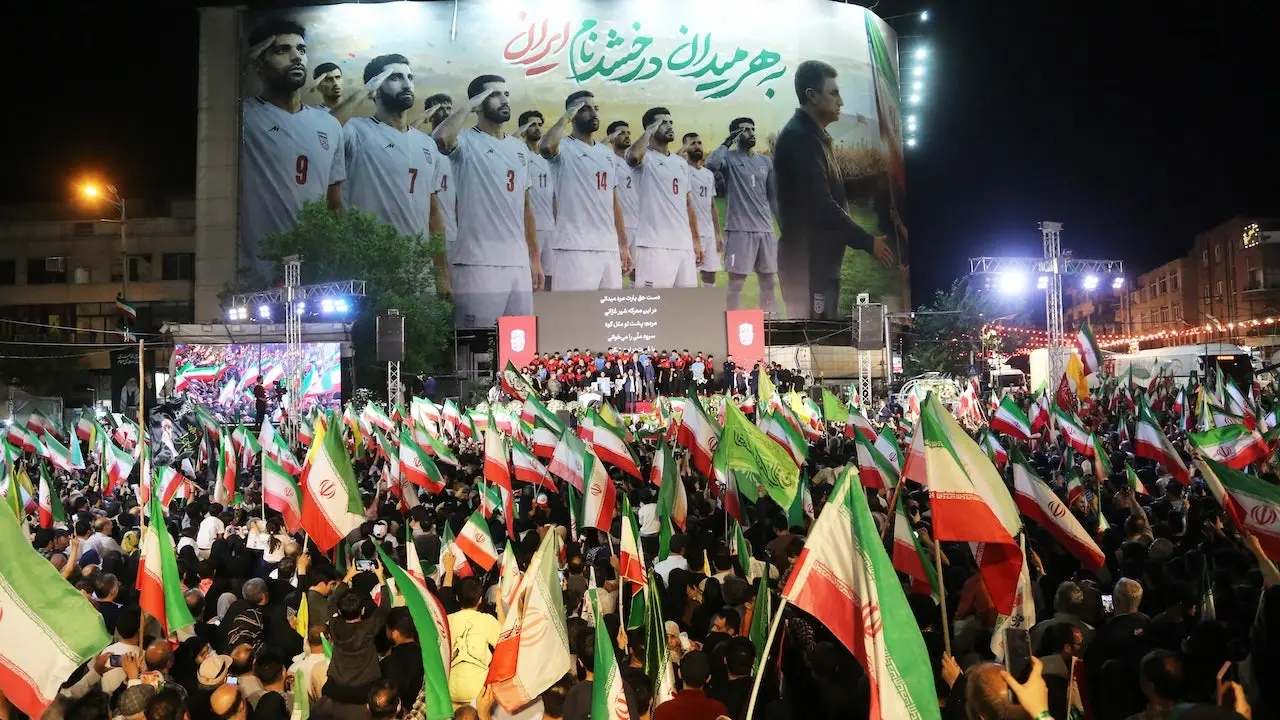
For millions of citizens living under the constant vigil of the Iranian regime, soccer has long been far more than a game; it is a sacred, breathing sanctuary. In a society where public expression is heavily policed and tears and laughter are closely monitored, the echoing concrete bowls of stadium grandstands have served as rare, vibrant spaces where the youth can gather, exhaust their lung capacity in unison, and briefly experience the intoxicating sensation of collective freedom. Yet, a chilling and exhaustive investigative report by the National Council of Resistance of Iran (NCRI), shared exclusively with Fox News Digital, reveals that even this final cultural oasis has been systematically weaponized. The report exposes a highly coordinated, state-sponsored campaign by the Islamic Revolutionary Guard Corps (IRGC) to absorb the nation’s entire soccer infrastructure into its pervasive internal security web. By transforming beloved athletic institutions, historic clubs, and crowded arenas into sophisticated intelligence traps, the militarized regime is actively using the beautiful game to monitor, track, and silence its own people, in blatant defiance of international sporting laws and the fundamental human rights of its citizens.
At the very core of this disturbing structural coup is the direct, physical colonization of soccer leadership by some of Iran’s most notorious military figures. The NCRI’s findings reveal that at least fifteen high-ranking IRGC commanders have been formally documented holding top managerial and administrative roles within Iran’s premier soccer clubs and its central governing federation. Perhaps the most glaring symbol of this militarization is Mehdi Taj, the current president of the Football Federation Islamic Republic of Iran, who has been identified as a former IRGC intelligence officer. This direct pipeline from the deep state’s interrogation and surveillance apparatus to the highest executive suites of the sports world completely shatters the core bylaws established by FIFA, the global governing body of soccer, which strictly dictate that national soccer associations must manage their affairs entirely independently and remain free from any manner of domestic political or military interference. Instead of serving as independent custodians of the sport, historic and beloved clubs like Persepolis and Esteghlal, which command the fierce, generational loyalty of tens of millions of working-class families, are being run as operational extensions of the state security apparatus, stripping the Iranian people of an authentic civic identity and turning their sporting idols into agents of the regime.
The terrifying operational details of this apparatus are laid bare in leaked, highly sensitive domestic security documents obtained by the MEK, a major Iranian opposition network operating deep within the country. These internal papers, which include highly classified strategies from the Tehran Province Security Council’s 2025 Sports Commission and a 2024 security directive from the feared Sarallah Headquarters, expose a meticulously planned digital panopticon designed to target spectators. According to these translated files, the regime has transformed historic venues like Tehran’s landmark Azadi Stadium into high-tech panopticons where every spectator is treated as a potential insurgent. The state has implemented biometric facial-recognition cameras, mandatory ticketing systems inextricably tethered to the national civil-registration database, and a seat-by-seat mapping algorithm that directly links an individual’s physical location on a wooden or plastic bleacher to their computerized national ID number. When a fan buys a ticket to escape the burdens of daily life for ninety minutes, their biological data, personal history, and exact seating coordinates are instantly logged into a database monitored by quick-reaction paramilitary units stationed directly inside the sports complexes, waiting to pounce on anyone who dares raise their voice in political protest.
The psychological toll of this omnipresent system of control is devastating, as the stadium has been deliberately reframed by internal security planners as a dangerous incubator of public rebellion. Alireza Jafarzadeh, the deputy director of the NCRI’s Washington office, explained that the regime’s hyper-focus on sporting arenas intensified dramatically during recent nation-wide uprisings, when authorities struggled to track and identify the brave young men and women leading protests in the chaotic streets of Iran’s major cities. Recognizing that soccer stadiums are among the very few places in the country where thousands of energetic youth naturally congregate and experience intense, synchronized emotions, security planners realized they could use these closed environments as a massive, controlled testing laboratory for mass surveillance. By matching crowd video footage with state identification records, the IRGC has successfully identified, tracked, and later arrested dissenting citizens long after they have left the stadium gates. This terrifying development turns a joyful, communal ritual into a trap, meaning that a passionate chant or a spontaneous gesture of defiance captured on a camera during a match can result in a late-night knock on a family’s front door by secret police weeks later. This psychological terror tarnishes the innocence of the sport, leaving fans to look over their shoulders even when celebrating a goal.
This modern, digital dragnet is the evolution of a dark, decades-long history of state violence against athletes who refuse to bow to totalitarian authority. The ultimate human price of this systemic repression is epitomized by the tragic legacy of Habib Khabiri, the charismatic former captain of the Iranian national soccer team and a beloved icon of his generation. Arrested in 1983 for his political convictions, Khabiri was subjected to brutal physical torture in prison and pressured to appear on state television to publicly renounce his beliefs and pledge allegiance to the regime. He steadfastly refused to betray his conscience, and on June 21, 1984, he was summarily executed by a state firing squad, his young life cut short at the absolute peak of his athletic prowess. Decades later, Khabiri’s memory remains a powerful, aching symbol of resistance and a stark reminder that under the Islamic Republic, the physical body of the athlete is treated as property of the state. Today, this tradition of cruelty continues unabated, as modern Iranian Olympians, soccer players, and sports stars who have dared to voice solidarity with grassroots anti-government protests have faced severe state retaliation, ranging from sudden, career-ending bans and official intimidation to torture, imprisonment, and even public execution.
The ongoing exploitation of the soccer system also perpetuates a deep-seated gender apartheid that continues to lock half of the Iranian population out of the beautiful game. Despite cosmetic, highly staged concessions designed solely to mislead international observers and prevent FIFA sanctions—such as occasionally allowing small, pre-vetted, segregated groups of women into select international matches—the regime continues to enforce systematic barriers against female fans and athletes. Women who try to enter historic stadiums to watch their favorite clubs are routinely met with physical violence, public humiliation, and arrest by the morality police, while female athletes are subjected to intense, patronizing state control over their uniforms, travel, and personal lives. The NCRI’s alarming revelations have prompted urgent, impassioned pleas to the international community, with Jafarzadeh and other human rights advocates fiercely arguing that FIFA must summon the moral courage to completely expel the Iranian soccer federation from the global stage, drawing a direct and necessary historical parallel to the international sporting bans that helped dismantle apartheid-era South Africa. As long as the IRGC continues to pull the strings of Iranian sports, utilizing soccer fields as arenas of human surveillance, intimidation, and raw political control, the global community’s silence serves as passive complicity in the systematic oppression of a population that simply wishes to play, watch, and harbor hope in peace.