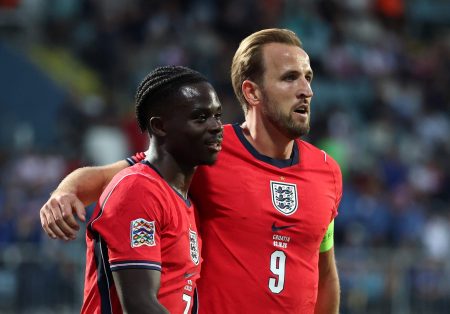






The long-awaited dawn of the 2026 FIFA World Cup has officially arrived on North American soil, unleashing a massive, unprecedented wave of soccer euphoria that has completely captivated the collective sporting imagination of the United States. For a generation of American players and supporters who have spent years dreaming of this moment, the opening match of the group stage was not merely a sporting fixture, but a grand statement of cultural and competitive arrival on the grandest stage of them all. Facing a stubborn, defensively robust, and physically imposing Paraguay side, the United States Men’s National Team (USMNT) put on a breathtaking display of attacking synergy, fluid possession, and clinical execution, cruising to a commanding 4-1 rout that set social media alight. The undisputed protagonist of this historic opening night was Folarin Balogun, the dynamic young striker whose high-profile international commitment to represent the United States over England and Nigeria had once dominated sporting headlines. Balogun vindicated the immense hype and repaid the nation’s faith in spectacular fashion, bagging two clinical goals—including a stunning half-volley off an assist from Christian Pulisic—that brought the packed arena to a state of absolute delirium. His intelligent off-the-ball movement, quick bursts into the half-spaces, and elite finishing ability exposed critical flaws in the Paraguayan defensive structure, showcasing a level of offensive sophistication that the national team has historically lacked. Every time Balogun breached the opposing backline, the roar from the stands, filled with faces painted in vibrant red, white, and blue, reverberated throughout the local community, signaling to world football that this host team intends to be a formidable contender rather than a passive participant. This emphatic victory not only earned three crucial points but also relieved the heavy psychological burden that naturally accompanies a host nation, injecting an invaluable dose of confidence into a young roster eager to write their names into the permanent archives of global soccer history.
Presiding over this tactical masterclass is the legendary head coach Mauricio Pochettino, whose blockbuster hiring by U.S. Soccer represented a paradigm shift in how the nation approaches its developmental and competitive ambitions. Pochettino, renowned worldwide for his demanding high-pressing style, intricate tactical frameworks, and history of transforming promising young players into elite international superstars, has successfully instilled a newfound sense of elite professionalism, emotional warmth, and tactical discipline within the squad, often seen embracing his players on the touchline to build their confidence. Under his steady guidance, the USMNT entered this historic tournament sitting at number seventeen in the official FIFA World Rankings—a mathematical standing determined by the highly scrutinized Elo rating system, which rewards real-world victories and penalizes setbacks based on the strength of opposition rather than historical prestige. To prepare his squad for the immense physical and mental pressures of a home World Cup, Pochettino organized a grueling pre-tournament schedule, highlighted by a thrilling, high-scoring 3-2 victory over an incredibly athletic Senegal side in late May. That friendly match served as a vital laboratory, highlighting tactical areas requiring immediate defensive reinforcement while simultaneously showcasing the team’s relentless resilience and attacking versatility under duress. Pochettino’s philosophical revolution extends far beyond tactical sheets; he has systematically dismantled the traditional, gritty “American underdog” archetype, substituting it with a highly sophisticated, possession-oriented mentality that demands his players dictate game tempos, utilize high-pressing traps, and assert dominance over elite opponents rather than merely reacting to their styles.
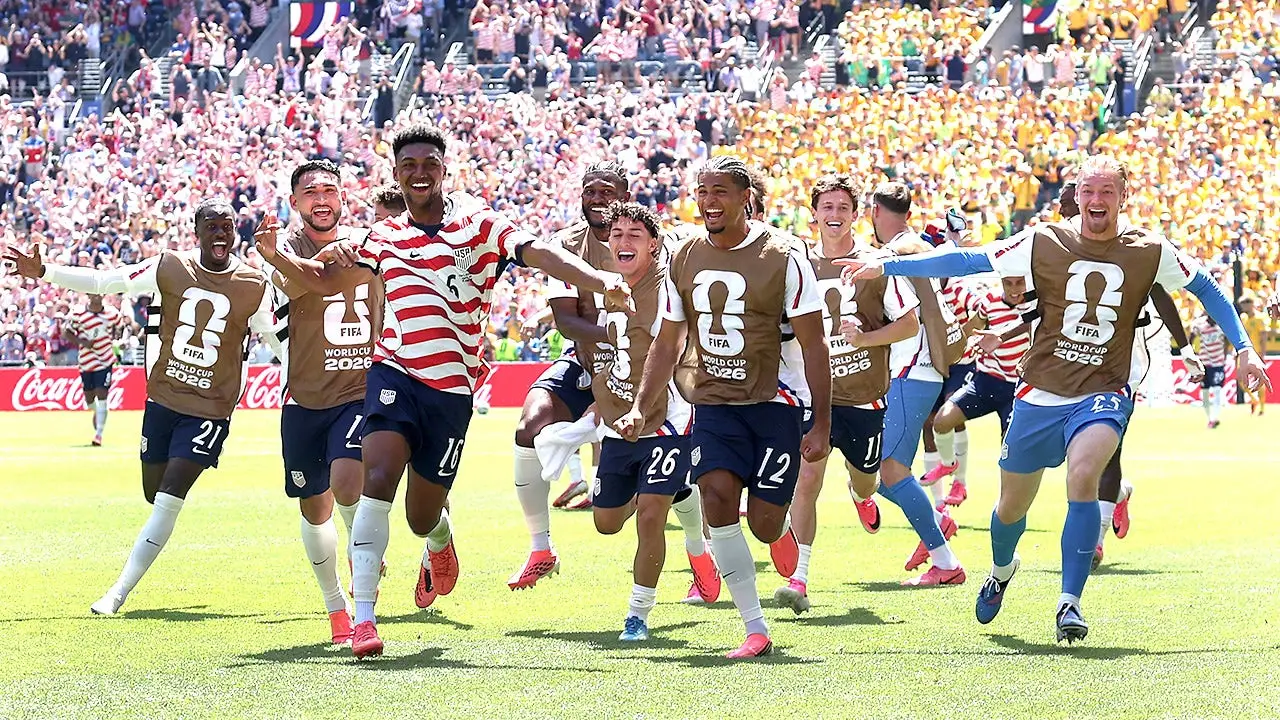
This rapid tactical evolution was put to a stern challenge in the team’s second group stage encounter against a famously rugged, organized, and defensively stubborn Australian side. The Socceroos came into the match with high confidence, having already secured a crucial victory over Turkey in their own opening match, transforming the clash against the Americans into a high-stakes duel for control of the group. What unfolded was an intense, physical midfield battle that demanded immense patience and defensive concentration from the young United States squad, requiring the central midfielders to constantly recycle possession under heavy pressure. Rather than forcing desperate passes into congested areas, the Americans maintained possession with clinical poise, eventually breaking down the Australian low block with clinical efficiency to secure a decisive 2-0 victory, sealed by a beautifully worked team goal late in the second half. This crucial result not only maintained the team’s perfect start to the tournament but, monumentally, clinched an early berth in the highly anticipated knockout rounds with a group stage game still left to play. Securing early passage to the round of sixteen is an immense luxury, allowing Pochettino the latitude to manage player fatigue, heal minor soft-tissue injuries, and rotate his squad without the paralyzing fear of a sudden, group-stage exit. Meanwhile, the rest of the group was thrown into chaotic mathematical calculations, leaving Australia and Paraguay to face off in a desperate, do-or-die battle for survival on the final day, highlighting the ruthless competitive landscape of modern international football and the immense relief felt inside the American locker room.
With their passage to the knockout stages securely locked away, the USMNT prepares to return to the sparkling, sun-drenched West Coast to play their final group fixture at the iconic Los Angeles Stadium in Inglewood, California. This architectural masterpiece, celebrated globally for its cutting-edge design and massive video board, will play host to a spectacular homecoming as the national team returns to a city that acts as a spiritual capital for soccer in North America. Southern California has historically served as a prime breeding ground for legendary American soccer talent, housing a deeply passionate, multicultural community that lives, breathes, and dreams the beautiful game, drawing parallels to the historic 1994 World Cup games hosted at the nearby Rose Bowl. The return of the Stars and Stripes to this specific venue is expected to generate an atmosphere of pure theatrical spectacle, with local communities uniting to celebrate a team that mirrors the diverse, dynamic, and fashion-forward essence of Los Angeles itself, where the glamour of Hollywood meets the relentless work ethic of the local sports youth academies. Players have consistently noted that the unique energy of this stadium—where the passionate crowd is seated close to the pitch and the state-of-the-art roof traps a wall of sound—creates an imposing environment for visiting teams while lifting the home players to a higher physical gear. Under the bright stadium lights of Southern California, the match promises to be as much of a cultural celebration as a sporting event, illustrating how soccer has seamlessly woven itself into the fabric of mainstream American pop culture, lifestyle, and prime-time entertainment.
Standing in the path of a perfect group stage record is Turkey, a proud footballing nation known worldwide for its fiery fan support, tactical unpredictability, and fierce competitive spirit. Unlike the qualified Americans, Turkey enters this final group stage match with their backs completely against the wall, knowing that their survival in this expanded, historic forty-eight-team tournament format depends entirely on securing a positive result against the host nation. The expansion of the World Cup to forty-eight teams has introduced complex mathematical dynamics to the group stages, where every single goal scored, yellow card received, and point accumulated can drastically alter a team’s potential matchups in the single-elimination bracket, making every tactical decision incredibly critical. Turkey’s traditional tactical profile combines technical ball-handling in midfield with aggressive transition play, making them an incredibly dangerous opponent when forced into desperate, must-win situations. For Mauricio Pochettino, this match represents a critical psychological litmus test for his players, challenging them to avoid the natural human trap of complacency that often arises when a team has already qualified for the next round. This tactical chess match will force both managers to adapt in real-time, testing the depth of both squads under pressure. To build a championship culture, the USMNT must treat this fixture with the same tactical discipline and physical intensity as a knockout game, using the ninety minutes to refine defensive communications, perfect transition play, and maintain the winning momentum necessary to navigate the brutal road that lies ahead in the tournament.
For millions of passionate fans eager to witness this legendary journey unfold in real-time, the tournament organizer and broadcast partners have created a state-of-the-art viewing experience designed to bring every ounce of drama directly to the public. This highly anticipated final group-stage clash between the United States and Turkey is officially scheduled to kick off on the night of Thursday, June 25, 2026, at 10:00 p.m. Eastern Time, providing a prime-time national window that will capture sports fans from coast to coast. The match will be broadcast live on FOX’s premier network channel, featuring world-class commentary, multi-angle replays, and extensive pre-game analytical breakdowns that detail the strategic nuances of Pochettino’s lineup decisions and provides the ultimate primer for the tournament’s next phase. For fans who prefer digital consumption, the match will be streamed live via the newly designed FOX One platform as well as the official FOX Sports application, allowing seamless viewing on mobile phones, tablets, and smart televisions. This comprehensive media ecosystem guarantees that regardless of where fans are—be it at a buzzing stadium watch party, a local pub, or gathered in the comfort of their own living rooms with family—they can easily connect with this historic cultural milestone. The narrative arcs of these young athletes, representing a tapestry of backgrounds, will be showcased to inspire future generations. As the starting whistle blows in Inglewood, it will signal far more than just a tactical game of soccer; it will mark another monumental step forward for a young, inspiring American team that is capturing the hearts of a nation and forever changing the landscape of the sport on home soil.