


Paragraph 1: The Coronation and the Unfinished Debate
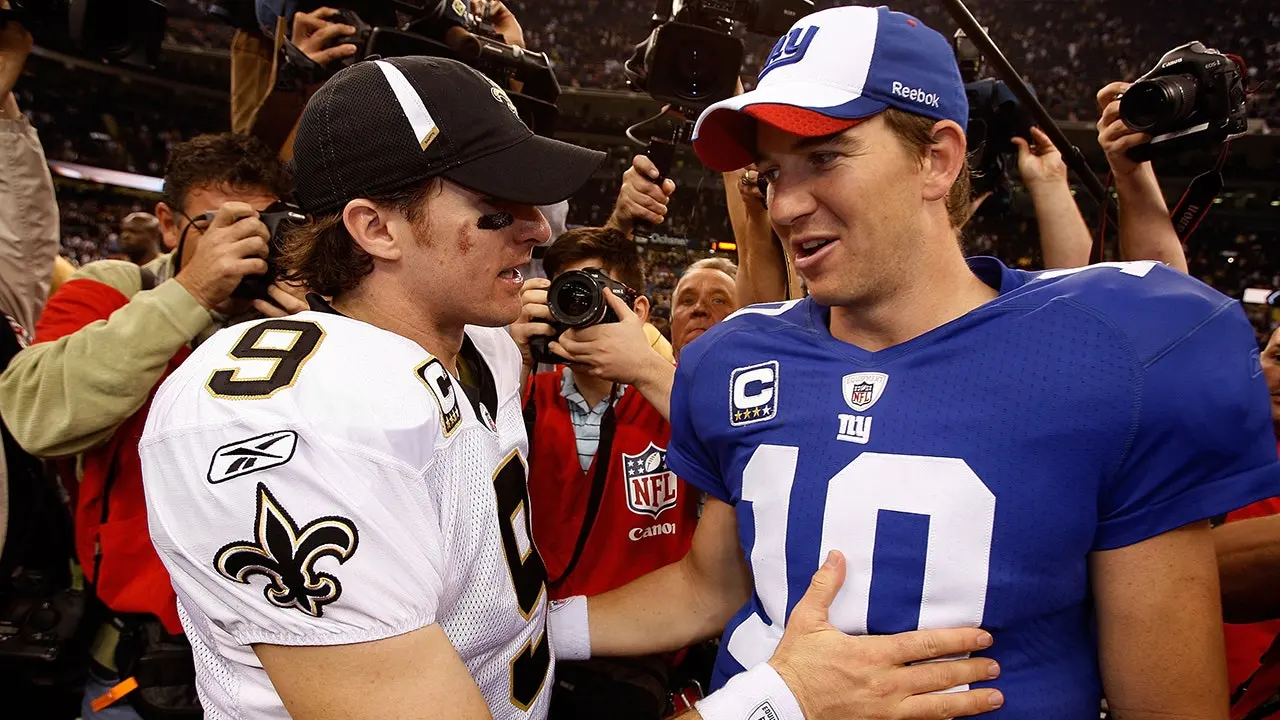
The sun seemed to shine a little brighter over Canton, Ohio, as Drew Brees took his rightful place among the gods of gridiron history. For Brees, the journey to that golden bust wasn’t just a coronation; it was the final, triumphant chapter of a story so improbable it reads like a Hollywood script. Cast aside by the San Diego Chargers after a devastating shoulder injury that threatened to end his career before it truly blossomed, Brees found a second home in the flood-ravaged city of New Orleans. There, he didn’t just resurrect his career—he resurrected a franchise and a community’s very spirit, leading them to a Super Bowl XLIV victory over his brother-in-law Peyton Manning that felt like a spiritual reawakening for the entire Gulf Coast. His statistical resume is one for the ages: second all-time in passing yards and touchdowns, a Super Bowl MVP, 13 Pro Bowl selections, and a record for consecutive games with a touchdown pass that may never be broken. But what truly set Brees apart was his meticulous, almost obsessive preparation and his infectious leadership that made everyone around him better. As he stood on that stage, basking in the applause of the crowd, his thoughts inevitably drifted to the fraternity of quarterbacks he battled alongside for nearly two decades—specifically, a certain lanky, awkward-armed kid from the Manning family who has become the most debated legacy case in modern football history. While Brees was a first-ballot lock for induction, the same cannot be said for Eli Manning, and that discrepancy has ignited a firestorm of passionate arguments among fans, analysts, and former players alike.
Paragraph 2: The Curious Case of Eli Manning
Eli Manning’s career is a fascinating study in contradictions, a paradox wrapped in a football jersey. At the heart of the debate lies a simple question: how do you weigh two transcendent, historic Super Bowl victories against a regular-season record that screams “mediocre”? On one hand, Eli delivered the New York Giants—and their rabid fanbase—the ultimate prize not once, but twice, and both times against the greatest dynasty the sport has ever seen, Tom Brady and the New England Patriots. His heroics in Super Bowl XLII, capped by the jaw-dropping “Helmet Catch” by David Tyree, and his surgical precision in Super Bowl XLVI, where he outdueled Brady with a game-winning touchdown drive late in the fourth quarter, are moments etched into the collective memory of football fans. These were not fluky wins; they were epic conquests. Yet, standing in stark contrast to these high-water marks is a statistical profile that gives ammunition to his detractors. Eli finished his 16-year career with an even 117-117 regular-season record, a metric that epitomizes “average” for a starting quarterback. He never once made a first-team All-Pro squad, never received a single vote for the Associated Press NFL MVP award, and he led the league in interceptions three separate times. His completion percentage of just over 60% is decidedly unremarkable in a modern era where accuracy is the currency of the position. For the past two voting cycles, he hasn’t even made it to the status of a finalist for the Hall of Fame, a glaring snub that has enraged his supporters while validating those who argue his regular-season consistency doesn’t reach the gold standard required for enshrinement.
Paragraph 3: A Peer’s Perspective and the Era of Titans
For Drew Brees, however, the argument isn’t even a close one. When asked point-blank whether Eli Manning belongs in the Hall of Fame, Brees didn’t hesitate, offering a resounding endorsement that cuts through the statistical noise. “Yeah, he is,” Brees declared, before expanding on the nuanced evaluation of a quarterback’s true worth. Brees emphasizes that the position is about more than just completion percentage or interceptions in low-stakes October games. It’s about the sheer weight of the body of work, the consistency of showing up year after year, and, above all, the championships. “It’s hard to argue the things that he accomplished in his career with his two championships, and then, you know, his body of work and his consistency,” Brees added. What makes Brees’s perspective particularly poignant is that he lived it. Both men were products of that incredible golden era of quarterbacks that defined the 2000s and 2010s. Brees looks back at that time with a sense of awe, referencing how the draft classes from 2001 to 2005 produced an unprecedented cluster of future Hall of Famers: Peyton Manning, Tom Brady, himself, Eli, Philip Rivers, Ben Roethlisberger, and Aaron Rodgers. They all competed against each other in epic battles, week after week, constantly raising the bar for what greatness looked like. Brees argues that this ferocious competition brought out the best in all of them, and to hold Eli’s regular-season record against him while ignoring that he conquered the ultimate peak of this brutal landscape twice is to fundamentally misunderstand the nature of the sport.
Paragraph 4: Deconstructing the Numbers and the Narrative
To fully humanize Eli’s case, one must peel back the layers of the raw stats that his critics love to cite. His 117-117 record, while even, doesn’t tell the story of a Giants team that was often carried single-handedly by their quarterback, particularly during their Super Bowl runs. Eli dragged some truly flawed rosters to the playoffs, displaying a mental toughness and an unflappable demeanor that earned him the nickname “Easy Eli” for all the right reasons. His durability alone is a testament to his greatness; he started 210 consecutive regular-season games, a streak that harkens back to an older, tougher era of football. He never missed a start due to injury, a rarity in a position where players routinely get shattered. His turnovers, while numerous, were often a byproduct of his aggressive willingness to take risks—a gunslinger mentality that, while leading to some ugly interceptions, also produced some of the most exhilarating comebacks in NFL history, including the famous “Manning to Manningham” drive in Super Bowl XLVI. The sheer emotional narrative of beating Brady twice—snapping the Patriots’ perfect season in 2007 and denying another ring in 2011—is something that stats alone can never quantify. Brees believes that, eventually, the voters will see past the black-and-white numbers and recognize the overwhelming, undeniable narrative. The Hall of Fame is not just a museum of statistics; it’s a museum of legends, moments, and championships. Eli Manning owns some of the most iconic moments in Super Bowl history, and his story arc—the underdog who defied the odds to slay the dragon twice—is the very essence of football folklore. To deny him entry would be to deny the very reason the game is played.
Paragraph 5: Beyond the Gridiron: Building a Community
While the Hall of Fame debate rages on in the media, Brees has gracefully transitioned from the field of play to the world of business and hospitality, applying the same winning mentality that defined his football career. These days, he is a co-owner and partner in Walk-on’s Sports Bistreaux, one of the fastest-growing sports bar franchise concepts in the country. What started as a humble Louisiana staple has now exploded into over 80 locations, with no signs of slowing down. For Brees, Walk-on’s is far more than a business venture; it’s a labor of love that embodies the culture and warmth of the South he grew to call home. “We pride ourselves on Louisiana-inspired cuisine. It’s unbelievable food,” Brees says with the same passion he once used to describe a perfect post-route. “My kids crave it all the time. But like a really family-friendly atmosphere… whether it’s date night, bring the family, bring the little league after the game—something for everybody.” Central to this vision is the sports bar experience itself. The energy in a Walk-on’s location is electric, driven by the high-definition screens playing every game imaginable, all thanks to a strategic partnership with DIRECTV FOR BUSINESS. For Brees, having access to every local, national, college, and pro game is non-negotiable. It’s the lifeblood of the establishment, allowing fans to walk in and feel like they’ve found their tribe, whether they came for March Madness, the Kentucky Derby, or a random Saturday SEC showdown.
Paragraph 6: The Shared Joy of Fandom and the Future
Ultimately, Brees’s post-football life revolves around the connection that sports fosters, and nothing embodies that connection better than the communal roar of a crowded sports bar. Through the partnership with DIRECTV FOR BUSINESS, Brees ensures that his restaurants offer a seamless blend of live TV and streaming networks, all in one place, solving the age-old problem of “which game do we watch?” for bar owners. And for the fans themselves, the website sportsbarfinder.com allows anyone, anywhere in the country, to locate a DIRECTV FOR BUSINESS-enabled establishment to catch their local team or a national showdown. Brees reflects on this with a warmth that is both genuine and inspiring. “There’s a saying: fans have more friends,” he muses, a glimmer of his old locker-room charisma shining through. “You step into your local sports bar wearing the local jersey. Man, all of a sudden, next thing you know, you’re high-fiving everybody and you just made 100 more friends. That’s the kind of atmosphere and that’s what sports does; it brings people together.” In that simple sentiment, Brees captures the essence of both his football legacy and his current business ethos. Whether he is championing Eli Manning’s Hall of Fame candidacy or serving up jambalaya to a family on game day, Brees remains a fierce advocate for the game he loves. He understands that the Hall of Fame is about the stories we tell and the moments we share. And just as he helped rebuild New Orleans, he’s now helping build spaces where new memories are made—where strangers become friends over a shared touchdown, where a father introduces his son to the history of a dynasty, and where the legacy of players like Eli Manning, whether they wear a gold jacket or not, lives on in the hearts of the fans who never missed a game. The debate over Canton will eventually resolve itself, but the human connection forged in the stands and sports bars is eternal.