





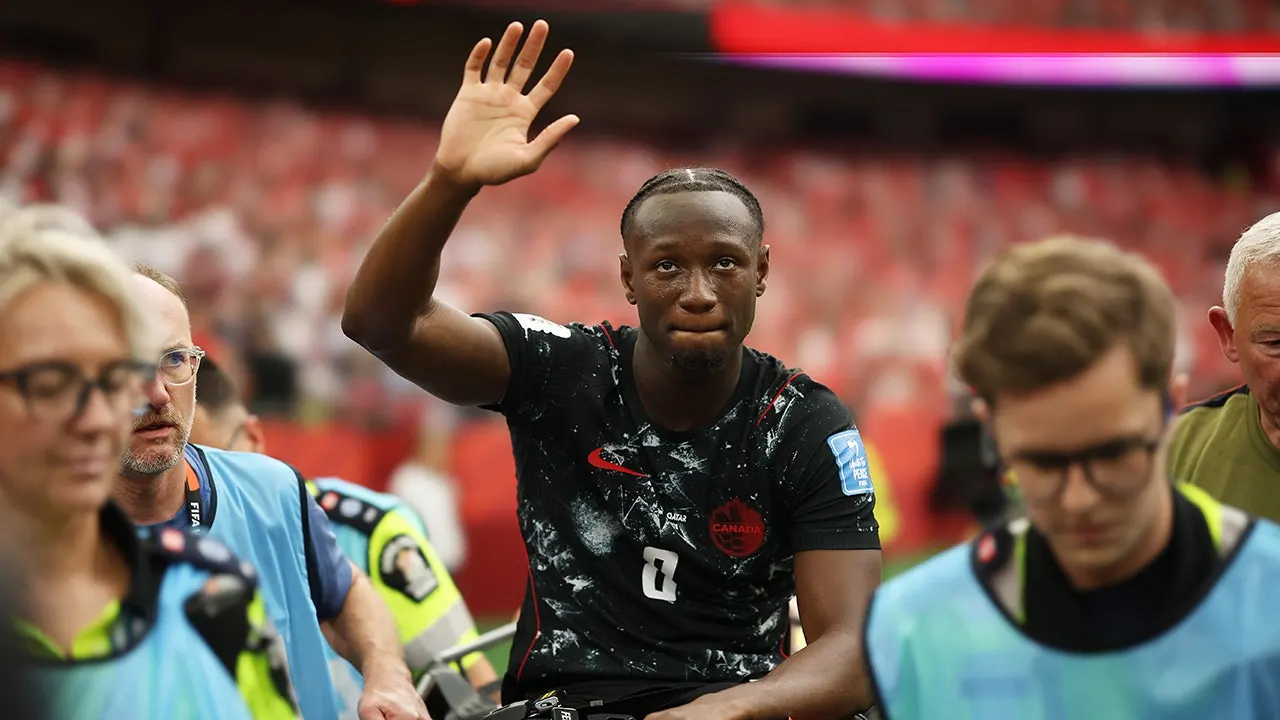
The atmosphere inside Vancouver’s iconic BC Place was exceptionally thick with history on Thursday afternoon, filled with a crackling, electric energy that only the global stage of the FIFA World Cup can generate. On this fateful day, Canadian men’s soccer took a monumental, historic leap forward, delivering a magnificent 6-0 thrashing of Qatar that will be remembered by sports fans for generations to come. This match was far more than a simple ninety-minute soccer game; it represented the vivid, long-awaited realization of a nation’s athletic dreams and a breathtaking display of raw dominance that ultimately secured Canada its first-ever World Cup victory. The stadium was a swirling, vibrant sea of red and white, filled with thousands of passionate supporters whose thunderous roars echoed under the massive retractable roof, creating an atmosphere of sheer, unadulterated joy. From the opening whistle, the Canadian squad played with a ferocious, relentless intensity, desperate to build on their hard-fought draw against Bosnia and Herzegovina in their opening fixture and prove their worth to the international footballing community. They possessed the ball with a beautiful, rhythmic precision, carving through the Qatari defense with ease and demonstrating a level of tactical sophistication that signaled their arrival on the world stage. The party started early in the sixteenth minute when Cyle Larin found the back of the net with a clinical finish, sending the home crowd into a state of absolute delirium and setting the tone for what was supposed to be a flawless afternoon of sporting excellence. As the early goals flowed and Canada asserted its complete control over the pitch, the narrative of the match seemed destined to be one of pure triumph, a golden chapter in the country’s sporting history. Yet, as any seasoned lover of the beautiful game understands, football is a sport of cruel, unpredictable contrasts, fully capable of delivering the highest peaks of human joy and the deepest, most agonizing valleys of heartbreaking despair in the span of a single, fleeting second.
The devastating counterweight to Canada’s historic triumph occurred in the second half, casting a dark, somber shadow over the entire stadium and silencing the vibrant, celebratory choruses of BC Place in an instant. In one horrifying moment, twenty-four-year-old midfielder Ismaël Koné, who had been orchestrating the Canadian midfield with brilliant vision, grace, and youthful vigor, fell victim to an extraordinarily brutal tackle from behind by Qatar’s Assim Madibo. The sheer violence of the challenge was immediately apparent to everyone in the arena, as Koné collapsed to the turf in a heap of unimaginable agony. On television replays and to those watching with bated breath from the sidelines, the visual was deeply disturbing, capturing a tragic image of the young midfielder’s left leg bent at an unnatural, sickening angle that was completely unsuitable for the faint of heart. It was the kind of sudden, career-threatening injury that makes seasoned athletes look away in terror and sends an icy, collective chill down the spines of spectators in the stands, grinding the celebratory mood to a screeching halt. Koné immediately went into a state of profound shock, his body reacting to the severe physical trauma as he desperately clutched his mangled limb before placing his hands flat against his head, a universal gesture of utter disbelief, vulnerability, and excruciating pain. The festive, triumphant energy that had defined Vancouver’s afternoon evaporated into a heavy, suffocating silence, replaced by the collective intake of breath from thousands of stunned onlookers who realized they had just witnessed a young man’s ultimate World Cup dream shatter on the pitch in real-time. This stark contrast between the beautiful, flowing soccer that preceded the incident and the cold, harsh reality of sports injuries served as a brutal, unforgettable reminder of the immense physical sacrifices elite athletes make every time they represent their country on the global stage, proving how fragile a sporting career can truly be when destiny intervenes.
The immediate aftermath of the tackle on the pitch was a chaotic mixture of fierce anger, deep distress, and profound professional worry. Canadian players and coaching staff instantly erupted in displeasure, rushing toward the spot of the foul to defend their fallen brother and demand justice from the officiating crew as tensions flared on the sidelines. Replays confirmed the worst, showing the sheer carelessness of Madibo’s challenge, which prompted an immediate video assistant referee (VAR) review that rightfully upgraded the initial ruling to a straight red card. This marked the second ejection of the match for a heavily disciplined Qatari side, following Homan Ahmed’s dismissal in the thirty-third minute, leaving the visitors severely depleted and compounding their struggles on the field. Yet, amidst the rising tension and the anger of the Canadian squad, a deeply human moment emerged from the Qatari side; Assim Madibo himself was visibly distressed, holding his hands to his head in agonizing remorse as he stood close to the medical staff who had rushed onto the pitch to stabilize the young midfielder. The Qatari defender seemed genuinely horrified by the unintended, devastating consequences of his reckless challenge, demonstrating the complex emotional spectrum of professional sports where competitive intensity can accidentally lead to tragedy. As the medical team carefully secured Koné onto a stretcher to carry him off the field, a powerful, warm round of applause cascaded down from the BC Place stands, a touching tribute from the home crowd to a young hero whose tournament had almost certainly come to a premature, tragic end. This display of solidarity between the suffering player, the remorseful opponent, and the compassionate fans highlighted the deep humanity that exists beneath the fierce rivalries of international athletics, proving that compassion and respect still reign supreme even in the heat of battle as the injured athlete was carried away.
In the wake of such a tragedy, the game of football demands that play must go on, forcing teams to summon their collective strength and find inspiration amidst their grief. For Canada, that heavy emotional burden fell squarely on the shoulders of Nathan Saliba, who entered the pitch as Koné’s substitute in the fifty-seventh minute, stepping into a pressurized environment thick with sadness and unresolved anxiety. What followed was a cinematic, deeply emotional manifestation of team brotherhood that captured the true, beating heart of the sport. Just seven minutes after stepping onto the field, Saliba channelled his complex emotions into a moment of pure brilliance, scoring a spectacular goal to stretch Canada’s lead to 4-0 and sending the stadium into a renewed frenzy of noise. However, instead of engaging in a standard, self-indulgent goal celebration, Saliba immediately sprinted toward the sidelines and hoisted Ismaël Koné’s jersey high into the Vancouver air, presenting it to the roaring crowd as a symbolic promise that the fallen midfielder was still very much a part of their historic journey. This beautiful tribute was a deeply moving gesture of solidarity, a public declaration that Koné’s sacrifice would not be forgotten and that the team would carry his spirit with them throughout the remainder of the tournament. The gesture resonated deeply with the fans in the stands, many of whom were brought to tears by the raw display of companionship, cementing Saliba’s goal not merely as a statistical contribution to a lopsided victory, but as a profound testament to the unbreakable bond shared by these young Canadian athletes who play for something far greater than themselves, proving that loyalty triumphs over adversity. This unforgettable moment bridged the gap between triumph and tragedy, turning a simple player substitution into a legendary narrative of love and respect.
Despite the heavy cloud hanging over the stadium, the Canadian national team continued their relentless offensive showcase, turning their numerical superiority into a historically dominant performance that left Qatar searching for answers. The chief architect of this attacking clinic was Jonathan David, who put on a virtuoso performance by recording a sensational hat trick that displayed his world-class finishing ability and high-level footballing intelligence. David opened his account in the twenty-ninth minute with a clinical strike, doubled his tally during first-half stoppage time, and finally capped off his magnificent afternoon with a clinical ninety-second-minute goal deep into second-half stoppage time, securing his place in Canadian soccer lore. Cyle Larin had already laid the foundation of this rout with his opening goal, and the misery for Qatar was compounded even further in the seventy-fifth minute when a frantic defensive sequence resulted in an unfortunate own goal scored by Mohammed Manai. This six-goal deluge was a statement performance from a Canadian side that had often been overlooked on the international stage, proving that they possess the offensive firepower and tactical discipline to compete with the very best teams in the world. Yet, even as the goals piled up and the scoreboard recorded a historic, unprecedented victory, the joy in the stadium remained bittersweet, inextricably linked to the thoughts of Koné recovering in a nearby hospital. The players competed with a dual sense of purpose, executing their tactics with flawless precision to honor their teammate while simultaneously securing a result that would echo through the annals of Canadian sporting history for decades to come, proving their collective resilience in the face of sudden tragedy. The clinical efficiency of the strikers and the steadfast support of the defensive line demonstrated a level of team maturity that bodes well for Canada’s future on the global sporting landscape.
With this historic 6-0 triumph officially in the books, Canada successfully catapulted themselves to the very top of Group B, earning four crucial points and positioning themselves on the precipice of securing a historic advancement to the knockout stages. Their path forward, however, remains highly competitive, as Switzerland also gathered four points following their dominant 4-1 victory over Bosnia and Herzegovina on the very same Thursday afternoon. This setup ensures an incredibly dramatic, winner-take-all showdown on June 24, when Canada and Switzerland will clash in a highly anticipated match to determine who will officially win Group B and secure a highly favorable seeding in the next round. As the Canadian squad transitions from the emotional highs and lows of Vancouver to prepare for this decisive fixture, the physical absence of Ismaël Koné will undoubtedly be felt on the pitch, but his spirit will serve as a powerful catalyst and a rallying cry for a team that has discovered its true identity through adversity. This unforgettable afternoon of soccer at BC Place perfectly encapsulated the beautiful, brutal, and deeply human modern reality of the World Cup, where triumphs and tragedies walk hand in hand, and where the ultimate victory is measured not just by the goals scored on the pitch, but by the resilience, brotherhood, and character a nation displays when its heroes are tested. As the world watches, Canada’s journey continues, fueled by a collective desire to make their fallen brother proud on the grandest stage of all, proving that the human spirit cannot be broken by injury and that the pursuit of glory is a collective endeavor that transcends individual pain and binds a country together in hope.