


The sports world is mourning the profound loss of Billy Ray Smith, a beloved former San Diego Chargers linebacker and College Football Hall of Famer, who passed away recently at the age of 64. His family shared the heartbreaking news of his transition, revealing that his final years were defined by a quiet, courageous battle against dementia—a condition directly linked to Chronic Traumatic Encephalopathy (CTE). In an intimate and deeply touching statement, his family remembered Billy Ray as a beacon of warmth, describing him as a man who “brought so much joy, light, and laughter to the world as a devoted father, husband, son, and loyal friend.” Their tribute painted a picture of a man who confronted the slow, agonizing decline of his physical and cognitive faculties not with bitterness, but with an unmatched level of dignity, bravery, and personal strength, leaving behind a legacy of resilience that extends far beyond the sidelines of the gridiron.
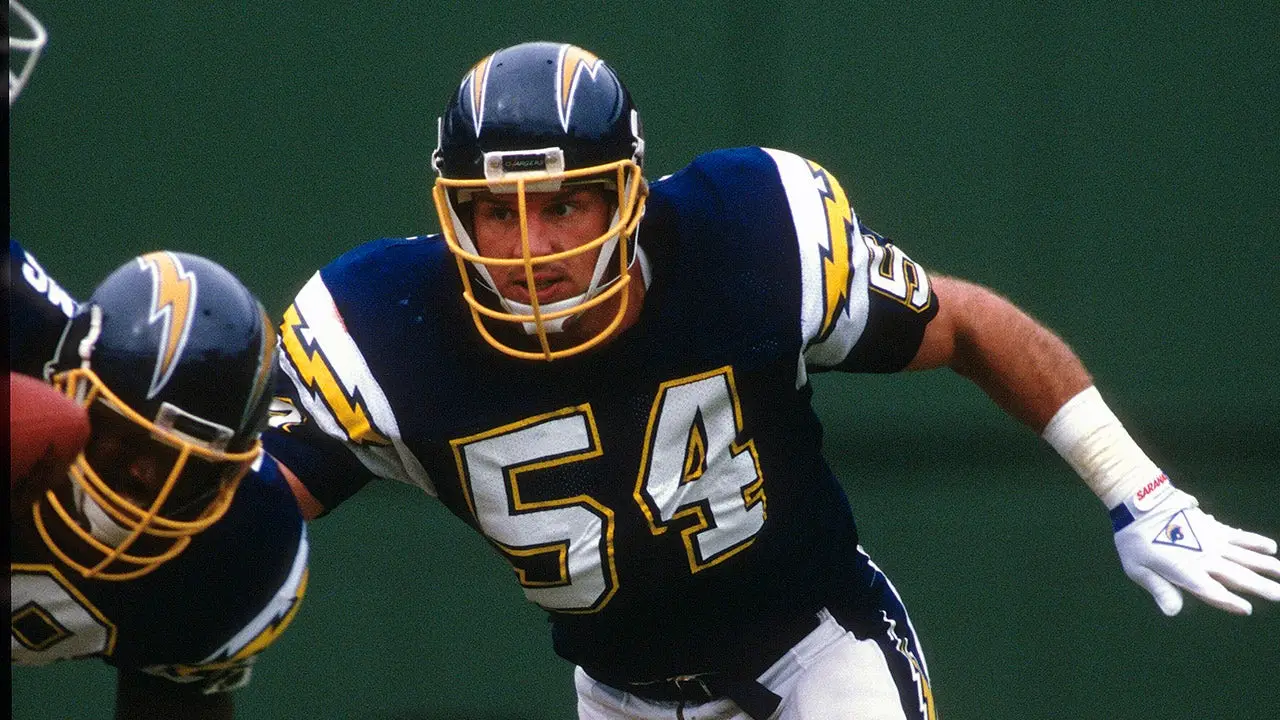
To understand the magnitude of this loss, one must revisit the sheer dominance and joy with which Billy Ray Smith played the game of football. Drafted as the prestigious number five overall pick in the 1983 NFL Draft out of the University of Arkansas, where his collegiate career earned him a permanent place in the College Football Hall of Fame, Smith went on to spend his entire decade-long professional career with the San Diego Chargers. He became a cornerstone of the defensive unit, a “Charger for life” whose relentless playstyle secured him a coveted spot on the franchise’s 50th Anniversary team. Over the course of 10 seasons, he amassed a remarkable stat sheet that reflected his defensive brilliance and raw instinct, recording 15 career interceptions, recovering 14 fumbles, and forcing another 13. Yet, it was his passion, his camaraderie, and the unbridled spirit he brought to every snap of the ball that truly endeared him to teammates and fans alike, establishing him as a legendary figure in San Diego’s sporting history.
However, the very physical sacrifice that defined his athletic prowess also highlights a sobering, silent epidemic within high-impact sports: the devastating reality of Chronic Traumatic Encephalopathy. As defined by the Mayo Clinic, CTE is a progressive, degenerative brain disease triggered not by a single, catastrophic head injury, but by the cumulative toll of repeated, sub-concussive head impacts sustained over years of play. The cruelty of CTE lies in its invisible progression; it systematically erodes an individual’s memory, mood, and cognitive abilities, transforming once-vibrant individuals into shadows of their former selves while offering no definitive way to be diagnosed until after death. Billy Ray Smith’s story is tragically representative of a much larger crisis, as a recent University of Utah study published in the Journal of Neurotrauma revealed that more than 100 former NFL players have been posthumously diagnosed with the disease, illustrating the steep, hidden price so many pays long after the stadium lights have gone dark.
The pain of this reality is currently being felt by a growing fraternity of football families who are courageously seeking answers details of their loved ones’ cognitive declines. This year alone, the families of other prominent sports figures—including Aldon Smith, Steve McMichael, and Claude Lemieux—have made the deeply painful yet profoundly generous decision to donate their loved ones’ brains to CTE research in hopes of saving future generations. These stories intersect in heart-wrenching ways; McMichael has battled the paralyzing effects of ALS (a disease also recently diagnosed in former running back Chris Johnson), while Lemieux tragically died by suicide, emphasizing the mental health crises that often run parallel to degenerative brain trauma. By donating these tissues to science, these grieving families are transforming their private agony into public advocacy, fueling the scientific search for diagnostic tools, preventative measures, and ultimately, a cure for the invisible wounds of contact sports.
The emotional void left by Billy Ray Smith’s passing has triggered a wave of collective grief and loving remembrance across the NFL community, perhaps most poignantly articulated by Chargers owner Dean Spanos. In a deeply personal eulogy, Spanos bypassed the cold statistics of Smith’s career to focus on the radiant essence of the man himself, stating, “To know Billy Ray was to love Billy Ray. Yes, he was a member of our 50th Anniversary team… But he wasn’t merely a great football player. He was, truly, larger than life. Always smiling. Lighting up every room he walked into.” Spanos reflected on the profound difficulty of processing the departure of someone who poured so much unconditional love and positivity into his community, expressing his deepest condolences to Billy Ray’s wife, Kimberly, and his daughter, Savannah, whose lives were made immeasurably brighter by his presence.
Ultimately, Billy Ray Smith’s life reminds us that our athletic heroes are, first and foremost, human beings who deserve to be remembered for their hearts rather than just their physical feats. As we honor his memory, we are also reminded of the profound importance of mental health, brain safety, and compassionate support for those struggling with cognitive decline or emotional despair. The transition from the roaring applause of a stadium to the quiet, confusing halls of dementia is a journey no one should have to walk alone, and it requires a societal commitment to empathy, research, and intervention. If you or someone you love is navigating the dark waters of mental health struggles or experiencing thoughts of self-harm, please reach out to the National Suicide Prevention Lifeline at 1-800-273-TALK (8255)—because even in our darkest moments, there is hope, there is help, and no one has to fight the battle in silence.