

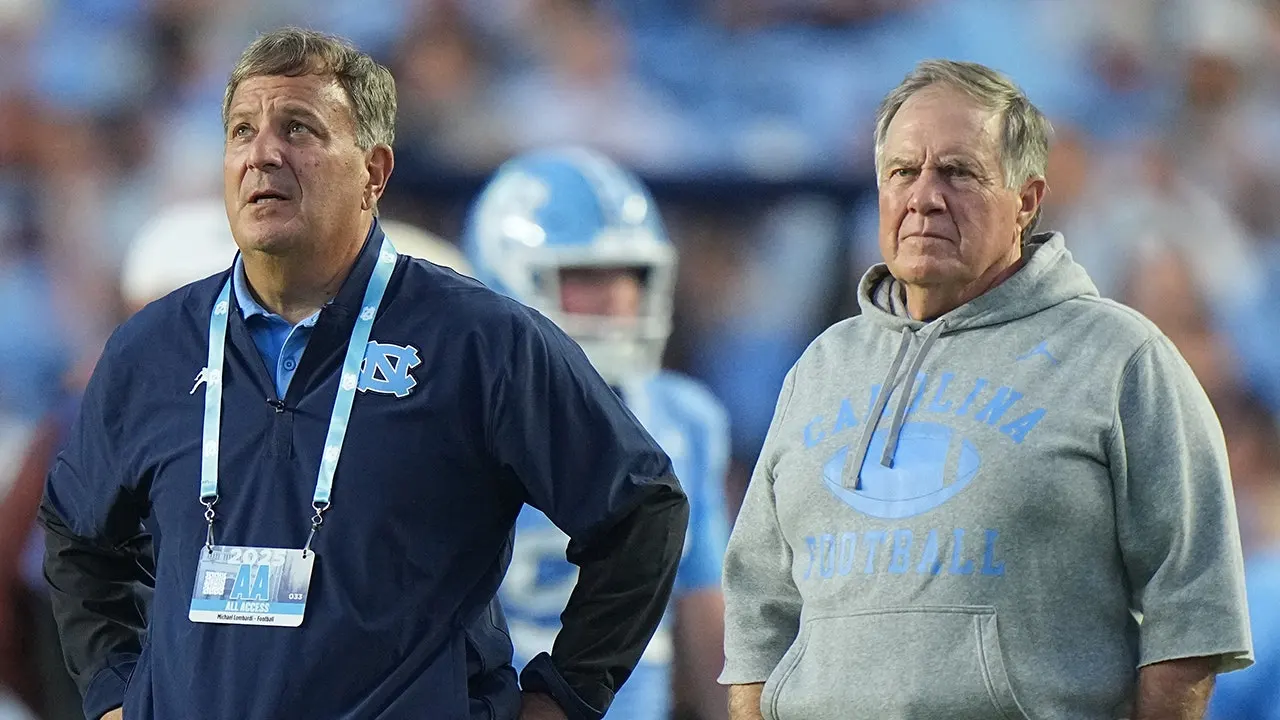
The transition from the hyper-structured, corporate environment of the National Football League to the emotionally charged, historically rich landscape of college sports is rarely seamless, as legendary head coach Bill Belichick is discovering firsthand in Chapel Hill. When Belichick first arrived at the University of North Carolina, the atmosphere was charged with an electric mixture of disbelief and immense expectation, yet his inaugural campaign was instantly plagued by off-field narratives that drowned out the actual football. Now, as the sweltering heat of August signals the arrival of fall camp and the dawn of his second season, history seems to be repeating itself in a highly frustrating way. Instead of analyzing offensive schemes, defensive packages, and the development of promising young student-athletes, the Tar Heels community is once again forced to look away from the gridiron and toward the administrative offices. The air in Chapel Hill should be filled with the crisp optimism of a brand-new season and the pursuit of redemption after a disappointing debut, but instead, a heavy fog of uncertainty hangs over Kenan Memorial Stadium. UNC officials recently confirmed a development that sent shockwaves through the program: general manager Michael Lombardi has been placed on administrative leave pending an internal investigation. This sudden personnel move has cast a long, distracting shadow over the team’s preparations, leaving fans, analysts, and the players themselves wondering how a program seeking stability can find its footing when its leadership structure is so deeply fractured. The contrast between the physical grind of the players on the practice fields and the silent, high-stakes maneuvering in the university’s legal offices highlights the complex, often chaotic reality of modern college athletics, where the line between game-day preparation and institutional crisis management is constantly blurred.
The details surrounding the investigation remain frustratingly sparse, creating a vacuum that has been rapidly filled by speculation, rumors, and anxiety. What began as a quiet administrative action on July 27 was formally acknowledged on a Thursday when university officials announced that the Office of University Counsel had officially initiated a probe into unspecified allegations. In the high-stakes world of major college football, the role of a general manager is critical; they serve as the architect of the roster, the bridge between coaching staff and administration, and the strategic planner for name, image, and likeness (NIL) initiatives. Losing a figure as influential as Michael Lombardi just as the team enters the critical phase of fall camp is a massive operational blow, yet the university has chosen to treat the situation with the utmost discretion, characterizing it strictly as a confidential human resources matter. This wall of silence has left a passionate fan base in the dark, desperate for answers but receiving only carefully worded corporate statements. The vacuum of information has inevitably intensified the spotlight on the program, transforming what should have been a routine week of physical conditioning and playbook installation into a masterclass in crisis communications. The silence from the athletic department’s upper echelons suggests a deep-seated concern that whatever the investigation uncovers could have far-reaching implications, not just for Lombardi’s career, but for the integrity and public perception of the entire North Carolina football program at a time when college sports are already undergoing unprecedented scrutiny and systemic change.
When Bill Belichick stood before the media at a highly anticipated press conference, onlookers expected a masterclass in redirection, and the veteran coach did not disappoint. True to the stoic, laser-focused persona that defined his historic tenure in the NFL, Belichick masterfully sidestepped direct questions regarding Lombardi’s indefinite absence and how it might disrupt the team’s delicate ecosystem. Rather than offering specific details or expressing personal sentiment, Belichick retreated to his familiar, pragmatic philosophy, stating simply that the team was “working through some things” on a day-to-day basis. He painted a picture of a program operating in seasonal cycles, noting that certain organizational matters are naturally in play at this time of the year while others will resolve themselves later in the calendar. To the untrained eye, his comments might have seemed dismissive or evasive, but to those who understand the relentless nature of football operations, it was a deliberate attempt to build a protective wall around his players. By refusing to engage in speculation, Belichick attempted to signal to his locker room that the outside noise must remain outside, and that the only reality that matters is the one taking place on the practice turf. Yet, even for a coach of his legendary stature, navigating the complex bureaucratic channels of a major public university is vastly different from running an NFL franchise, where the head coach often wields absolute authority. At UNC, Belichick must operate within a web of academic integrity, legal compliance, and public accountability, making his signature “do your job” mantra significantly more difficult to enforce when the job itself is being scrutinized by university lawyers.
Behind the scenes, the tension between the athletic department and the broader university administration is palpable, reflecting a deeper systemic struggle over the institution’s priorities. Athletic Director Steve Newmark found himself walking a delicate tightrope, publicly acknowledging the urgent need for a swift resolution while simultaneously emphasizing that the Office of University Counsel must conduct a thorough, legally airtight investigation. Newmark’s statements revealed the difficult balance that modern athletic directors must strike: they must protect the competitive interests of their teams while upholding the ethical and legal standards of the universities they represent. This bureaucratic tightrope walk has clearly taken a toll on the school’s leadership, perhaps most visibly on Chancellor Lee Roberts. Following a regularly scheduled Board of Trustees meeting, Roberts initially attempted to remain above the fray, but his mounting frustration eventually boiled over during a recent media session. In a candid and weary address, Roberts expressed his deep disappointment that the conversation surrounding UNC had once again drifted away from the achievements and well-being of the student-athletes. His distress is a poignant reminder of the human cost of these public scandals; for every headline about administrative investigations and coaching staff drama, there are dozens of young athletes whose hard work, dedication, and personal stories are pushed into the background. Roberts’ plea to refocus the spotlight on the students underscores the fundamental conflict at the heart of modern collegiate sports, where the romanticized ideal of the student-athlete is constantly threatened by the high-finance, high-drama realities of big-time athletic programs.
As the university’s legal machinery slowly grinds forward, Michael Lombardi is not standing by idly; he has mobilized his defense by hiring prominent and fiercely protective attorney Tom Mars. Known in the collegiate sports landscape for his aggressive defense of high-profile clients, Mars wasted no time in launching a counter-offensive to protect his client’s tarnished reputation. In a sharply worded statement, Mars revealed that Lombardi has yet to be informed of the specific nature of the allegations against him, leaving him in a state of professional limbo while his name is subjected to rampant speculation and social media innuendo. Mars characterized the online discourse surrounding Lombardi as baseless and deeply damaging, reminding the public of the real-world consequences that occur when an individual’s integrity is tried and convicted in the court of public opinion before any formal findings are made. The statement emphasized Lombardi’s full cooperation with the university’s probe, alongside an earnest plea for decency, fairness, and patience from the public. This legal skirmish adds a deeply human element to the unfolding drama, illustrating how quickly a lifetime of professional achievement can be threatened by administrative actions and digital gossip. It serves as a stark reminder that behind the corporate jargon of “personnel actions” and “internal investigations” are real human lives, families, and careers that can be permanently altered by the swift and often merciless currents of modern media and institutional self-preservation.
Ultimately, the true test of Bill Belichick’s leadership at North Carolina will not just be decided by how many games the Tar Heels win on Saturdays, but by how effectively he can shield his roster from this gathering storm. Coming off a disappointing 4-8 inaugural season that failed to live up to the astronomical expectations of the fan base, the pressure to produce a winning product on the field is already immense. Young athletes are incredibly perceptive, and keeping a locker room focused on blocking, tackling, and conditioning is an uphill battle when the very structure of their program’s front office is in jeopardy. As the Tar Heels push forward through the grueling days of August camp, the coaching staff must find a way to transform this adversity into a unifying force, challenging the players to find solace and purpose within the white lines of the football field. In a world where college sports are increasingly dominated by transfer portals, NIL negotiations, and administrative controversies, the ability to maintain focus amidst chaos has become the ultimate competitive advantage. Whether Belichick can guide this program through its current institutional crisis and steer the Tar Heels back toward national prominence remains to be seen, but one thing is certain: the path to redemption in Chapel Hill will require every ounce of resilience, discipline, and grit that the legendary coach and his players can muster.