



The intersection of family legacy and athletic promise is rarely as crowded or as heavily scrutinized as it has been for Arch Manning. Carrying one of the most legendary surnames in American sports history, the young quarterback arrived at the University of Texas not just as a highly touted recruit, but as a symbolic heir to a historic football dynasty. Long before he ever strapped on a Longhorns helmet or took a meaningful snap in a collegiate game, the media and fan bases alike had constructed an almost mythical narrative around him. They treated his ultimate success not as a goal to be worked toward through sweat and failure, but as an absolute, foregone conclusion. This preemptive coronation highlighted a broader, more systemic trend in modern college sports, where the hunger for the next superstar often eclipses the biological and emotional reality of a young athlete’s development. For a teenager transitioning from the relatively shielded environment of high school football in Louisiana to the high-stakes pressure cooker of a powerhouse program like Texas, the noise was deafening. Every throw in practice, every sideline expression, and every clip on social media was analyzed under a microscope, transforming what should have been a standard period of collegiate learning into a daily public trial. Yet, behind the glitz of the five-star recruiting rankings and the relentless television segments lay a young man simply trying to find his footing in a game that his grandfather, father, and uncles had mastered before him. This pressure, while largely self-inflicted by a sports culture obsessed with legacy, left virtually no room for the typical mistakes, doubts, and learning curves that define the college experience for almost every other freshman in the nation, setting up a complex and stressful dynamic between external hype and the quiet, internal reality of his developmental journey.
It is this exact rush to judgment that has deeply concerned the patriarch of the family, Archie Manning, who recently shared his heartfelt reflections on the immense pressure placed upon his grandson’s shoulders. Speaking with a mix of grandfatherly tenderness and the weathered wisdom of a former NFL icon who knows the fickle nature of football fame, Archie expressed a profound sense of disappointment in how the public and media handled Arch’s transition to the college level. He lamented the fact that people had essentially crowned the young quarterback before he had ever had the chance to prove himself on a college field, calling the immense expectations deeply unfair to a young athlete. For Archie, who watched his own sons, Peyton and Eli, navigate their own high-profile paths to football immortality, the level of scrutiny surrounding Arch felt unprecedented and needlessly burdensome. He recognized that the modern media landscape, fueled by a relentless news cycle and viral social media posts, creates an environment where patience is a forgotten virtue, and young people are rarely allowed the grace of time. By projecting an aura of perfection onto a player who had not yet faced a collegiate defense, the public set an almost impossible standard that ignored the inevitable challenges of adapting to a higher level of play. Archie’s comments serve as a poignant, grounding reminder that under the jersey is a human being who deserves the space to fail, to learn, and to grow without the weight of an entire fan base’s historic expectations resting solely on his shoulders from the moment he steps onto campus.
Despite the overwhelming storm of external expectations and the inevitable challenges of his early collegiate career, Arch Manning demonstrated a level of resilience that perhaps speaks louder than any stat line ever could. His transition was far from seamless, featuring a tough start where he had to adjust to the speed, complexity, and sheer physicality of the college game while playing against top-tier competition. Sitting on the bench and waiting for his turn—a scenario that many highly rated modern recruits might greet with impatience or immediate transfer portal queries—became a crucible for his character. Rather than shrinking under the spotlight or letting the frustration of backup status deter him, Arch put his head down, focused on self-improvement, and worked quietly behind the scenes, earning the quiet but fierce admiration of his college teammates, coaches, and the locker room dynamic that so often fractures under the weight of such massive outside hype. Archie Manning noted that he had never been prouder of anyone in his life than he was of Arch for the grit and character he displayed in battling through those early difficulties. As the season progressed, particularly during the final eight or nine games, a noticeable shift occurred as Arch began to find his rhythm, showcase his arm talent, and display the poise that has long been a trademark of his family. This period of quiet dedication and steady improvement revealed a maturity that went far beyond his years, proving that he was willing to earn his place in the locker room through hard work rather than relying on his famous last name to carry him.
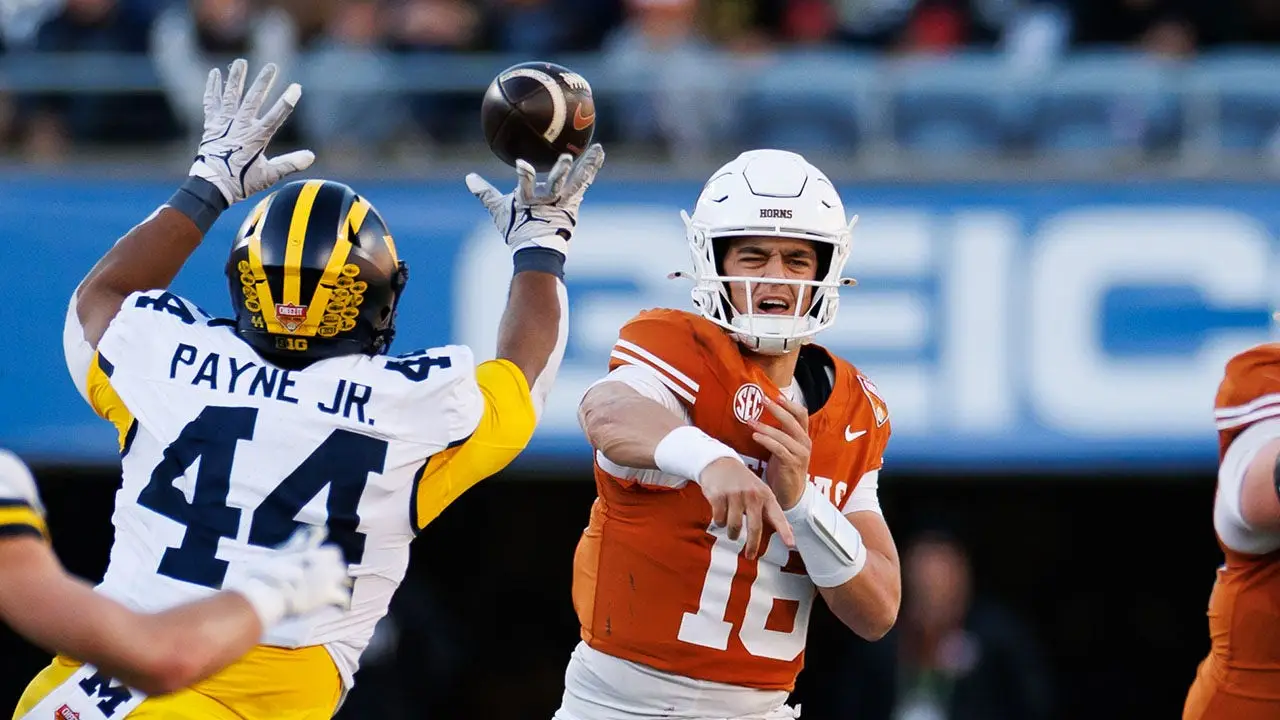
The patience and hard work ultimately bore fruit in a spectacular fashion during the 2025 campaign, a season where Arch Manning began to truly write his own narrative on the collegiate gridiron. Amassing an impressive 3,163 passing yards and throwing for 26 touchdowns, marks that placed him among the elite in Texas program history, he silenced many of the skeptics who wondered if he would ever live up to the monumental hype that preceded his arrival in Austin. This breakout year was not just a collection of impressive statistics, but a testament to his tactical evolution, showing a young quarterback who had learned to read complex defensive coverages, command the huddle with authority, and make high-pressure plays when the games hung in the balance. His performance effectively shifted the public conversation from what Arch might do to what he was actively doing, solidifying his status as one of the premier quarterbacks in the country. However, in the paradoxical world of college football, this success did not alleviate the pressure; instead, it elevated the stakes even further. As the quarterback who had finally delivered on his immense promise, he was no longer praised just for his potential, but was now expected to be the catalyst that would propel the Texas Longhorns back to the absolute pinnacle of college football, creating an entirely new set of lofty expectations as he looked toward the future of his career.
As the calendar turns toward the highly anticipated 2026 season, the spotlight on Arch Manning is set to burn brighter than ever, with fans and analysts anticipating a season that could define both his collegiate legacy and his future NFL Draft prospects. The Texas Longhorns are scheduled to kick off this pivotal campaign on September 5th against Texas State, a matchup that offers a chance to fine-tune the offense and build early momentum, though it is widely viewed as merely a prelude to the true test that awaits them just one week later. On September 12th, the Longhorns will host the powerhouse Ohio State Buckeyes in a monumental home game that will serve as an immediate, high-stakes litmus test for Manning and his team. This matchup is precisely the kind of national stage that defines a quarterback’s career, offering a direct opportunity to showcase his ability against one of the elite programs in the nation on a massive broadcast. With the expanded College Football Playoff looming as the ultimate goal for Texas, every single game carries postseason implications, and the pressure on Manning to not only perform but to lead his team through a grueling schedule is immense. He will be expected to elevate those around him, maintaining his composure in the face of elite defenses and proving to NFL scouts that he possesses the mental and physical tools to succeed at the next level, making this upcoming season a critical chapter in his ongoing football journey.
Ultimately, the story of Arch Manning is more than just a sports narrative about yards gained, touchdowns thrown, or draft boards updated; it is a deeply human parable about the challenges of navigating extraordinary pressure in the modern era. In an age where young athletes are often treated as commodities, brands, or vessels for fan expectation, the relationship between Arch and his family highlights the enduring importance of grounded support and realistic perspectives. Archie Manning’s willingness to speak out against the premature crowning of his grandson serves as an important defense of a young man’s right to his own humanity, reminding us that athletic development is a journey filled with setbacks and learning opportunities rather than a straight line to superstardom. As Arch prepares to take the field for another grueling season, he does so not just as a member of football’s royal family, but as a young player who has fought through adversity, earned his achievements, and learned to tune out the external noise in favor of personal growth. Whether he leads the Longhorns to a national championship or eventually takes his place in the NFL, the true measure of his success may well lie in the resilience and grace he has shown while walking one of the most heavily scrutinized paths in sports history, proving that character is built in the quiet moments of struggle rather than the loud arenas of hype.