


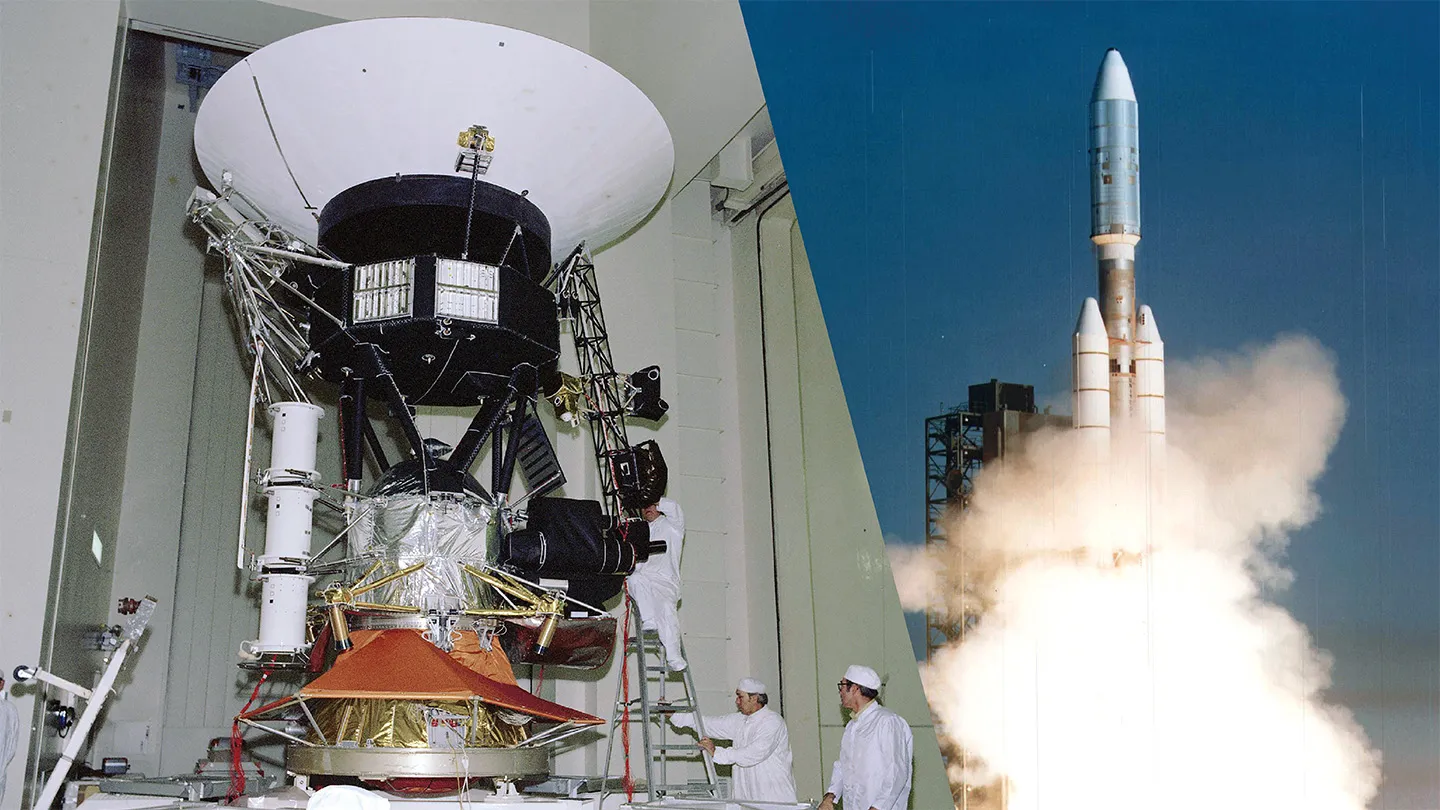
On November 18, a small, aging spacecraft will silently cross a threshold unlike any before it, marking one of the most poignant milestones in human exploration. Voyager 1, launched nearly 50 years ago, has already become the farthest human-made object from Earth, overtaking Pioneer 10 in 1998 and becoming the first spacecraft to slip beyond the solar system’s protective bubble. At 5:16:07 a.m. Eastern Standard Time, it will reach one light-day from Earth—a staggering 25.9 billion kilometers away, more than four times the distance from the Sun to Pluto. From that moment, a signal sent from our planet will take an entire day to reach Voyager 1, and if it answers, its voice will take another day to travel back home. There is something deeply humbling about that: a conversation with our own creation, stretched across a day of silence. For Linda Spilker, a planetary scientist at NASA’s Jet Propulsion Laboratory who began working on Voyager before its 1977 launch, the mission’s endurance is still hard to believe. She was there in Cape Canaveral for the first launch. She planned the births of her children around mission milestones, and those children are now in their 40s. Voyager, she says, is a multi-generational mission, but it is not a work of nostalgia. It still lives on the edge of discovery, sending back data from places no one has ever explored before. As physicist Jamie Rankin of Princeton University puts it, every piece of data, every single day, tells us something new. The spacecraft, built with technology far less powerful than the phone in your pocket, has become humanity’s quiet, resilient messenger to the stars. It has outlasted presidents, wars, revolutions, and countless technological revolutions of its own. It has carried our curiosity farther than any myth, dream, or ambition has ever carried us, and now, one light-day away, it waits in the dark, still listening, still whispering back.
The original mission of the Voyager probes, though, was far more humble and practical than the epic voyage we imagine today. In the early 1970s, when planning began, no spacecraft had ever traveled beyond Mars. The solar system’s outer planets were almost entirely unknown territory, and the idea of sending a probe on a multi-planet tour seemed almost arrogant. But nature had offered a rare gift: a perfect planetary alignment that would allow a spacecraft launched in the late 1970s to swing past Jupiter, Saturn, Uranus, and Neptune, using each planet’s gravity as a slingshot to push it onward. Such an alignment will not happen again until the 2150s. The mission’s conservative official goal was simply to fly by Jupiter and Saturn, but with two spacecraft launched as insurance, there was room for audacity. After two nail-biting launches and nearly two years of silence and anticipation, the Voyagers began pouring back images and measurements that rewrote textbooks in real time. They revealed volcanoes erupting on Jupiter’s moon Io, the swirling madness of the Great Red Spot, and signs of strange, frozen activity on Saturn’s moon Enceladus. They sent back the first clear images of Uranus and Neptune, discovering rings where none were expected and dozens of moons no one had ever seen. On Neptune, they found a storm so powerful that it churned endlessly in the planet’s cold blue atmosphere, and on Neptune’s moon Triton they spotted icy geysers erupting from a world that should have been frozen solid. Ed Stone, the mission’s original chief scientist, once said that the planetary encounters alone packed a lifetime of discovery into each pass. The images were shared in newspapers and on television, giving people around the world their first glimpses of strange, distant worlds. But the most astonishing discovery came almost by accident, after the excitement of the Jupiter flyby had begun to fade.
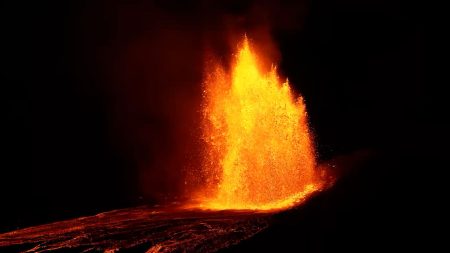
Four days after Voyager 1’s closest approach to Jupiter, project astronomer Linda Morabito was processing routine navigation images of Io, enlarging and enhancing them in an effort to pinpoint the spacecraft’s path. Something odd caught her eye: a strange, bulbous shape rising from the moon’s edge, like a bump that had no business being there. She asked herself, “What’s that?” and her supervisor had the same baffled reaction. When they enhanced the image further, the bump revealed itself to be a volcanic plume—a towering fountain of fire and sulfur that stretched roughly 250 kilometers above Io’s surface. It was the first active volcano ever seen anywhere beyond Earth, and it changed everything. The outer solar system, long imagined as a cold, inert icebox, was actually alive, churning with energy, heat, and possibility. That single discovery reshaped planetary science and inspired a generation of follow-up missions. Galileo, orbiting Jupiter from 1995 to 2003, found evidence that Europa might hide a subsurface ocean capable of supporting life. Cassini, which studied Saturn from 2004 to 2017, discovered that Enceladus also harbors a potentially habitable ocean, one that vents icy geysers into space. In a way, every one of those later discoveries traces its ancestry back to that strange bump on Io, spotted by a woman staring at an image in a quiet room. Years later, in 1990, Carl Sagan persuaded mission controllers to turn Voyager 1’s camera backward for one last look at the planets. From billions of kilometers away, Earth appeared as a pale blue dot, a mote of dust suspended in a sunbeam. Sagan’s words about that photograph remain one of the most moving reflections ever written about our place in the universe: everyone you love, everyone you know, everyone who ever lived, all of human history happened on that tiny speck. Soon after, the cameras were switched off forever, because the spacecraft were heading somewhere where there would be nothing left to see.
What lay beyond the planets was a mystery more profound than anyone had anticipated. The Sun does not simply end at the orbit of Neptune; it exudes a constant stream of hot, charged particles called the solar wind, which carves out a vast bubble around our solar system known as the heliosphere. That bubble is our cosmic shield, deflecting radiation and shaping the environment in which planets and life have evolved. Its outer edge, the heliopause, had never been crossed by any human object, and scientists did not know exactly where it was or what it would feel like when a spacecraft finally reached it. For 35 years, Voyager 1 traveled inside that great protective envelope, sailing through the solar wind like a ship in a familiar harbor. Then, in August 2012, just as Jamie Rankin was beginning her doctoral work, Voyager 1 detected a dramatic shift. High-energy cosmic rays from deep space surged, while solar particles plummeted. It looked as though the spacecraft had finally broken through. But the magnetic field measurements were confusing, suggesting that the Sun still had some grip on the region. The answer came months later, thanks to a lucky cosmic accident. In April 2013, a solar eruption sent a pressure wave rippling outward through space, setting the electrons around Voyager 1 vibrating like a struck bell. By measuring those vibrations, scientists could estimate the density of charged particles in the surrounding space. The numbers matched interstellar space, not the solar wind. Voyager 1 had actually crossed the heliopause on August 25, 2012, at about 18 billion kilometers from Earth—roughly 120 times the distance between our planet and the Sun. Voyager 2 later confirmed the discovery from a different direction. Ed Stone called it the beginning of a new era of exploration. But what surprised everyone was how messy, how porous, how unexpectedly complicated that boundary turned out to be.
The so-called edge of the solar system is not a clean line but a turbulent, blurry frontier, where the Sun’s influence leaks far deeper into interstellar space than models predicted. On the far side of the heliopause, Voyager 1 encountered a strangely quiet realm. Particle speeds dropped, temperatures fell, and the magnetic field weakened. Even the dust density was only about half of what it had been inside the heliosphere. For the most part, the interstellar medium has felt calm and stable, but it is not completely silent. In four separate episodes, scientists observed sudden spikes in magnetic field strength and particle density around Voyager 1. After the fourth spike, in mid-2020, those elevated readings have lingered, refusing to settle back down. No one knows why. It may be that Voyager 1 is still feeling the aftershocks of solar eruptions, disturbances from our own Sun traveling far beyond where anyone expected them to reach. The shape of the heliosphere itself remains an open question; most researchers believe it is elongated like a comet, but others argue it could be spherical or even shaped like a croissant. Newer missions, such as the Interstellar Boundary Explorer and the recently launched Interstellar Mapping and Acceleration Probe, are trying to answer that question, looking back from deep space to map the boundaries of our home. Meanwhile, the Voyagers keep sailing onward, carrying less power with each passing year. Scientists estimate that the radioisotope power sources that keep their instruments alive will run dry within ten to fifteen years. When that happens, the spacecraft will no longer be able to send data home. Our conversation with them will fall silent. But their journey will not stop. They will continue drifting through the Milky Way, wordless, invisible, but still moving toward the distant stars. In about 42,000 years, Voyager 2 will pass close to a red dwarf star called Ross 248, coming within 700 light-days. About 44,000 years from now, Voyager 1 will have its own close encounter with a star known as Gliese 445. It is a timescale that dwarfs all of recorded history, a reminder that these little machines will endure long after our names, our nations, and perhaps our species are gone.
And that, perhaps, is why the Golden Record remains the most moving part of the Voyager story. Each spacecraft carries a gold-plated phonograph record, a time capsule designed to tell any intelligent being who might find it something about life on Earth. It contains a map of the solar system, images of human monuments and landscapes, greetings in dozens of languages, and the sounds of our world: whale song, laughter, classical compositions, Navajo chants, the crackle of distant thunder. It was conceived as a gesture of optimism, a way of saying that humanity existed, that we loved, that we dreamed, that we reached for something beyond ourselves. Linda Spilker says the Golden Record captures the hope and promise of the entire mission, and that it may well outlast humanity. There is something almost unbearably poignant about that thought. A phonograph record, an artifact from an analog era, riding on a spacecraft launched before the personal computer existed, carrying the voice of a species that may one day disappear. The Voyagers are not just scientific instruments; they are our letters sent into the dark, our way of saying, across unimaginable distances, that we were here. Every time we hear from them, we are reminded of what we are capable of when we are brave, curious, and willing to wait. One light-day from Earth, they still call home, and we still answer. One day, soon, that call will stop. But the silence that follows will not be empty. It will be filled with everything we have learned, everything we have hoped, and everything we dared to send out into the stars.