


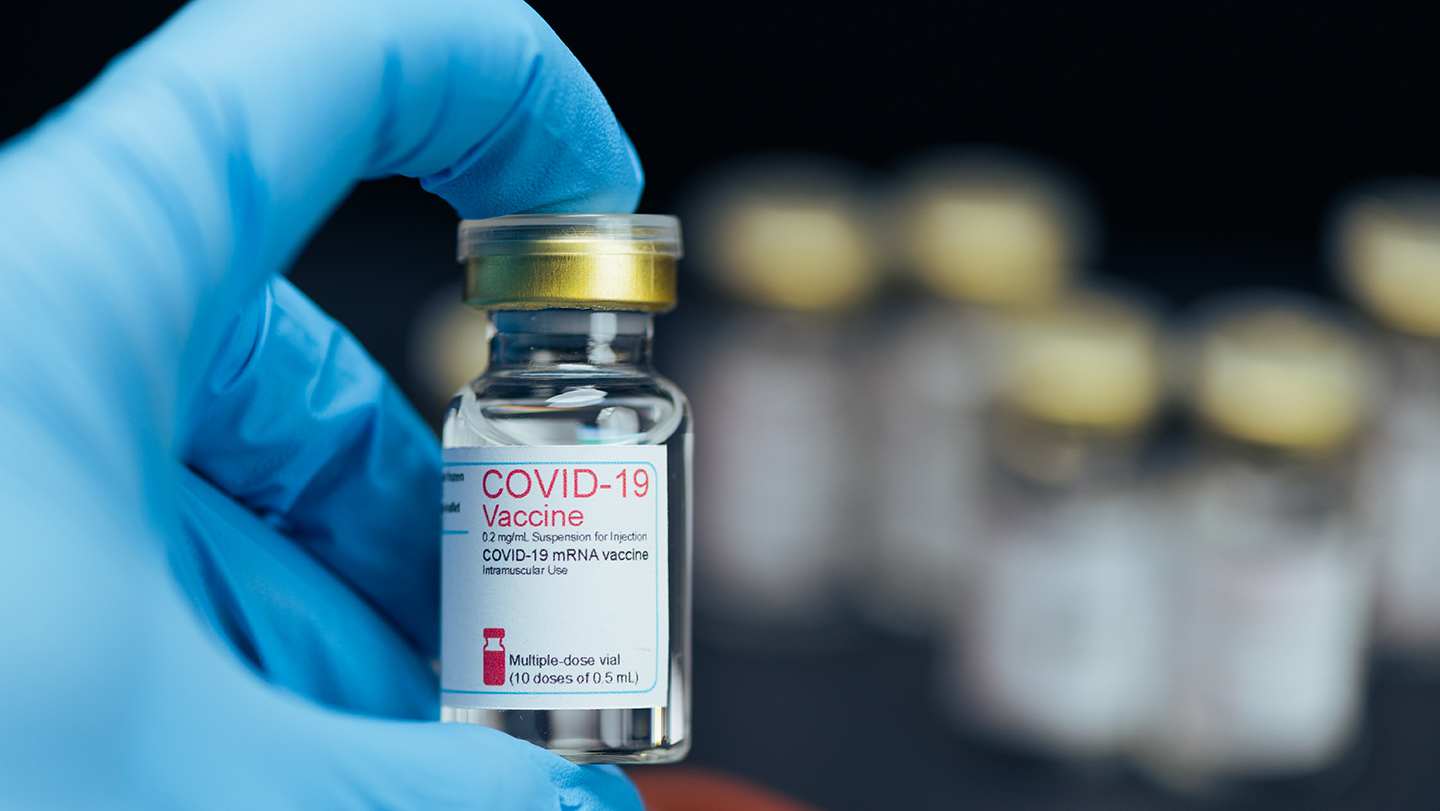
Imagine sitting in a quiet exam room, the kind of room where time seems to slow down. You have just been told you have glioblastoma. It is the most aggressive form of brain cancer, a disease that often gives patients only a year or so with the people they love. Treatment plans follow a familiar, grim rhythm: surgery or biopsy, then radiation and chemotherapy. Every family clings to numbers, to clinical trials, to anything that might buy a few more months. Now imagine learning that a simple COVID-19 vaccine shot—something you may have gotten at a pharmacy or a community clinic—might have quietly doubled survival time for glioblastoma patients who had recently undergone a tumor biopsy or surgery. That unexpected finding reads less like a medical breakthrough and more like a moment of grace in a disease that offers too few of them. It is not a cure. It is not even a therapy yet. But it is a startling glimpse of hope hidden inside a vaccine designed for an entirely different threat.
To understand why this is so remarkable, you need to appreciate how steep the odds are in glioblastoma. This is a cancer that grows quickly, invasively, and stubbornly. It wraps itself around healthy brain tissue, defeating most forms of treatment and almost always returning after initial therapy. Even with the best surgical care, the most precise radiation, and chemotherapy that leaves patients exhausted, the median survival remains heartbreakingly short. For years, researchers have tried to coax the immune system into attacking brain tumors, but glioblastoma is a master of disguise and suppression. It creates a fog of signals around itself, telling immune cells not to attack. It hides behind the blood-brain barrier, sending the message that no danger exists. This is why the suspicion that a vaccine meant for SARS-CoV-2, the virus that causes COVID-19, could somehow give these patients extra time feels almost impossible. Yet that is exactly what the data seem to suggest. When patients who had undergone a biopsy or surgery received a recent shot of the COVID-19 vaccine, their survival time doubled compared to similar patients who did not receive that shot. The observation is raw and preliminary, but it is compelling enough to demand attention.
Let’s be precise about what this finding actually shows, because precision matters when we talk about hope. This was not a clinical trial designed to treat brain cancer with a COVID-19 shot. No doctor walked up to a patient and said, “Have this vaccine to shrink your tumor.” Instead, likely looking back at medical records and recognizing a pattern, researchers noticed that glioblastoma patients who had already gone through a biopsy or surgery and then received a COVID-19 vaccine lived roughly twice as long as those who had not. The biopsy or surgery part of the story is not a small detail. It may be the key. When a surgeon cuts into a tumor or takes a needle sample of it, the brain’s hidden tumor is suddenly exposed. Fragment of the tumor enter the bloodstream. Inflammation begins. The immune system, which has been kept in the dark for a long time, finally gets a look at the enemy. A vaccine given at that moment could act like an amplifier, revving up the immune response at exactly the right time, making it more likely that immune cells will not only notice the tumor but also launch an attack on it. That is the hope whispered between the lines of this observation.
But behind every statistic is a human being, and this finding deserves to be humanized. For a glioblastoma patient, survival time is not just a number on a chart; it is mornings watching the sun come up, afternoons spent with grandchildren, evenings holding your partner’s hand a little longer. Doubling survival time could mean months that were never promised. It could mean attending a wedding that seemed impossible, finishing a letter that had been started years ago, celebrating one more birthday with a shaky but grateful voice. The patients in this observation were probably not thinking about immunology when they rolled up a sleeve for their COVID-19 vaccine. They were thinking about staying safe from a virus that had swept the world. They were thinking about protecting themselves, maybe protecting family. They never knew they were part of something potentially larger. That is the strange beauty of medical discovery. Often, the people who contribute to it are simply trying to live their ordinary lives. In a disease like glioblastoma, ordinary life is a gift, and if a shot meant for a virus can stretch that gift, then we need to listen carefully to what the science is telling us.
How could a COVID-19 vaccine possibly affect a brain tumor? The immune system is not a simple machine; it is a network of memories, signals, and reactions. The mRNA vaccine tells cells to build a harmless piece of the spike protein, and the immune system notices that piece and mounts a fierce response. It sends soldier-like T cells into the bloodstream, wakes up memory cells, and triggers a powerful inflammatory alarm. For a glioblastoma patient who recently had surgery or a biopsy, that alarm may be enough to break the tumor’s hold over the immune system. The brain is no longer a quiet sanctuary; it is shaken by the surgery, leaking proteins, flashing emergency signals. The T cells, already mobilized by the COVID-19 vaccine, may accidentally stumble into the tumor site and notice something strange. They were trained to recognize the spike protein, but the chaos around the tumor might also make them recognize the cancer’s own abnormal proteins. This is sometimes called a bystander effect or an off-target immune activation. Another possibility is molecular mimicry, where a piece of the tumor looks vaguely like a piece of the virus, fooling T cells into attacking both. These ideas are still theories, but they are grounded in the way immune systems work: once activated, they do not always stick to the script. They explore, they attack, and sometimes, in a beautiful accident, they defeat an enemy they were never asked to fight.
Still, we must hold this hope with open hands and cautious minds. A single observation, however promising, does not prove cause and effect. It could be that patients who chose to get a COVID-19 vaccine were healthier overall, more connected to medical care, or more willing to follow up after surgery. It could be that vaccination is simply a marker of better health behaviors, not the reason for longer survival. That is why the next step is careful, deliberate clinical research. Scientists need to study this in larger groups, ideally in controlled trials where some patients receive a vaccine and others do not, while all other treatments remain equal. They need to look at the immune cells inside these tumors, comparing vaccinated and unvaccinated patients to see what actually changed. They need to determine whether the timing of the shot matters and whether a second or third dose could make the effect stronger. It would be dangerous and wrong to tell glioblastoma patients to rely on a COVID-19 vaccine as a cancer treatment right now. But it is equally wrong to ignore this glimmer of possibility. Every revolutionary therapy in history began with a strange observation, a patient who survived longer than expected, a doctor who decided to ask why. This is that moment for glioblastoma. At the very least, this finding reminds us that the immune system is full of surprises and that the tools we create for one enemy may help us fight another. For patients and families facing the hardest journey of their lives, that reminder is itself a form of medicine. In a world where glioblastoma offers so little, any reason to hope is worth protecting, worth studying, and worth believing in.