



In her editor’s letter, Nancy Shute, Editor in Chief of Scientific American, does something that is harder than it sounds: she makes the abstract feel intimate. The threats she surveys are the ones that have become too familiar to shock us — extreme heat, relentless drought, and a proposed technological fix that sounds like something from a science fiction movie, a plan to give Earth sunlight on demand. But instead of only listing statistics and projecting graphs, she grounds these issues in the texture of daily life. She writes about the way heat crawls into a room and refuses to leave, about the sound of a river that no longer runs, about the strange promise of a billion tiny mirrors placed in the sky to reflect sunlight away from a feverish planet. Her point is not just to inform but to connect. She wants us to understand that these “existential threats” are not some distant backdrop; they are happening in our neighborhoods, in our bodies, in the questions our children ask. She also resists the temptation to tell a simple story with heroes and villains. The scientists who study the planet are not trying to scare us; they are trying to save us. The engineers who imagine shading the Earth are not megalomaniacs; they are desperate people reaching for tools. And the rest of us are not passive victims; we are participants in a story that is still being written. Shute’s editorial voice is wise without being cynical, warm without being naive. It is the voice of someone who has looked at the data long enough to be frightened and looked at people long enough to be hopeful. Indeed, part of what makes the essay powerful is Shute’s willingness to sit in contradiction. We want solutions that are safe and certain, but the climate crisis offers none. We want to believe that technology will save us, but technology can also be a dangerous distraction. We want to believe that individual choices matter, but we know they cannot outweigh systemic change. By holding these tensions open, she treats readers like adults who are capable of complexity. She does not offer false comfort; she offers something more valuable: clarity and companionship in a difficult time.
Shute’s first deep dive is into extreme heat, and she treats it not merely as a discomfort but as a profound physiological and social stress. Human beings are tropical animals, but we have limits. Our bodies are designed to shed heat through sweat, but when the air is hot and humid enough, that system stops working. The term she invokes is wet-bulb temperature, a measure that combines heat and moisture to show when the air can no longer cool a sweating body. At that point, without artificial cooling, death can occur within hours. This is not a hypothetical; it is already happening in places around the globe, and it will happen more often as the planet warms. Shute brings the science to life by asking us to imagine an older woman living alone in a city apartment, where the walls have retained the day’s heat, where the fan blows warm air, where turning on the air conditioner is a choice between paying the electric bill and buying groceries. She asks us to imagine a construction worker on a rooftop, a delivery driver in a van with no shade, a child at a playground where the equipment burns to the touch. Extreme heat is not a disaster that makes headlines in the same way as a hurricane, but it kills more people every year than many dramatic storms. It strains power grids, closes schools, damages crops, and worsens air pollution. And heat does not stay politely inside a weather system; it seeps into cities and stays there overnight, creating what scientists call the urban heat island effect. Asphalt, concrete, and dark rooftops bake during the day and release their stored heat at night, robbing vulnerable people of the chance to recover. Shute uses these images to make a larger point: the measurable threat of a warming world is also a threat to human dignity. It is about who can escape the heat and who cannot, who can afford adaptation and who is left exposed. She does not propose that we should simply learn to live with it, because living with extreme heat is not really living. Instead, she calls on us to redesign our cities, our homes, and our economies so that protection from the heat is not a luxury. In her telling, heat is not an abstraction; it is an ethical test.
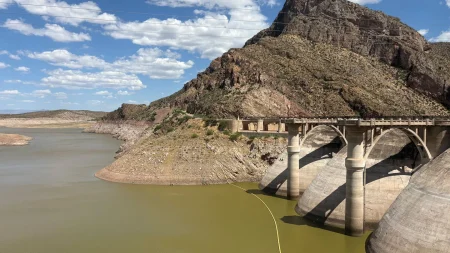
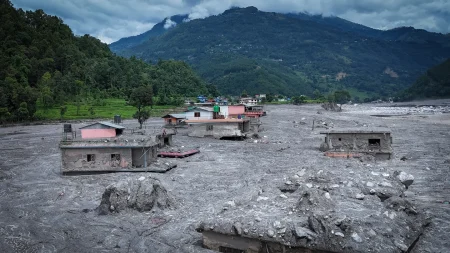
From the intensity of heat, Shute shifts to the slow terrible ache of drought. Unlike the sudden violence of a storm, drought creeps in without dramatic announcement. It is a shadow that grows longer month by month. She describes the way a landscape changes under prolonged dryness: grass turns the color of old paper, trees shed leaves that were never supposed to fall, riverbanks expose stones no one knew were there. But the deeper tragedy is not just the absence of rain; it is the collapse of the systems that depend on water. Farmers plant seeds and watch them fail; ranchers sell herds they have raised for generations; cities impose water restrictions that turn green lawns into apologies. Shute argues that the word “drought” may not even be strong enough to describe what is happening in regions where the dry spell is not a seasonal anomaly but a permanent condition. She points to massive reservoirs that have become mud flats, to aquifers that are being drained faster than they can refill, to communities that have to truck in bottled water for even the most basic needs. She also connects drought to conflict, because when water disappears, people move, and when people move, borders are tested. The existential dimension is inescapable: without water, there is no agriculture, no sanitation, no industry, no life as we know it. Yet Shute does not leave us in that desolate place. She turns to the people who are adapting, not out of nostalgia but out of necessity. There are farmers who are changing the crops they grow, choosing varieties that need less water. There are engineers building systems to capture dew and recycle wastewater. There are families who have learned to shower in less than a minute and to save every drop. These acts are small, Shute acknowledges, but they are not futile. They are signs of a deeper human capacity to recognize when a way of life is ending and to have the courage to build a new one. The problem is that adaptation has limits, and drought is a reminder that we cannot engineer our way out of every loss. Sometimes the only honest response is grief for what is vanishing, and grief, she suggests, can be a form of love that motivates us to protect what remains.
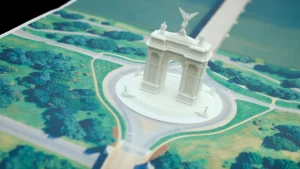
Then comes the part that feels both futuristic and frightening: sunlight on demand. Shute introduces this as the culmination of a long history of human attempts to control nature. For centuries, we have dammed rivers, flattened mountains, moved storm clouds. But this is different. The idea is to make Earth as a whole reflect more sunlight, to cool the planet in a matter of years by putting a thin layer of reflective aerosols into the stratosphere. It is inspired by volcanoes, which have long shown that after eruptions, the planet briefly cools. If we can imitate that effect deliberately, we might buy time for the transition away from fossil fuels. Shute explains that the science is still uncertain, but the models suggest it could be surprisingly effective in reducing global temperatures. She also acknowledges that the appeal is enormous. In a world where international climate talks are slow and emissions are still rising, the promise of a fast, cheap, planet-wide shade is almost intoxicating. Who wouldn’t want an umbrella big enough to cover the world? But then she slows down and asks the questions that too many of us, in our desperation, might prefer to ignore. What if the umbrella disrupts monsoons, causing drought in one continent while saving another from heat? What if we start and then cannot stop, because stopping would cause rapid warming that could be worse than what we originally faced? What if the nations who control the switch use it as a weapon, or what if they use it as an excuse to avoid reducing carbon emissions? She calls this the moral hazard problem: if you give people a painkiller, they may ignore the infection that caused the pain. She also raises a quieter question, one about our relationship to the planet. Do we really understand ourselves as stewards capable of deciding how much sunlight every living thing should receive? Sunlight is not just a resource; it is the source of all life. Turning it into an adjustable dial seems to require a level of hubris that our history does not support. Yet Shute is careful not to demonize the scientists researching this idea. Many of them are motivated by genuine love for the world; they see a cliff approaching and want to build a bridge. What she asks is not for us to close our minds to their proposals, but to widen our lens. The best use of solar geoengineering, she suggests, is not as a replacement for cutting emissions, but as an emergency response that would only be considered after every other option had been exhausted — and even then, only with global consent. She wants us to understand that there is no technology that can absolve us of responsibility.
Underneath these alarming topics, Shute keeps returning to a simpler truth: we are not doomed until we make ourselves so. The editorial is not arguing that human nature is inherently destructive, any more than it is arguing that technology is inherently evil. What she does is invite us to examine our choices. She points out that we already have the tools to reduce greenhouse gas emissions, to build renewable energy, to shift away from fossil fuels, and to design communities that can withstand heat and drought. The obstacle is not a lack of wisdom; it is a lack of will, entangled with short-term interests and collective action problems. But she also sees hopeful patterns. She writes about young activists who will not let the world forget what is at stake, about indigenous communities who are reviving ancient ways of caring for land and water, about businesses that are beginning to understand that sustainability is not a slogan but a survival strategy. She reminds us that every major transformation in history — the abolition of slavery, the expansion of civil rights, the healing of the ozone layer — began with ordinary people deciding that they were not going to accept the status quo. The climate crisis is bigger than any previous challenge, but the same muscles of imagination and empathy are needed. Shute’s call to action is not a list of ten things to do; it is more profound than that. She is asking us to change the way we tell the story of the future. Instead of a choice between apocalyptic doom and the false optimism of technology, we need a narrative that embraces complexity and character. We need stories in which humanity learns, adapts, makes mistakes, and keeps going. She is also honest about the emotional labor required. It is exhausting to stay engaged. It is easier to scroll past the next heat record or the next drought headline. But the people who are making a difference are the ones who let themselves feel the weight of the crisis without being crushed by it. They mourn, they get angry, they organize, they act. They understand that hope is not a feeling; it is a practice. And that practice, Shute suggests, is available to all of us, no matter where we sit.
In the end, Nancy Shute’s editorial is not only a summary of threats; it is a mirror held up to our species. We are capable of extraordinary kindness and extraordinary cruelty, extraordinary wisdom and extraordinary foolishness. The discussion of extreme heat, never-ending drought, and sunlight on demand is, at bottom, a discussion about who we are and who we choose to become. Shute offers no tidy conclusion, because there is none. But she leaves us with a sense of urgency that is not the same as panic. Panic closes the mind; urgency opens it. She asks us to look at the people around us, the city we live in, the food we eat, the air we breathe, and to recognize that all of it is connected to the decisions being made in boardrooms and legislatures, and also to the decisions we make in our own homes and neighborhoods. The future is not a fate that arrives like weather; it is a consequence of actions, a living thing that we feed with our attention and our habits. We can choose to feed it with denial or with determination. She suggests that the human species has survived because we are adaptive, social, and inventive. We learned to farm, to build cities, to heal diseases, to fly, to communicate across oceans. There is no reason to believe that our capacity for innovation suddenly runs out; the question is whether we will apply it quickly and fairly enough. The old ways of thinking — that resources are infinite, that the living world is a collection of commodities, that my country first and history is a ladder — are themselves becoming extinct. In their place, Shute proposes a new story: a story in which human flourishing depends on the flourishing of the entire planet, in which we see ourselves as members of a community that includes rivers, forests, oceans, and all the strange and beautiful creatures that share our home. Sunlight on demand may one day be tested or rejected, but a deeper truth remains: we are already living in a world that provides everything we need. Our job is not to master it but to protect it. That is the message, I believe, that Shute wants to leave with her readers — a message not of doom but of awakening, not of despair but of resolve. It is a hard message, but it is a human one, and it deserves our attention.