


When we think of rain, mosquitoes, and disease, the connection seems obvious: standing water gives mosquitoes a place to breed, and more rain usually means more mosquitoes. But the story behind Brazil’s first urban yellow fever outbreak in decades reminds us that the opposite can also be true. In 2015, a powerful El Niño brought an unusually severe drought to central South America, drying up forests and shrinking the water sources that wildlife depends on. Thirsty monkeys and mosquitoes, both searching for relief, began moving closer to towns and cities. According to a study published August 14 in Science Advances, these simple, desperate movements may have helped spark a devastating yellow fever outbreak that began in late 2016. By the time it was over, more than 2,000 people had fallen ill and nearly 750 had died. The idea feels almost counterintuitive: dryness, not rain, set the stage for a mosquito-borne disease. But when researchers ran computer simulations based on real-world data from the outbreak, they found that drought-driven changes in animal behavior were the missing piece. The simulations suggested that forest mosquitoes and infected nonhuman primates, pushed by thirst to venture into human-dominated landscapes, brought yellow fever with them. It is a reminder that the natural world does not stay neatly separated from our cities, especially when climate extremes upend the rhythms of survival.
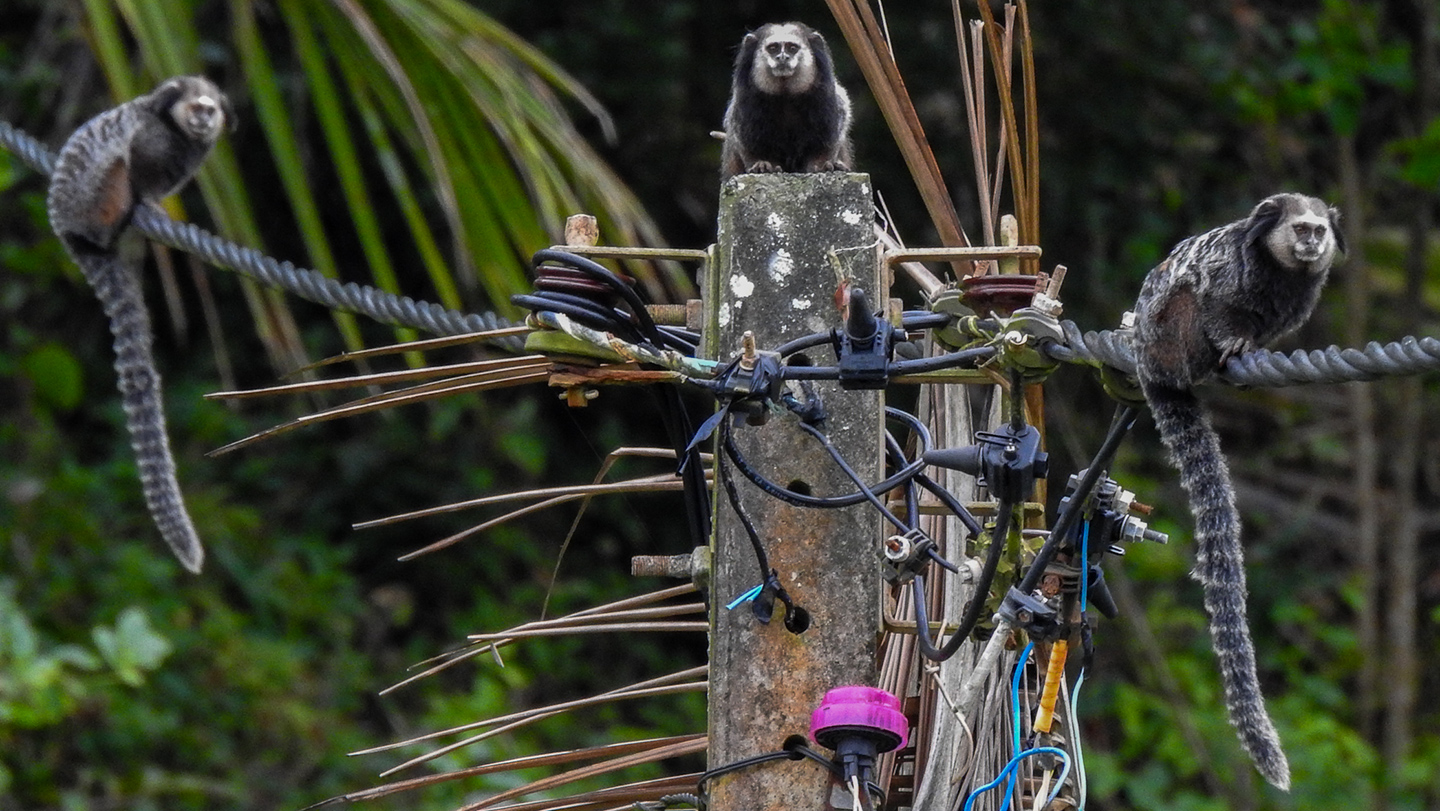
Yellow fever is a disease with two very different lives. The better-known cycle is urban. In that cycle, the yellow fever mosquito, Aedes aegypti, spreads the virus from person to person, thriving in cities and biting humans almost exclusively. This is the form of yellow fever that once caused major epidemics across the Americas and Africa. Thanks to an effective vaccine and aggressive mosquito control, urban yellow fever was largely beaten back in the Americas, and Brazil had not seen an urban outbreak since 1942. But the virus never disappeared. It kept surviving in forests, in a hidden cycle involving wild mosquitoes and monkeys. There, mosquitoes in the Haemagogus genus and others carry yellow fever among howler monkeys, marmosets, and other nonhuman primates. This forest cycle is not just an ecological curiosity; it is a warning system. When monkeys start dying from yellow fever, it is a sign that the virus is active and spilling over. If the virus reaches a place where Aedes aegypti mosquitoes are abundant and human immunity is low, the stage is set for urban transmission. During Brazil’s recent outbreak, however, the urban cycle took an unexpected twist. Studies showed that Aedes aegypti was not the main culprit. Its populations had been dramatically reduced by the mosquito control efforts that followed the Zika outbreak. Instead, Haemagogus mosquitoes from the forest, perhaps carried by animals on the move or biting people in the outskirts of cities, were transmitting the virus. The outbreak was not the classic urban spillover scenario; it was something stranger and more unsettling, a forest disease leapfrogging into cities through drought-driven contact.
The researchers behind the new study wanted to understand exactly how that leap happened. They gathered information on primate deaths, human yellow fever cases, and drought conditions, then built computer simulations to test different explanations. Did infected monkeys simply wander into urban areas because they were searching for water? Did forest mosquitoes bite more often, perhaps because dehydration made them more desperate for a blood meal? Or was it both? The simulations provided a clear answer. The scenario that best matched the real-world spread of the virus in Minas Gerais, the Brazilian state where the outbreak began, was the one that included both animal movement and mosquito biting behavior. In other words, the drying landscape was reshaping how wild animals and insects interacted with humans. With water sources shrinking, monkeys moved into fragmented habitats, gardens, and park edges in search of streams or puddles, and mosquitoes followed, or perhaps arrived already infected. At the same time, mosquitoes that were struggling with dry conditions may have bitten more aggressively to avoid dehydration, increasing transmission. It was a perfect storm of survival instincts colliding with human populations. As Jamie Caldwell, a disease ecologist at Princeton’s High Meadows Environmental Institute, put it, “It was this once-in-a-century drought coinciding with this really unusual once-in-a-century outbreak.” In the face of such extraordinary conditions, ordinary public health measures were not enough; the outbreak burned through communities for years, hopping between forest fragments and urban neighborhoods.
Drought has been linked to other mosquito-borne diseases too, and the reasons are often similar. West Nile virus, for example, can spread more easily during dry spells because infected birds and mosquitoes are drawn to the same scarce sources of water, concentrating the virus in a smaller area. But drought alone does not cause outbreaks. It works in combination with other vulnerabilities. During Brazil’s yellow fever outbreak, one crucial factor was low vaccination coverage. Many people in the affected regions had not been vaccinated against yellow fever, leaving them exposed when the virus arrived. Deforestation also played a role. Clearing forests pushes wildlife into smaller, fragmented habitats and brings people into closer contact with monkeys and mosquitoes. Joelle Rosser, an infectious diseases physician and epidemiologist at Stanford University, described the situation with a powerful metaphor: “I think of drought as the spark. The setting was there.” That setting included a large susceptible human population, landscapes altered by human activity, and a virus circulating silently in wildlife. In such circumstances, a single environmental shock like drought can be enough to ignite an epidemic. The study is important because it moves beyond just describing the outbreak and begins to explain the mechanisms behind it. It also offers a framework for testing these ideas in real time, by collecting data on monkey deaths, mosquito behavior, and human cases in future outbreaks. Nikos Vasilakis, a virologist at the University of Texas Medical Branch at Galveston, called the study “a step in the right direction,” noting that it gives scientists a way to gather additional evidence from both forests and cities.
The response to the outbreak was ultimately successful, but it required significant effort. Health officials ramped up vaccination campaigns across affected regions, focusing on areas where coverage had been low. They also worked to control mosquito populations, reducing the chance that the virus could gain a foothold in urban environments. Together, those measures helped bring the outbreak under control. But the episode carries a warning. One of the most valuable lessons is the importance of paying attention to monkeys. Nonhuman primates are like sentinels in the forest; when they begin dying from yellow fever, they are telling us that the virus is moving. Monitoring howler monkey deaths and other signs of wildlife disease can provide an early warning system, giving public health officials precious time to vaccinate people and reduce mosquito populations before the virus reaches cities. The study also highlights the importance of understanding animal behavior in a changing climate. Scientists now have a clearer idea of what to look for: infected monkeys moving toward human settlements, forest mosquitoes biting more frequently, and drought conditions creating the conditions for those behaviors to matter. But gathering data from real forests and real cities is difficult. It requires collaboration between ecologists, epidemiologists, climate scientists, and local communities. Still, the payoff is enormous. If we can predict when and where yellow fever is likely to spill over, we can act before the outbreak begins, saving lives and preventing suffering.
Looking ahead, climate change is likely to make situations like this more common, not less. Droughts are expected to become more frequent and more intense in many parts of the world, including regions where yellow fever circulates. Sadie Ryan, a medical geographer at the University of Florida in Gainesville, put it bluntly: “What was once in a century will now be four times in a century.” That means the unusual convergence of drought, wildlife movement, and disease transmission may no longer be so unusual. We are going to see more scenarios where it is dry enough, for long enough, to set the stage for these kinds of outbreaks. There is no easy fix. But the study points to actions that can make a difference: maintaining high vaccination coverage even in areas that have not recently seen yellow fever, investing in mosquito control, preserving and restoring forests rather than fragmenting them, and building surveillance systems that watch both human cases and animal deaths. It also asks us to see the interconnectedness of our world. A thirsty monkey and a biting mosquito are not just background scenery; they are part of a web that includes us. When we change the climate, when we cut down forests, and when we leave people unprotected, we create opportunities for viruses to find new routes into our lives. The rain-and-mosquito story is familiar, but the drought-and-mosquito story is just as important. In a warming world, the search for water may be one of the most powerful forces driving disease, and we need to be ready for it.