





Below is a humanized, six-paragraph summary of the scientific story behind that headline.
Few phrases in medicine evoke the same visceral shudder as “brain-eating amoeba.” It sounds like something from a horror film, and the disease it causes is no less terrifying. Naegleria fowleri is a microscopic, single-celled organism that lives in warm fresh water—lakes, rivers, hot springs, and even poorly maintained swimming pools. When water carrying the amoeba is forced into a person’s nose, the microbe can travel up the nasal cavity, pass through a thin, sieve-like plate of bone behind the eyes, and enter the brain. There it destroys neural tissue and triggers primary amebic meningoencephalitis, a rare but almost always fatal infection. For a long time, scientists viewed Naegleria fowleri as an accidental predator: a tiny monster that, when given the chance, eats its way into a human mind. But recent research suggests a more grounded and fascinating explanation. The amoeba’s ability to reach the brain is connected to the normal behaviors it uses to survive in ponds, soil, and sediment. It is not hunting people. It is exploring—the same way it explores muddy water, tiny crevices, and the surfaces of aquatic plants in search of bacteria. Understanding that exploration, and the crawling movements that make it possible, may be the key to preventing and treating a disease that terrifies many more people than it actually kills.
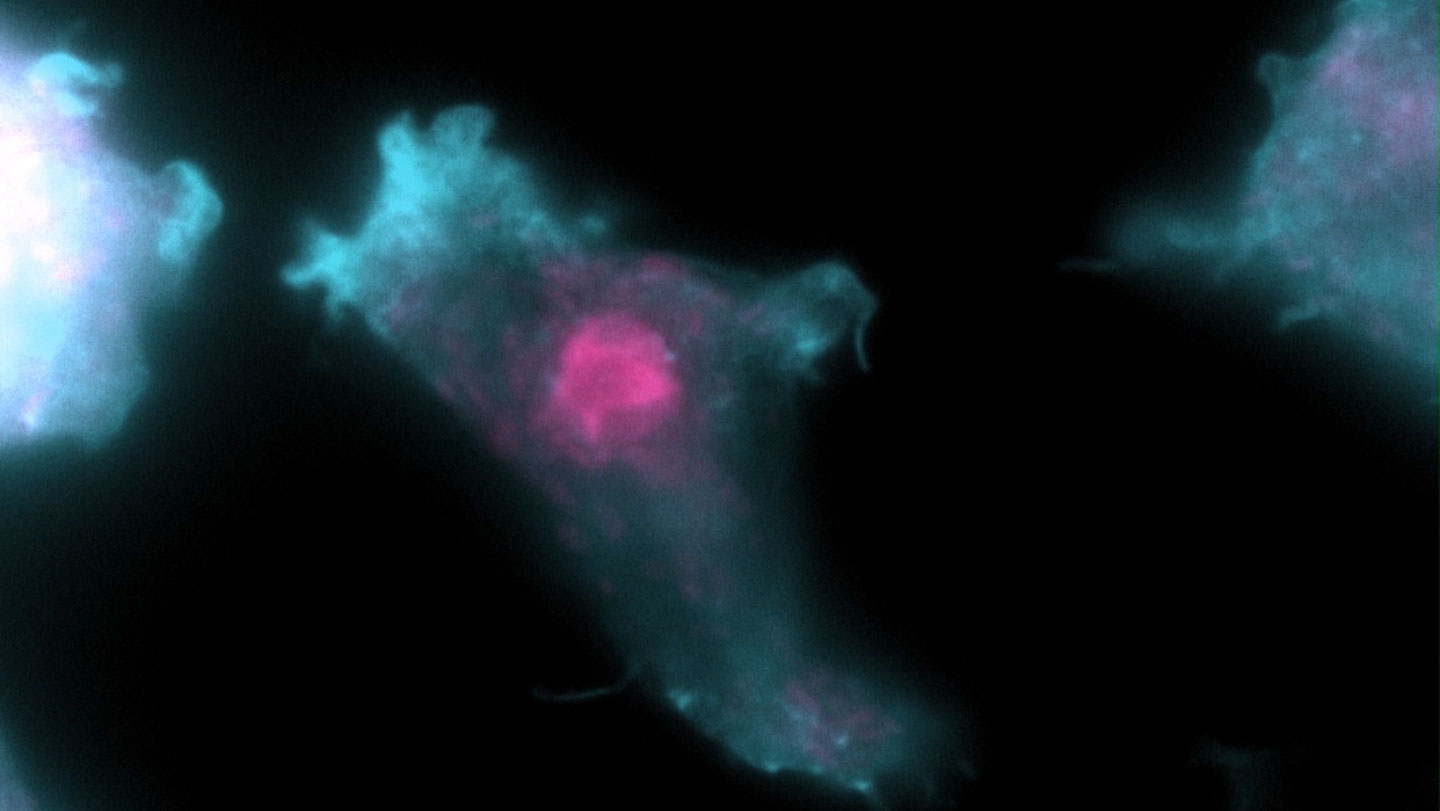
To understand how an amoeba gets into the brain, scientists had to watch how it moves. They focused on a close relative, Naegleria gruberi, a harmless species that shares many of the same cellular tools as the deadly version. Using specialized microscopes and small channels that mimic the tight spaces inside living tissue, researchers observed a surprisingly dynamic lifestyle. Naegleria can exist in several different forms. When conditions are favorable, it behaves like an amoeba, slowly extending sausage-shaped lobes of its jellylike body. It anchors itself to surfaces, pulls its rear end forward, and creeps along. When it finds itself in calm water, it can transform into a swimming form with flagella, tumbling through the liquid in search of better surroundings. But the most striking discovery was not the swimming. It was the way the amoeba hesitates, samples, and chooses. If it encounters a channel that is too narrow, it doesn’t simply stop. It probes the edges, pushes a little further, retreats, and then tries another angle. It can squeeze its body through incredibly tight spaces by redistributing its internal fluid. It sometimes forms branching false feet in two directions at once, as if it is testing which path promises a meal. This exploration is not conscious, but it is highly organized. In the microbe’s world, these movements are the difference between finding food and starving. The same mechanisms allow it to find a warm human nose and follow a biological trail that leads, step by step, toward the brain.
Now translate that behavior into a human nose. The infection route begins when contaminated water is inhaled, such as when a swimmer plunges into a warm lake and water rushes up the nostrils, or when someone uses a neti pot with untreated tap water. Once inside the nasal cavity, the amoeba finds itself on a damp, warm surface—the olfactory epithelium, the region responsible for the sense of smell. That surface is rich in nerve cells called olfactory sensory neurons. These neurons extend tiny fibers through small holes in the skull, known as the cribriform plate, directly into the brain’s olfactory bulb. To Naegleria, that environment must seem like a network of narrow, moist passageways, not entirely different from the spaces between soil particles or the surfaces of rotting leaves in a warm pond. Its crawling ability, which evolved for life in mud and water, becomes a path into the skull. The amoeba attaches to mucus, crawls along the lining, follows chemical gradients, and squeezes through the tiny holes in the bone. Once it reaches the brain, it begins feeding. It produces proteins that break down the body’s tissues and it consumes red blood cells and nerve cells. The immune system responds, but often too late, causing inflammation and swelling. The combination of physical destruction and immune chaos leads to the sudden, catastrophic symptoms of meningitis: severe headache, fever, stiff neck, confusion, seizures, and coma. From exposure to death can take as little as one or two weeks.
To humanize this story, we need to push away the image of a scheming villain. An amoeba is not evil. It is a single cell following biochemical rules written long before humans existed. Imagine being smaller than a grain of sand, blind, and lost in a dark, watery cave. You cannot see the world or hear a sound. Instead, your entire body is covered with molecular sensors that feel shapes, detect chemicals, and sense whether a surface is sticky or slippery. You push a lobe of yourself forward into the darkness. If the chemical smell of appetizing bacteria is stronger there, you continue. If not, you try another direction. You are hungry, but you have no understanding of hunger’s meaning. A warm current sweeps you into a strange new cave. It is warm and inviting. There are surfaces to grip and fluids to swim through. You follow the currents and chemical trails. The tunnel gets tighter, but that is fine—you can squish through. At the end of the passage, there is tissue rich in nutrients. You begin to eat. From inside, this is just survival. From outside, it is one of the most frightening infections a human being can suffer. The tragedy arises not from malice but from an evolutionary collision: a microbe’s ancient skills of exploration and feeding happen to fit dangerously well into the anatomy of the human nose and nervous system. The amoeba does not know what a brain is, and it does not know what death is. It only knows the next stretch of surface, the next pocket of warmth, the next meal.
This perspective has practical consequences. If researchers can identify exactly which molecules allow Naegleria to probe and crawl, they can design medicines that interfere with the process. For example, the amoeba’s crawling depends on actin, a protein that forms fibers and pushes the cell membrane outward. A drug that disrupts those fibers might make it impossible for the amoeba to squeeze through the cribriform plate. The amoeba also uses receptor proteins to sense chemical signals; blocking those receptors could theoretically leave it lost and confused in the nasal cavity. Because Naegleria fowleri is so dangerous, studying its harmless relative, Naegleria gruberi, gives scientists a safe way to test these ideas. This kind of research may also improve public health. We already know that avoiding water going up the nose is the most reliable way to prevent infection. Wearing nose clips in warm fresh water, avoiding stirring up sediment at the bottom of lakes, and using only sterile, boiled, or properly filtered water for nasal rinsing are all practical steps. If scientists can develop a medication that stops the amoeba from crawling, then people who have been exposed might be able to take a preventive treatment before the infection reaches the brain. More broadly, understanding how single cells move is not just about amoebas. Human cells crawl through tissue when they heal wounds, fight infections, and spread cancer. The same basic principles of pushing, probing, and pulling are at work everywhere in biology. Studying the brain-eating amoeba’s exploration skills can therefore teach us about our own cells, our own health, and the way all life moves through a world full of obstacles.
In the end, Naegleria fowleri remains a rare but terrifying organism. It has no neurons, no intentions, and no plan. Yet it can navigate the human body and find a hidden pathway into the command center of a person’s life. The phrase “brain-eating amoeba” will never lose its ominous power. But the new research on amoeba exploration and crawling changes the story. It replaces some of the mystery and horror with a clearer picture of cause and effect. It shows us a microbe that is hungry, not vindictive; an organism that is skilled, not intelligent; and a disease process that is physical, not supernatural. It also shows us the quiet heroism of scientists who spend hours watching tiny creatures move, measuring how a living speck of protoplasm chooses one microscopic path over another, so that someday no one has to watch a child, a swimmer, or a grandparent die from a microbial wrong turn. The amoeba’s trip into the brain is a dark story, but it is not hopeless. Every discovery about how it moves is another brick in the wall of protection. Every tool that blocks a pseudopod, every chemical that confuses a receptor, and every public health message that keeps warm water away from a nose is a way of saying: we know you are out there, tiny explorer, but you will not enter this world without a fight.