






For half a century, astronomers have turned their instruments toward the dense, glittering heart of the Milky Way, seeking to understand the mysterious titan that resides there. At the very center of our home galaxy lies Sagittarius A, a supermassive black hole with a mass equivalent to over four million suns. Discovered in the 1970s, Sagittarius A has long fascinated humanity, serving as a silent, invisible anchor around which our entire cosmic neighborhood revolves. However, for all our progress in mapping the stars that orbit this gravity well, the black hole itself has remained notoriously difficult to observe. Wrapped in a thick, shimmering shroud of interstellar dust, roaring gas, and brilliant stellar cluster lights, the galactic center is an astrophysical fortress, guarding its secrets jealously. Astronomers have long suspected that this giant does not just passively swallow the universe around it, but actively interacts with its environment, breathing out energy in the form of cosmic winds. Yet, proving the existence of these invisible, outward breaths has been an arduous, multi-generational quest, requiring decades of technological evolution and a profound shift in how we conceptualize the behaviors of these ancient cosmic behemoths. Now, after fifty years of searching, researchers have finally captured the first direct evidence of a gentle, persistent breeze whispering from Sagittarius A*, revealing a softer side of the universe’s most dramatic residents.
To understand how a black hole, an object famous for its inescapable gravitational pull, can generate a wind that blows outward, one must look to the chaotic dining habits of these celestial giants. As a supermassive black hole draws in nearby gas, dust, and unraveling stars, this material does not fall straight in; instead, it spirals violently downward, forming a rapidly spinning accretion disk. Inside this disk, immense friction and gravitational forces compress the captured matter, heating it to millions of degrees and causing it to emit blinding torrents of high-energy radiation. This intense light and electromagnetic energy exerts an outward physical pressure, acting as a cosmic fan that physically repels gas and debris away from the black hole’s edge, creating what astronomers call a black hole wind. When a black hole is experiencing a feeding frenzy, consuming colossal amounts of matter, these winds can escalate into terrifying cosmic gales, powerful enough to blast entire clouds of star-forming gas completely out of their host galaxies and permanently arrest their growth. However, most supermassive black holes in the modern universe, including our own Sagittarius A*, are not in the midst of such furious tantrums; they exist in a relatively calm, dormant state, consuming only a modest trickle of cosmic fuel. For decades, scientists hypothesized that these quiet giants must produce a correspondingly gentle, lukewarm breeze, but because these whispers of wind are so faint, detecting them was thought to be nearly impossible against the background noise of the galaxy.
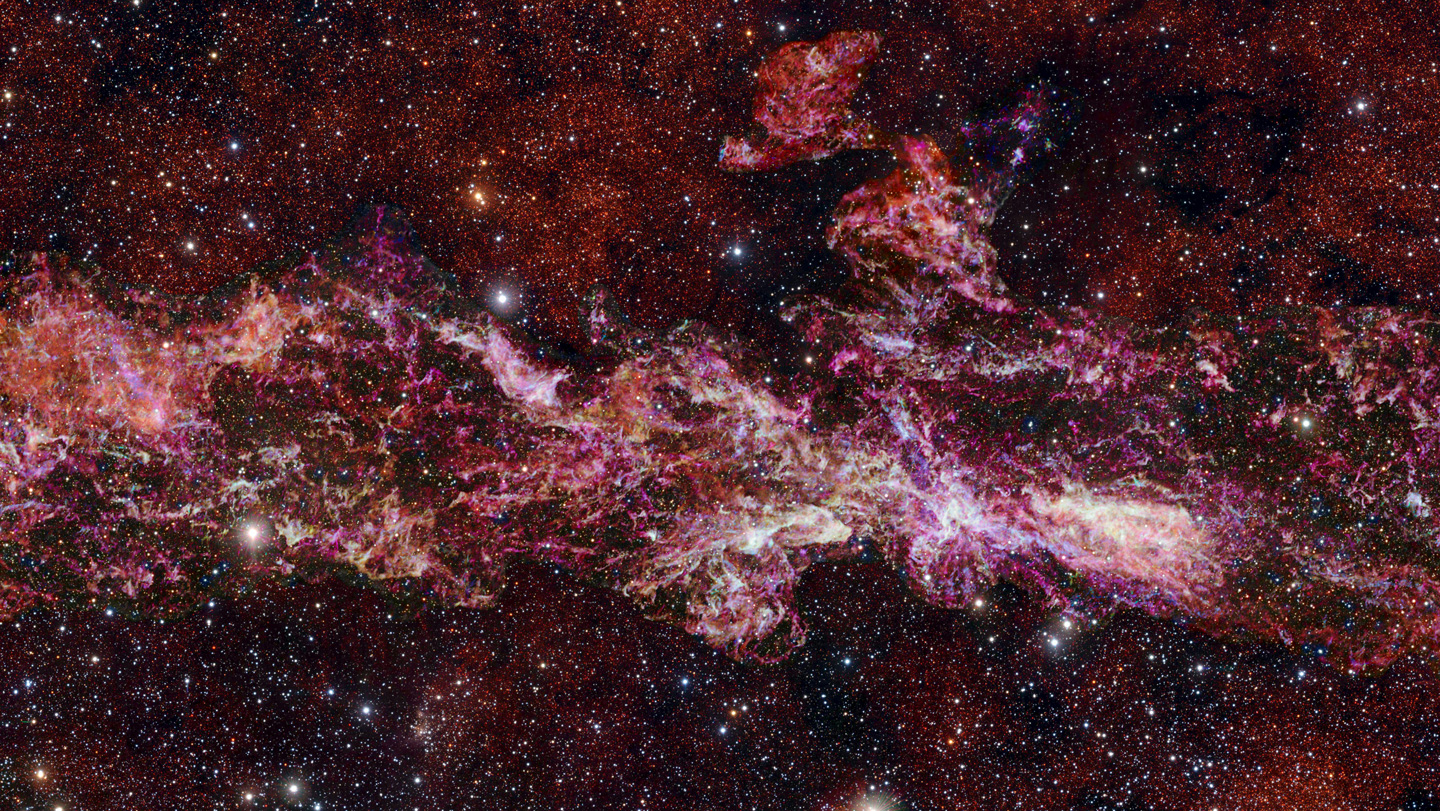
The breakthrough that finally bridged this observational gap was born from raw perseverance, cutting-edge technology, and an inventive approach to data analysis. A research team led by astrophysicist Lena Murchikova and astronomer Mark Gorski of Northwestern University turned one of the world’s most sensitive radio observatories—the Atacama Large Millimeter/Submillimeter Array, or ALMA, perched high in the arid Chilean Andes—toward the galactic core. Over a meticulous five-year period, the astronomers amassed more than one hundred hours of high-resolution observations of the region immediately surrounding Sagittarius A*, focusing specifically on the faint radio signatures of cold carbon monoxide gas. Carbon monoxide acts as an essential tracer in astrophysics, illuminating the structures of cold molecular gas clouds that are otherwise invisible to the naked eye. However, the raw data collected by radio dishes is notoriously messy, often obscured by the complex, turbulent cosmic noise of the Milky Way’s busy downtown. To overcome this obstacle, Murchikova and Gorski pioneered a revolutionary new mathematical method to process and filter the ALMA data. This innovative technique allowed them to strip away background interference with unprecedented precision, enabling them to detect radio emissions that were a hundred times fainter than what could be resolved with traditional methods, and producing an image of the black hole’s immediate neighborhood that was an astonishing eighty times sharper than any previous attempt.
When the team analyzed this freshly sharpened view of the galactic center, they discovered a striking anomaly that immediately pointed to the existence of the long-sought wind. Right on the doorstep of Sagittarius A*, carved pristine out of the dense surrounding clouds, was a distinct, cone-shaped void completely devoid of cold carbon monoxide gas. This clear wedge of empty space stood in sharp contrast to the rich, chaotic tapestry of cold dust and gas filling the rest of the galactic center. By cross-referencing their radio maps with archived X-ray observations from NASA’s Chandra X-ray Observatory, the researchers realized that this empty, cone-shaped channel was actually filled with highly ionized, boiling-hot gas. The geometry of this void and the thermal properties of the gas left only one plausible explanation: a gentle, warm wind originating from the immediate vicinity of the black hole is steadily blowing outward, acting as a cosmic leaf blower that pushes the cooler, heavier carbon monoxide gas aside and clears out a massive corridor. This is a monumental discovery for the scientific community, as it represents the very first time astronomers have witnessed a gentle breeze pouring from a supermassive black hole, confirming that even when these objects appear to be resting quietly, they are still actively exhaling energy into their surroundings.
The discovery of this mild galactic draft has profound implications for our understanding of galactic evolution and the delicate, long-term balance of the cosmos. Supermassive black holes and their host galaxies exist in a state of complex, mutual feedback, where the behavior of the central giant directly dictates the destiny of the stars that surround it. For instance, the winds generated by a central black hole serve as an important thermostat for the entire galaxy; by heating up or blowing away cold molecular gas, they can prematurely starve a galaxy of the raw ingredients needed to forge new stars, effectively putting a cap on its stellar population. Conversely, these same winds can also act as cosmic catalysts, compressing nearby dust clouds as they push outward and triggering localized pockets of rapid star birth. Because the vast majority of supermassive black holes across the universe spend most of their multi-billion-year lifetimes in a quiet, low-activity state similar to Sagittarius A*, understanding this gentle breeze phase is key to unlocking the true history of how galaxies are sculpted over cosmic time. This revelation suggests that the quiet periods of a black hole’s life are not merely periods of static dormancy, but are instead marked by a slow, continuous, and highly influential shaping of its home galaxy, proving that a black hole does not need to be a raging beast to leave a permanent mark on its environment.
While the discovery has sent ripples of excitement through the global astronomical community, it has also been met with the healthy skepticism that defines great science. Independent experts, such as astrophysicist Rebecca Diesing of Columbia University, have noted that while the presence of a cone-shaped void is highly compelling and represents a massive leap forward, locating a gap in gas coverage is still an indirect method of proving a wind exists. To solidify this monumental finding, astronomers are already planning future observations to directly measure the physical velocity of the gas being swept along the edges of the cavity, which would provide definitive proof of a moving, outward-bound draft. Scientists are also optimistic that if they monitor the galactic center over a longer period, they might actually witness the molecular boundary of the void wobble, flex, and warp in real-time as the gentle wind continues to buffer against the surrounding cosmic fog. Ultimately, this discovery is a testament to human curiosity and our relentless drive to explore the dark; it reminds us that our home galaxy is a living, breathing system, and that even the most formidable, enigmatic objects in the universe are capable of revealing themselves through the softest, most unexpected whispers.