






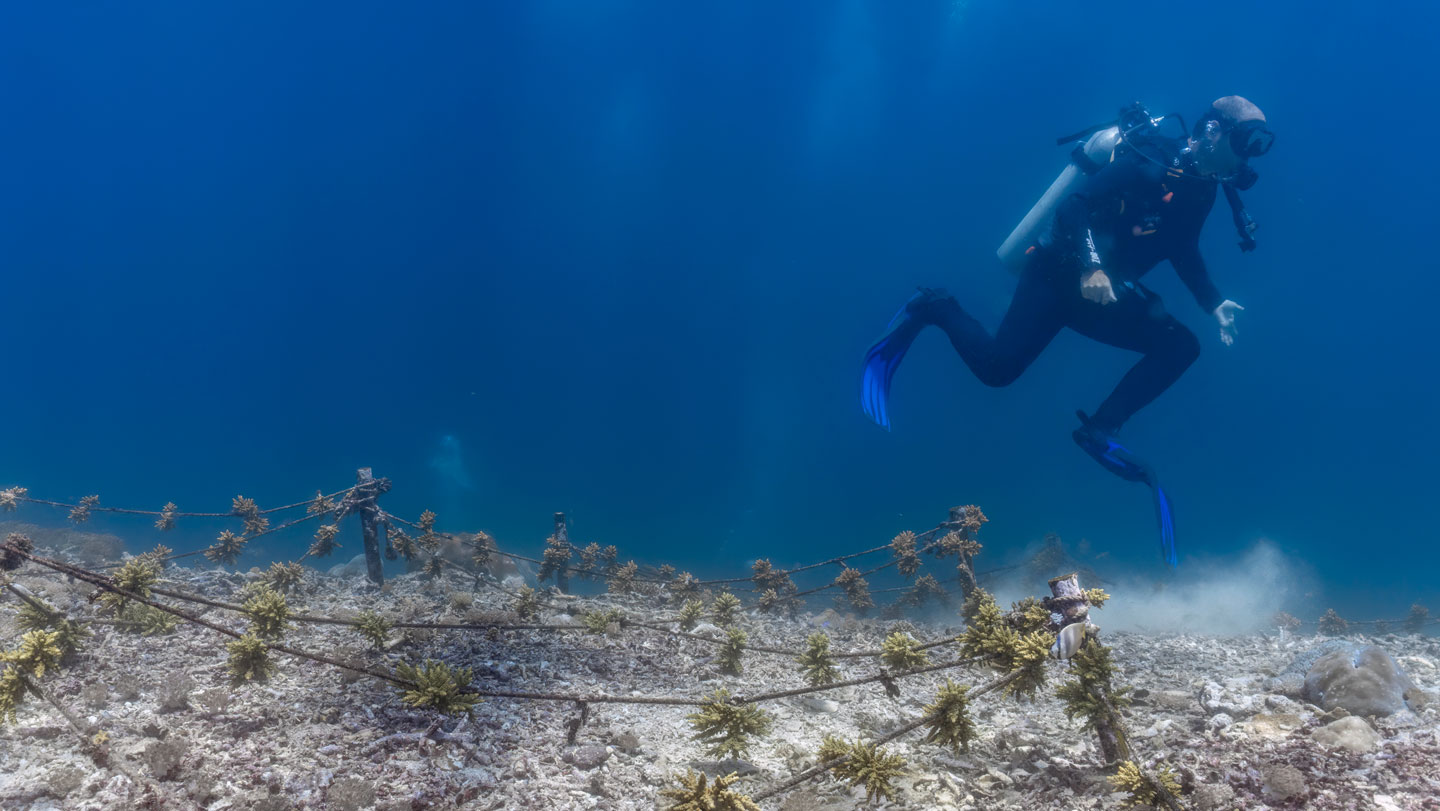
To submerge beneath the surface of the ocean is to enter a world that feels entirely detached from our terrestrial lives, a quiet sanctuary defined by the rhythmic hiss of a regulator and the hypnotic, weightless dance of coral ecosystems. For decades, recreational scuba diving has been celebrated as the ultimate model of high-end, low-impact eco-tourism. Unlike industries that harvest marine resources, the diving community operates under a proud ethos of conservation—summarized by the classic motto to “take only pictures and leave only bubbles.” This perspective frames the diver as a silent, benign ghost gliding over a delicate, vibrant metropolis. However, a jarring reality is emerging from the depths: our underwater excursions are far less innocent than we like to think. New scientific research reveals that even the most well-meaning divers are routinely, and completely unconsciously, battering the fragile coral reef structures they descend to admire. What we perceive as a harmless float through an aquatic garden is often, from the coral’s perspective, a series of disruptive, physical collisions that threaten the structural framework of the entire marine habitat.
To explore this deep disconnect between human perception and physical reality, marine conservation scientist Bing Lin from the University of Sydney, along with his colleagues, conducted a revealing and meticulously designed study. Published in the journal Conservation Letters, the team analyzed the underwater behavior of 732 scuba divers across prominent, high-traffic marine sanctuaries in Indonesia and the Philippines between December 2022 and January 2024. The researchers took a highly objective approach, quietly shadowing divers underwater with video cameras to log their exact physical movements, buoyancy control, and any instances where gear, fins, or hands made contact with the reef. Upon returning to the surface, the team interviewed these same divers, asking them to evaluate their personal diving abilities and estimate how often they believed they had touched the seabed or coral. The compiled data exposed a massive blind spot: divers were touching the reef on average once every four minutes. More alarmingly, the study found that over 80 percent of the physical contact that resulted in actual, visible damage to the corals was completely unintentional or went entirely unnoticed by the divers causing it.
This disconnect highlights a well-documented human vulnerability: the cognitive bias of overconfidence. When we operate in challenging, unfamiliar environments like the ocean, our brains are remarkably adept at shielding us from our own clumsiness to maintain a sense of competence and safety. The study revealed that a staggering 75 percent of the monitored divers rated themselves as “above average” in their diving proficiency and their ability to avoid contacting reef structures. Yet, these very same individuals were captured on camera colliding with the reef up to five times more frequently than they estimated in their post-dive surveys. Underwater, our senses are heavily muffled; clad in thick neoprene, weighed down by heavy steel tanks and lead belts, and preoccupied with monitoring air pressure and depth, we simply do not feel the light scrape of a fin tip against a delicate branch of coral or the drag of an unsecured console. We emerge from our dives feeling triumphant, light, and environmentally flawless, completely unaware of the structural casualties and micro-fractures we have left in our wake.
If general clumsiness and a lack of spatial awareness establish the baseline for reef damage, the sudden thrill of witnessing rare marine life acts as the ultimate catalyst for reckless behavior. The researchers observed a dramatic shift in diver psychology when charismatic wildlife, such as sea turtles, octopuses, or highly sought-after macro critters, entered the scene. In these moments of pure awe, rational caution instantly dissolves, replaced by an urgent desire to get a closer look or capture a perfect photograph. Divers focus their attention entirely on the animal, causing them to neglect their buoyancy control, kick wildly to stabilize their positions, or even grab onto nearby reef structures to steady themselves against currents. The study documented that the rate of damaging physical contact with the reef more than doubled during these wildlife sightings. It is a poignant, painful paradox of modern eco-tourism: the very creatures that inspire our deepest appreciation for the ocean are the ones that unwittingly lure us into destroying their essential habitats.
While an isolated bump or minor scrape every four minutes might seem negligible when viewed as a single event, the cumulative mathematics of popular dive tourism paint a highly concerning ecological picture. In busy marine parks where hundreds of tourists submerge daily, these tiny, repeating traumas add up to a relentless physical assault that slow-growing coral colonies are ill-equipped to handle. Corals are not merely rocks; they are living polyps that build intricate calcium carbonate skeletons over decades, providing food, shelter, and breeding grounds for a quarter of all marine life. Constant physical stress breaks fragile branches, scrapes away protective mucus layers, and introduces fatal pathogenic infections, accelerating the degradation of ecosystems already suffering from ocean acidification and rising temperatures. Yet, amid these sobering realizations, the research highlighted an important beacon of hope: roughly 15 percent of the observed divers managed to navigate their entire dive without touching the reef even once. Fabio Favoretto, a marine ecologist at the University of Plymouth who was not involved in the study, pointed out that this disciplined minority proves reef damage is not an inescapable tax we must pay for diving, but rather a completely fixable issue of practice and self-control.
Ultimately, protecting these underwater treasures does not mean we must hang up our fins and abandon the ocean altogether. Both Lin and Favoretto strongly advocate against shutting down dive tourism, recognizing that responsible travel provides the vital economic engine needed to fund marine sanctuaries and incentivize local communities to protect their waters from destructive industrial fishing. Instead, the solution lies in a profound cultural and educational shift toward mindful, humble diving practices. Training organizations and dive charter operations must move away from rushed, commodified certifications and instead prioritize rigorous, practical mastery of buoyancy, trim, and gear configuration. Dive guides have a powerful role to play by setting strict, clear boundaries before entering the water, fostering a culture where a truly successful dive is measured not by how close you got to an animal, but by how little of your presence you left behind. By transforming our underwater awareness and matching our physical actions to our conservation values, we can evolve from clumsy, well-meaning intruders into the careful, silent guardians that our oceans so desperately need.