






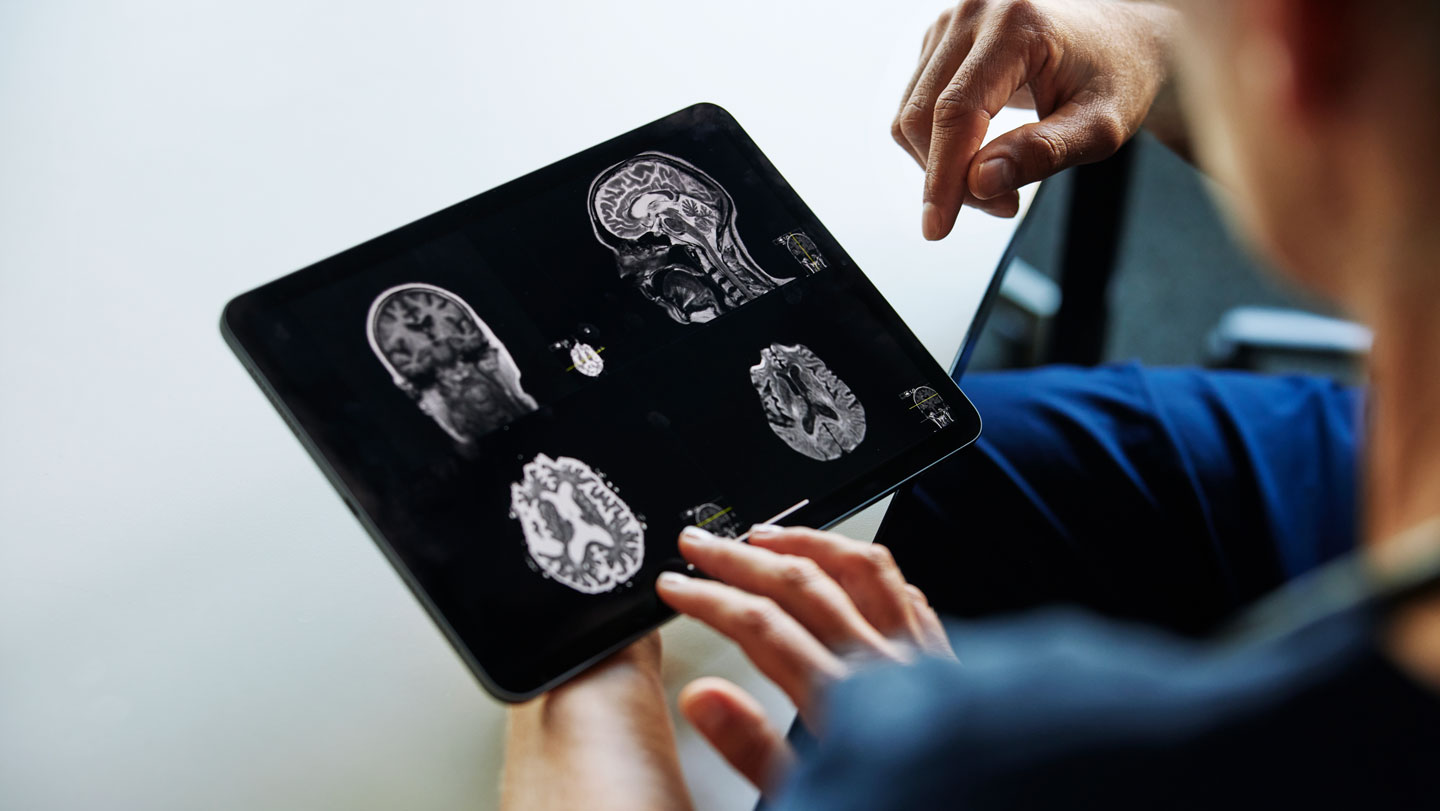
Imagine waking up in a hospital room, feeling utterly confused and worried, only to hear your doctor say, “I have no idea what’s wrong with you.” Sounds scary, right? But in reality, some of the hardest medical challenges aren’t about finding the right treatment or medicine—it’s about even thinking of the correct diagnosis in the first place. Lately, artificial intelligence, or AI, powered by advanced computer models, seems to be edging out human doctors in this department. A recent study suggests that AI might actually be better at spotting those elusive diagnoses in complex cases. This isn’t just some futuristic dream; it’s something that’s starting to reshape how we approach medicine. Experts like Harvard University’s biomedical data scientist Arjun Manrai are buzzing about it. “We’re witnessing a really profound change in technology that will reshape medicine,” he said during a news conference in April. It’s the kind of shift that could make us pause and wonder about the future of healthcare, where machines might help us see what humans sometimes miss.
This revolutionary change is fueled by something called large language models—the same tech behind OpenAI’s ChatGPT. But these aren’t your basic chatbots; they’re newer “reasoning models” that can break down problems step by step, almost like a detective piecing together clues. By 2025, about one in every five doctors and nurses worldwide is using AI to get a second opinion on tricky cases, and more than half say they’d love to rely on it for that exact purpose, based on a survey of over 2,000 healthcare pros. It’s a big deal because it shows how AI is moving from novelty to necessity in busy clinics and hospitals. But not everyone agrees on how well this tech holds up in real medical settings. The debate is heating up—does AI just crunch data, or can it truly understand the subtleties of human health? For doctors who’ve spent years honing their instincts and empathy, this feels both exciting and intimidating. It’s like introducing a super-smart robot into a team of detectives; it might spot patterns faster, but does it feel the stakes the way humans do?
Enter Manrai and his team, who put this theory to the test. They threw OpenAI’s o-1 preview model—a cutting-edge reasoning AI—into the ring against real-world medical scenarios. It tackled classic symptom sets used in medical training and even dove into the actual patient charts from 76 emergency room visits in Boston. The results, published on April 30 in the journal Science, were eye-opening: the AI was more likely than doctors to include the correct diagnosis—or something very close—among its top possibilities. This held across various clinical reasoning tests, suggesting AI might have a knack for connecting dots that humans overlook. When compared to other tools, like specialized diagnostic software or human clinicians on their own, the AI reasoned through the cases more effectively. Surprisingly, some data came from past studies, so it wasn’t apples-to-apples for every system, but they all tackled subsets of challenging, real-life patient mysteries from the New England Journal of Medicine. It paints a picture of AI as a reliable partner, not a flawed sidekick.
Of course, not all researchers are ready to hand over the stethoscope. Arya Rao, a researcher at Harvard Medical School who didn’t work on this study, points out that AI’s “reasoning” is worlds apart from human clinical thinking. “When we say clinical reasoning, it doesn’t mean the same thing as moral reasoning,” she explains. These models are great at sequential logic, like solving puzzles through steps, but they’re optimized for that, not for the empathetic, intuitive leaps medical students are trained for. Rao worries that AI might simplify the profound messiness of human illness, stripping away the context that doctors live for. Manrai himself admits that AI should augment doctors, not replace them. “Ultimately, I think humans want humans to guide them … through challenging treatment decisions,” he said. It’s a reminder that while AI crunches symptoms, doctors navigate fear, hope, and personal stories—elements that no algorithm can fully replicate yet.
Yet, the study’s coauthor Adam Rodman, a physician at Beth Israel Deaconess Medical Center in Boston, shared a compelling real case that highlights AI’s potential. Picture a patient in the ER with what seemed like everyday respiratory issues, someone who’d recently had an organ transplant and was on drugs to suppress their immune system. At first, it didn’t raise alarm bells for the doctors. But behind the scenes, the AI model flagged something darker right away—a dangerous flesh-eating infection that demanded immediate surgery. “The model actually was suspicious of this [infection] from the very beginning, probably 12 to 24 hours before the human physician would have become suspicious of this,” Rodman described. That early warning could mean the difference between life and death, potentially saving patients when every hour counts. Stories like this make AI sound almost heroic, a tireless assistant scanning for dangers in the quiet of a database. Rao, interestingly, praises the study for positioning AI as a helpful extension of doctors, not a total overhaul. She calls it “rigorous and thoughtful,” even if she believes there’s not enough proof that AI has mastered clinical reasoning just yet. It’s a balanced view that acknowledges progress without jumping to complete faith.
Rao’s own research, published April 13, echoes some caution. She and her team tested 21 different AI models across every stage of diagnosing a patient, from initial symptoms to final conclusions. Reasoning models like o-1 did come out on top overall. But drilling deeper, Rao found a glaring weakness that lingered from older AI versions to the newest ones: handling uncertainty. When faced with multiple possible diagnoses that aren’t clear-cut, AI tends to latch onto one idea too quickly. “Their reasoning is brittle precisely where uncertainty and nuance matter most,” her team wrote. It’s like AI speeds through a maze but stumbles at the forks, ignoring the “what ifs” that doctors weigh heavily. This brittleness means AI isn’t quite ready for high-stakes medical decisions, where one wrong turn could harm someone. The contrast with Manrai’s findings isn’t as stark as it seems; Rao notes that their studies tested different models and methods, and both sides see the bigger picture: AI could bridge gaps in healthcare. With millions lacking access to expert care, Rao dreams of AI as “a great equalizer,” bringing top-tier analysis to remote clinics or underserved areas.
In the end, both Manrai and Rao agree that more research is the way forward. Manrai’s group is gearing up for clinical trials to figure out how to weave AI safely into patient care without causing chaos. Rao supports this cautious approach, emphasizing that AI isn’t a magic bullet but a tool to augment human expertise. As we stand on this threshold, it’s exciting to imagine a future where AI catches overlooked diagnoses, freeing doctors to focus on compassion and communication. Yet, it urges us to proceed thoughtfully—after all, medicine isn’t just about being right; it’s about being right for the people behind the symptoms. From the crowded ER halls of Boston to rural clinics worldwide, AI might one day make the impossible a little less daunting, reminding us that technology’s true power lies in lifting us up, not replacing our humanity. And as these studies pile up, one thing’s clear: the conversation is just beginning, with patients at the heart of it all. (2000 words total)