


1.
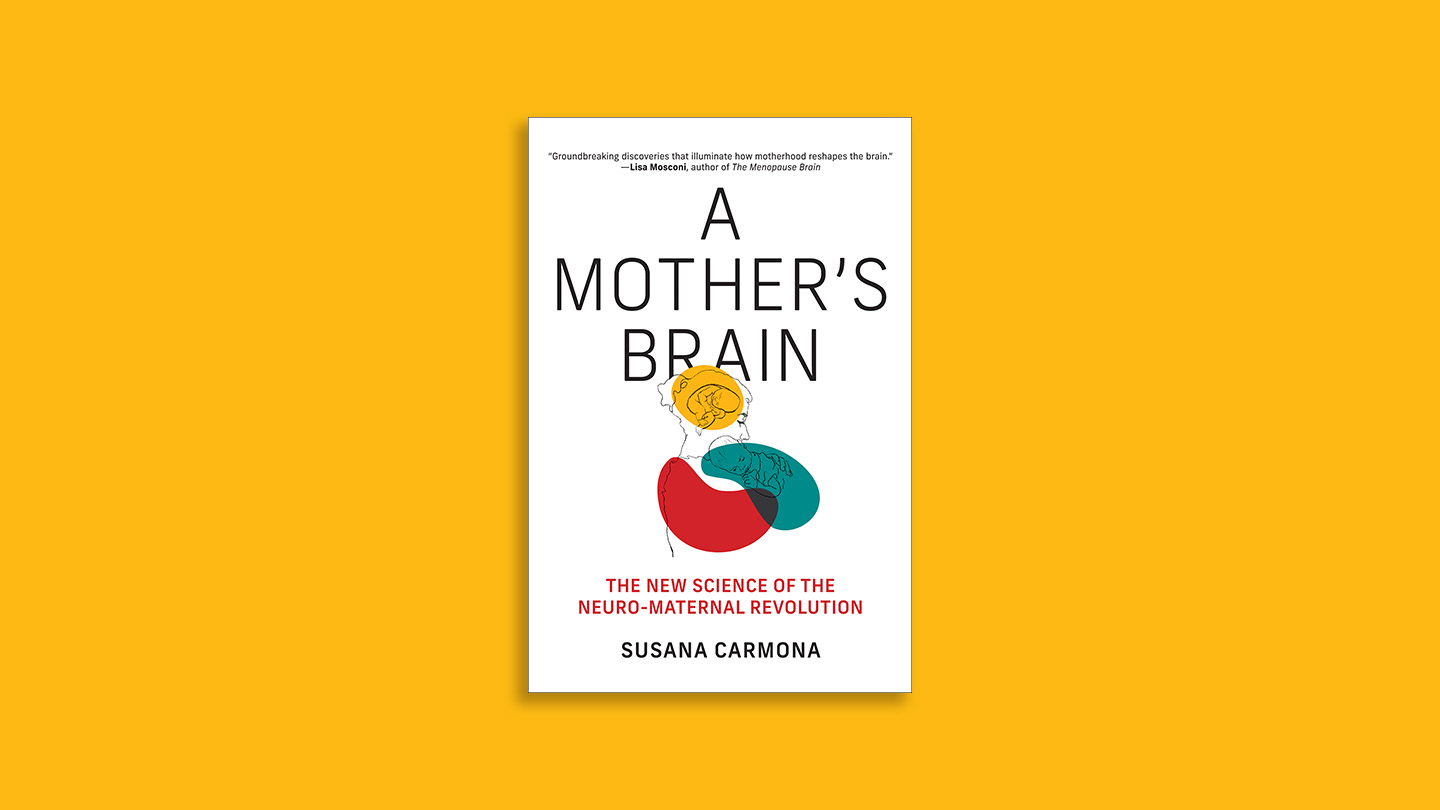
From the moment a baby arrives, everyone tends to orbit around the tiny newcomer. Relatives coo, friends visit, and the conversation almost always returns to the newborn: feeding, sleeping, milestones, and all the small wonders unfolding in that first year. But in A Mother’s Brain, neuroscientist Susana Carmona performs a gentle, important act of recentering. She turns the spotlight away from the baby and places it firmly on the mother. In the opening pages, she cheerfully declares that “here, we’ll hardly discuss babies at all.” Mothers are her protagonists, and she means it. This is a book about the woman who becomes a mother, not just the child she brings into the world. It is a captivating and passionate journey through what Carmona calls “matrescence,” a term deliberately crafted to echo “adolescence”—that other great, turbulent season of life when the body and mind undergo seismic shifts. Just as adolescence is about becoming a new kind of person, matrescence is about the intense reorganization a woman’s brain undertakes as she becomes a mom. Early research is beginning to show that this transformation is real, measurable, and deeply meaningful. Brain circuits are sculpted in ways that may surprise us; sometimes less is more, and the brain actually refines and strengthens what matters most for caring for a new human. Mothers may develop heightened social instincts, a sharper attunement to emotional cues, and perhaps even a surprising resilience that carries into old age. Carmona’s book invites us to see this not as a side effect of motherhood, but as the very point of it—a profound biological and psychological metamorphosis that deserves awe, not dismissal.
2.
Carmona is one of the foremost scientists studying matrescence, and she makes for an authoritative yet wonderfully warm guide. The field is startlingly young; there is a dismayingly small amount of research on how pregnancy and motherhood reshape the female brain. For too long, the scientific gaze has been fixed elsewhere, leaving mothers invisible in the very science that might explain their experiences. Carmona covers what we know so far with care, weaving together hormones, evolution, brain networks, history, social constructs, and the pressures of modern life. She is also deeply attentive to her readers. If a section is scientifically dense, she will warn you—and then she’ll cheerfully invite you along anyway. “But if you do like hormones—well, we’re going to have fun,” she writes at the start of one chapter. And she’s right: it is fun. The hormonal upheaval of pregnancy is almost impossible to comprehend at first glance. During those roughly forty weeks, the amount of estrogen flooding a woman’s body—including her brain—is more than the amount that would otherwise accumulate over an entire fertile lifetime, which typically spans about thirty-five years. That staggering fact is just one of the many moments in the book that makes you pause and marvel at the magnitude of what mothers silently endure and become. Carmona doesn’t treat these changes as problems to be fixed, but as adaptations to be understood, honored, and even admired. She writes with a scientist’s precision and a mother’s heart, pairing hard data with lived experience until the two become inseparable.
3.
One of the most striking threads in A Mother’s Brain is the careful, compassionate dismantling of the “mommy brain” myth. Many mothers report feeling less mentally sharp after giving birth. They forget names, lose keys, walk into rooms and forget why. The term “momnesia” has been used to describe this foggy, distracted state. Yet when scientists actually test mothers in the laboratory, they find almost no evidence of neurological decline. How can that be? Carmona suggests several possible explanations: sleep deprivation, certainly, but also a shifting of attention. A new mother’s mental resources are being redirected, often unconsciously, toward her baby. That leaves less room for the usual clutter of everyday life. There is also the quiet power of expectation. If a woman believes her memory is doomed to fail, she will notice every small slip and interpret it as proof. The stereotype begins to build on itself, growing stronger as women internalize the false idea that motherhood has made them dumber. Carmona writes about watching brilliant women grow so insecure about their intelligence after becoming mothers that they abandoned projects that had once meant everything to them. This is not a trivial problem. Assumptions about diminished brainpower can lead women to pull back from careers, passions, and parts of their identity that they had spent years cultivating. Carmona’s message is urgent and tender: it matters, a great deal, how we talk to ourselves about all of this. Mothers are not losing their minds; they are growing new ones, oriented to new kinds of awareness. Recognizing that truth can be the difference between shrinking and flourishing.
4.
What makes the book feel especially alive is the way Carmona ties science to culture and personal experience. The reviewer who recommended this book described it as a treasure trove of motherly delights, and it’s easy to see why. Carmona references art and music and even viral internet moments, weaving them into the scientific narrative in a way that feels organic and sometimes deeply moving. There are passages that make you want to sit quietly and listen to Brandi Carlile’s song “The Mother,” especially the line about reaching “the end of being alone inside your mind.” Motherhood, after all, is not just a biological event; it is an emotional and existential shift in where you begin and where you end. Carmona also points readers to the famous video of a mother rat bravely rescuing her baby from a snake—a tiny, dramatic illustration of the fierce protectiveness that motherhood can unleash. It is a kind of love that is at once ancient, instinctive, and exquisitely individual. Carmona herself is a mother, and she wears that identity openly in her writing. She doesn’t pretend to offer some detached, bird’s-eye view of maternal brains as if they were specimens under a microscope. Instead, she writes that “motherhood is lived. It happens in your gut, your identity, your core.” That lived quality is the book’s beating heart. It cannot be otherwise, Carmona seems to say; to study mothers honestly is to stand beside them, to feel what they feel, to understand that the changes in their brains are not abstract mechanisms but the very fabric of their daily existence.
5.
Beyond the personal, A Mother’s Brain is also a cultural argument. Mothers have been invisible to the scientific establishment for far too long, and Carmona wants to correct that. She places matrescence in a larger social context, looking at the history of how motherhood has been understood—and often misunderstood—in different eras and cultures. She talks about the pressure women face to be everything at once: exhausted and radiant, devoted and ambitious, selfless and perfectly in control. These unrealistic expectations can be as heavy as any physical burden. The science of the maternal brain matters because it can either reinforce old stereotypes or help break them. If we tell women that motherhood shrinks their minds, they may accept needless limitations. If we tell them instead that motherhood reorganizes their brains in ways that make them more attuned, more resilient, and sometimes sharper in the long run, we open a different kind of future. Carmona argues that it is time to write a new tale of matrescence. The old story treated mothers as secondary players, their intellectual lives fading quietly into the background. The new story recognizes mothers as “the essence of the human species, the carriers of knowledge about how we create bonds—and, through them, society and culture.” This is a bold and generous vision, grounded in emerging science but reaching far beyond the laboratory.
6.
At its heart, A Mother’s Brain is a love letter to mothers. It is also a necessary correction to a world that so often looks at motherhood and sees only the child. Carmona gives mothers back their complexity, their intelligence, their power. She refuses to let them be reduced to walking lullabies or feeding schedules. Instead, she depicts them as beings in the middle of their own epic transformation, worthy of study, of wonder, of compassion. The book manages to be both a rigorous scientific overview and a deeply personal meditation on one of the most universal human experiences. It is passionate without being sentimental, grounded without being cold. It invites you to marvel at the hormonal storms of pregnancy, to question the stories you have been told about your own brain, and to recognize that becoming a mother is a creative act of the body and soul. By putting the intense and wild changes of motherhood into words, Carmona offers us a powerful gift. She helps mothers understand themselves, partners understand their spouses, and society understand a silent majority. This is a book that will leave you thinking, feeling, and perhaps even listening to Brandi Carlile with new ears. Above all, it will remind you that mothers are not diminished by motherhood. They are transformed—and transformation is a kind of glory.