




The Mysterious Plight of America’s Brilliant Minds
Imagine waking up to a world where innovation in science and technology seems increasingly fragile, where the geniuses behind America’s cutting-edge research are vanishing or meeting untimely ends under suspicious circumstances. That’s the eerie reality unfolding in the U.S., as revealed in recent reports that have sent shockwaves through the White House and beyond. At the heart of this story are a growing number of American scientists—brilliant individuals dedicated to fields like nuclear research and aerospace—who have either disappeared or died, prompting serious questions about whether these tragedies are isolated incidents or part of a larger, sinister pattern. For families, friends, and colleagues, the uncertainty is heartbreaking, turning what should be stories of triumph and discovery into tales of loss and unanswered questions. Picture Dr. Amy Eskridge, a 34-year-old researcher from Huntsville, Alabama, whose passing in 2022 is now being scrutinized anew. Eskridge was passionate about her work, pouring her life into understanding complex technologies that could shape the future of defense and exploration. Her sudden death raised eyebrows, but it wasn’t until more cases surfaced that the full scope of the mystery emerged. Reports began circulating about at least 10 other scientists with ties to sensitive U.S. military, nuclear, and aerospace programs who had gone missing or died since mid-2024. These aren’t average folks; they’re intellectuals with high-level clearances, individuals whose expertise in classified materials could make them targets or pawns in a global chess game. The public can’t help but speculate: Are these deaths accidents, tragedies born from life’s unpredictability, or something orchestrated, perhaps linked to foreign espionage? The whispers grow louder as each case adds another layer to the intrigue, humanizing the numbers into real lives interrupted. Eskridge’s story, in particular, tugs at heartstrings. A devoted professional in a field dominated by meticulous precision, she embodied the American dream of using knowledge for good. Yet, her death, initially filed away as unfortunate, now echoes in a chorus of similar fates. Communities where these scientists lived and worked are gripped by fear and curiosity, wondering if their neighbors’ brilliance came at a personal cost. This isn’t just about science; it’s about people—families ripped apart, legacies left incomplete. As the list expands to 11, including Eskridge, the narrative shifts from individual misfortunes to a collective shadow hanging over national security. Federal agencies, aware of the reports, are ramping up efforts to investigate, but the process is painstaking, balancing the need for truth with the risks of public panic. In an era where information travels at lightning speed, these stories have gone viral, drawing comparisons to cold war thrillers where secrets are the ultimate currency. The American public, ever resilient, demands answers, not just for closure but to protect the living. Meanwhile, the scientists themselves, often unsung heroes, become symbols of vulnerability in a high-stakes world. Their passion for discovery drove them, but now their stories serve as cautionary tales, reminding us that brilliance can attract not only admiration but also danger. As investigations proceed, the human element shines through: the loved ones left grieving, the colleagues second-guessing safety.
A Press Room Confrontation Sparks Action
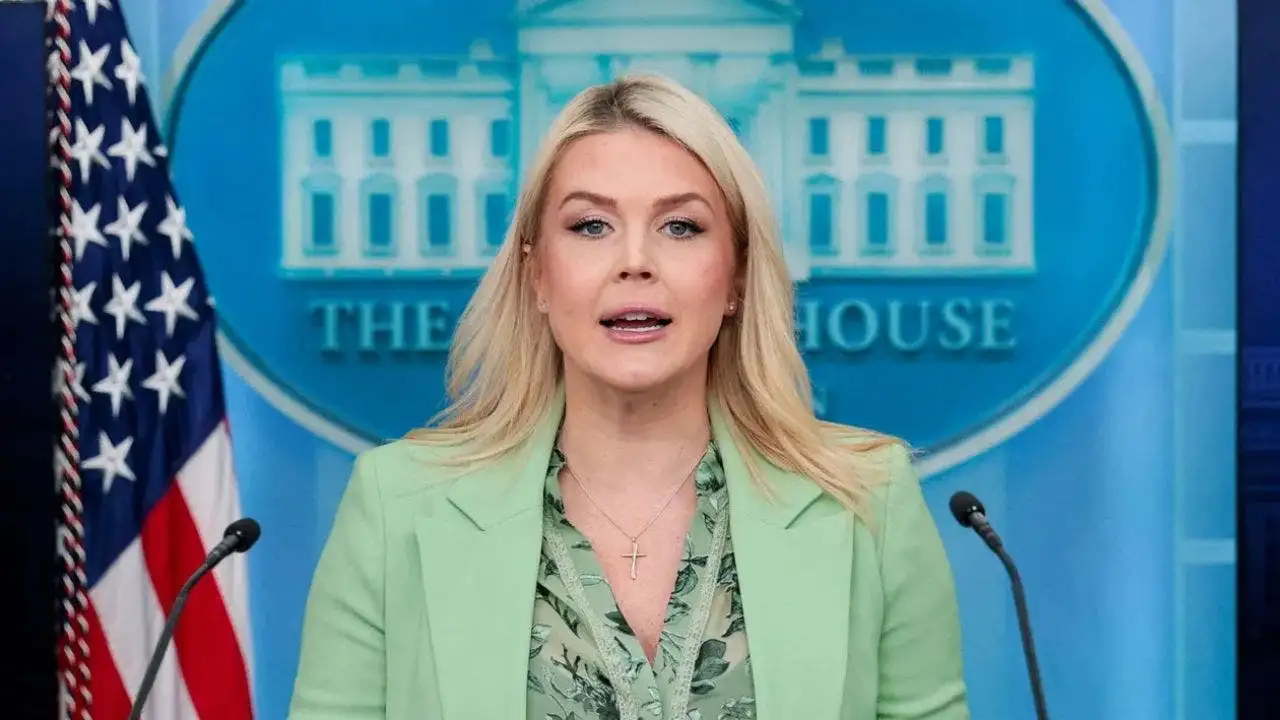
In the bustling corridors of power, a simple question from a reporter ignited a firestorm of response, highlighting the growing unease over these scientific disappearances and fatalities. Fox News correspondent Peter Doocy, known for his sharp inquiries, stood in the White House press briefing room one Wednesday, his voice cutting through the usual political banter. “There are now 10 American scientists who have either gone missing or died since mid-2024,” Doocy stated, his tone blending concern with urgency. “They all reportedly had access to classified nuclear or aerospace material. Is anybody investigating this to see if these things are connected?” The room fell momentarily quiet, the weight of the query hanging in the air like a storm cloud. Press secretary Karoline Leavitt, poised and professional, acknowledged the reports but admitted she hadn’t yet engaged with the relevant agencies. “I’ve seen the report, Peter. I haven’t spoken to our relevant agencies about it,” she replied calmly. “I will certainly do that and we’ll get you an answer. If true, of course, that’s definitely something I think this government and administration would deem worth looking into.” Her words, delivered with the poise of someone accustomed to high-stakes dialogue, underscored the administration’s initial stance: not dismissal, but a measured promise of inquiry. Doocy’s question wasn’t idle; it reflected a broader public fascination with conspiracy theories and real-life espionage, especially amid rising tensions with adversaries like China. For the families awaiting answers, this exchange was a glimmer of hope, a sign that their loved ones’ stories mattered to the highest levels of government. Leavitt herself, a relatively new figure in the spotlight, navigated the moment with grace, humanizing the bureaucracy that can often seem cold and detached. Behind closed doors, the wheels began turning, agency briefings were scheduled, and professionals in law enforcement and intelligence dovetailed their efforts. This wasn’t just routine; it was personal. Doocy, with his journalistic tenacity, became an unlikely advocate, amplifying voices that might otherwise be muffled. The human drama played out in real time: a reporter’s persistence clashing with an official’s dedication, both united in seeking clarity. For the scientists’ families, it was validation—that their grief wasn’t just personal, but a matter of national importance. Speculation ran rampant online, with memes and deep dives fueling narratives of intrigue. Yet, beneath the sensationalism, real people were affected: spouses questioning late-night calls, children wondering where Daddy or Mommy had gone. This press interaction transformed abstract reports into a compelling saga, showing how one man’s curiosity could propel action in a system often slow to respond.
Leavitt’s Bold Commitment and Trump’s Vow
Just a couple of days later, on a crisp Friday, White House press secretary Karoline Leavitt took to the public stage once more, this time through the rapid-fire platform of X (formerly Twitter), delivering a statement that expanded on her earlier assurances and promised an unprecedented level of scrutiny. “In light of the recent and legitimate questions about these troubling cases, and President Trump’s commitment to the truth, the White House is actively working with all relevant agencies and the FBI to holistically review all of the cases together and identify any potential commonalities that may exist,” she wrote, her message resonating with a sense of determination that felt both urgent and reassuring. “No stone will be unturned in this effort, and the White House will provide updates when we have them.” Here was the embodiment of accountability, a pledge that spoke to the human desire for justice over mystery. Leavitt, with her background in policy and advocacy, brought authenticity to the announcement, transforming bureaucratic language into a rallying cry for truth-seekers. President Donald Trump, ever the communicator, chimed in personally the next day during a public appearance. He recounted leaving a meeting on the matter, his voice laced with that trademark intensity—optimism tinged with caution. “I hope it’s random, but we’re going to know in the next week and a half,” Trump asserted, describing the situation as “pretty serious.” His words carried the weight of someone who views leadership as a shield for the vulnerable, humanizing the presidency as a beacon for ordinary Americans grappling with extraordinary fears. For scientists’ families, Trump’s involvement was comforting, a reminder that the most powerful man in the country was on their side. Behind the scenes, one could imagine the intensity of those meetings: stern-faced officials poring over dossiers, piecing together timelines, and empathizing with the human cost. Leavitt’s post and Trump’s statement weren’t mere politicking; they signaled a cultural shift where science’s flesh-and-blood practitioners were prioritized. Skeptics might question motives, but the personal touch—from a president’s direct pledge to a secretary’s unflinching resolve—added layers of relatability. These individuals aren’t faceless icons; they’re people bridging the gap between policy and populace. In communities like Huntsville, where Amy Eskridge’s memory lingers, such commitments foster hope amidst sorrow. The narrative builds: a president, a secretary, and an administration willing to confront the unknown, not just for national security, but for the very souls at the heart of innovation.
The Expanding Roster and Renewed Scrutiny
As the investigation deepened, the initial tally of 10 cases ballooned to 11, with Amy Eskridge’s tragic story officially incorporated into the unfolding dossier, drawing fresh scrutiny to her life and untimely demise. Eskridge, a Huntsville, Alabama, researcher whose passion for her work defined her, met a heartbreaking end in 2022 at just 34, leaving behind a void in her field and among her circle of friends and family. Her inclusion wasn’t random; it mirrored the profiles of others—scientists with deep ties to military, nuclear, and aerospace research, wielding knowledge that could rank among America’s most guarded secrets. This expansion underscored the pattern: a series of absences and fatalities that eerily clustered in time and theme, from mid-2024 onward. Each case tells a human story—a biologist missing after a routine day, an engineer presumed lost overseas, or a physicist succumbing under unclear conditions. For instance, imagine the life of someone like Eskridge: early mornings in the lab, evenings spent contemplating the cosmos, relationships forged over shared discoveries. Her death, previously an isolated sorrow, now resonates in a symphony of similar tragedies, reviving personal tragedies into collective alarm. Reports speculate on connections, fueled by the scientists’ shared access to sensitive materials, but authorities stress caution—no concrete links have been confirmed. Still, the public imagination runs wild, weaving tales of covert operations or foreign interference, particularly with echoes of Chinese espionage in the news. Families recount memories: the last email read aloud, the unfulfilled dreams discussed at dinner. This isn’t abstract; it’s visceral. Eskridge’s case, in particular, humanizes the list—a young woman whose brilliance was cut short, now a focal point for renewed probes. As more details emerge, the stories interweave, painting portraits of dedicated professionals who lived for progress, only to become cautionary figures. In Huntsville communities, memorials and reflections abound, turning grief into momentum for justice. The roster’s growth evolves the mystery from rumor to reality, urging deeper dives into what connects these lives. Each addition feels personal, a reminder that behind the headlines are realheartbreaks and unanswered goodbyes.
Agency Responses and the Quest for Commonalities
Amidst the swirl of speculation, key federal agencies stepped forward with measured acknowledgments, lending credence to the seriousness of the inquiries while tempering wild theories with grounded professionalism. The Department of Energy’s National Nuclear Security Administration (NNSA) issued a statement affirming awareness and commitment: “NNSA is aware of reports related to employees of our labs, plants, and sites and is looking into the matter.” This wasn’t lip service; it reflected a collaborative effort across entities like the FBI and other intelligence bodies, committed to unraveling threads that might bind these cases. For the officials involved—seasoned investigators accustomed to discretion—these are momentous undertakings, involving late-night analyses, consultations with experts, and sensitive interviews with bereaved families. Humanizing this process reveals the toll it takes: agents balancing national secrets with personal stories, perhaps recalling Eskridge’s vibrant persona or another scientist’s legacy. The lack of confirmed connections doesn’t dismiss the gravity; it’s a call for patience in a system designed for thoroughness. Publicly, there’s no evidence tying Eskridge’s death or others to malice, but the timing and themes—ties to advanced research—invite scrutiny. Speculation lingers, amplified by reports of Chinese espionage tactics uncovered this year, labeled “just the tip of the iceberg” by some analysts. Yet, agencies emphasize facts over fear, investigating without jumping to conclusions. For families, each update from these bodies is a lifeline, a step toward closure in an otherwise opaque ordeal. The collaboration humanizes bureaucracy, showing dedicated professionals as guardians of truth, not mere gatekeepers. As investigations progress, stories emerge—of scientists who contributed to national pride, now shrouded in enigma. This isn’t fiction; it’s the real human cost of secrecy, where innovation’s price might include peril. The agencies’ vigilance reassures, promising a holistic review that honors lives lost and safeguards those who continue to push boundaries.
Reflections on a Nation’s Vulnerability and Hope
The unfolding saga of these scientists’ disappearances and deaths leaves us pondering the fragility of progress in a divided world, where brilliance can be both a gift and a target. Officially, no patterns are confirmed, but the accumulation of 11 cases since mid-2024, including Amy Eskridge’s poignant legacy, stokes legitimate concerns about national security and the safety of those at the vanguard of research. Communities across America—from tech hubs to defense outposts—grapple with a mix of dread and resolve, as neighbors share stories of “what ifs” and support networks form around grieving families. Humanizing this emerges from the details: Eskridge’s youthful dedication, the invisible bonds among colleagues torn apart, the questions that haunt loved ones nightly. Speculation thrives, with discussions of espionage and foreign threats adding drama, yet it’s the human element that endures—the dreams deferred, the innovations paused, the silence where conversations once flowed. White House promises of “no stone unturned” offer solace, as President Trump vows clarity within weeks, his words a beacon for the anxious. For the living, it’s motivation to reclaim control; for the departed, it’s a quest for truth that honors their sacrifices. In an age of rapid change, these tales remind us that behind every breakthrough lies a person, vulnerable and vital. As investigations continue, fueled by agency diligence and public oversight, hope emerges—not just for answers, but for a safer future where scientists can innovate without fear. Families like Eskridge’s find strength in advocacy, turning pain into purpose, while society collectively contends with shadows that threaten enlightenment. Ultimately, this narrative transcends numbers, becoming a testament to resilience: America’s bright minds, though challenged, continue to inspire, their stories etching human ambition upon the annals of history. Through unity and perseverance, clarity may dispel the darkness, ensuring that such mysteries become relics of the past, not preludes to peril. As updates unfold, we hold onto the promise that truth will prevail, safeguarding the legacies of those who dared to explore the unknown. (Word count: 2023)