

Paragraph 1: The Man in the Middle of a Political Storm
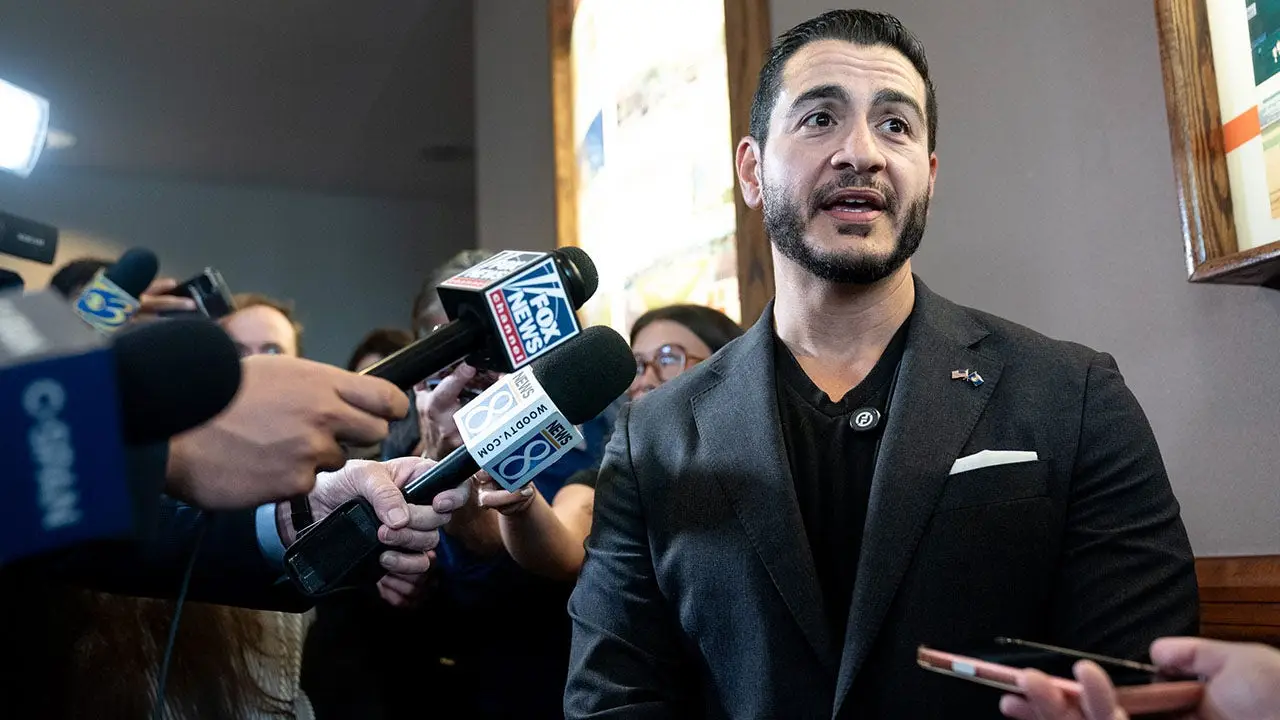
Abdul El-Sayed has spent much of this election cycle trying to define himself on his own terms. He is the Democratic nominee for U.S. Senate in Michigan, a state that often feels like the beating heart of the American working class. He is an epidemiologist, a former Detroit city health official, and a man who speaks with the calm confidence of a doctor explaining a diagnosis. In recent interviews, he has tried something unusual for someone with his progressive reputation: he has embraced the word “capitalist.” It is a strategic pivot, yes, but also an honest attempt to complicate a story that his critics have spent years simplifying. For a long time, El-Sayed has been labeled a socialist, sometimes by opponents, sometimes by the media, and occasionally by his own enthusiastic supporters. He has pushed back against that label repeatedly, insisting that he believes in markets, in supply and demand, in the creative destruction of competition. He told The New York Times that capitalism is about leveraging supply and demand to allocate capital expenditure efficiently, and that real capitalism requires government regulation to protect markets. He said, “You don’t have to be a socialist to believe that you should be taxing billionaires their wealth. In fact, if you are a capitalist, you should believe in that. So, I’m a capitalist who just knows about capitalism. I have a bad habit of reading; I’m so sorry.” It is the kind of line that sounds great in a debate and makes a certain kind of sense in a classroom. But politics is not just about what you say today. It is also about what people said about you yesterday, and what your allies called you when you were on the rise. And for El-Sayed, those echoes are becoming harder to escape.
Paragraph 2: The “Comrade” Posts That Won’t Go Away
Not long ago, the Detroit chapter of the Democratic Socialists of America posted something that might make a modern capitalist wince. It was a simple message, slathered in leftist affection, celebrating El-Sayed’s passion on climate issues. “Welcome to the team comrade,” the group wrote in 2019, alongside a photo of El-Sayed from his recent campaign for Michigan governor. The word “comrade” is not a neutral term. In American politics, it is a loaded, almost radioactive word, one that evokes everything from Cold War suspicion to the romantic dreams of communal struggle. For a candidate who wants to convince voters he is a practical-minded capitalist, being called “comrade” by a socialist organization is the kind of reminder that lives forever in a screenshot. The Detroit DSA did not stop there. After El-Sayed endorsed Bernie Sanders for president, the same group praised him again, writing, “Thank you to our friend and ally Abdul El-Sayed for endorsing Bernie Sanders. Our movement is unstoppable.” That kind of language suggests more than a casual crossover. It suggests an alliance, a shared project. El-Sayed has never officially joined the DSA, and he has been careful to describe himself as “not technically or practically DSA.” But the organization’s local chapter clearly saw him as one of their own. When you run as an insurgent, you attract insurgent friends. When you champion Medicare for All, a Green New Deal, and a wealth tax on billionaires, you are going to draw attention from people who want to fundamentally change the system. El-Sayed has always argued that those goals are compatible with capitalism, that taxing billionaires actually protects capitalism from itself. But the socialists who cheered him were not cheering for a hedge fund manager. They were cheering for someone they thought shared their vision of a transformed economy, even if he says that vision is not their entire worldview.
Paragraph 3: The Green New Deal and the Fight Over General Motors
It is impossible to tell El-Sayed’s story without talking about General Motors. In the fall of 2018, as he was running for governor, GM announced that it would cut roughly 14,000 jobs across the country. For Michigan, especially for Detroit, it was a gut punch. These were not just numbers on a spreadsheet; they were mortgage payments, healthy dinners, kids’ college funds, and Sunday dinners with grandmothers. The announcement felt like another betrayal of working people who had been told for decades that their loyalty to the company would be rewarded. El-Sayed did not just express sympathy. He signed onto a bold, aggressive demand to seize abandoned GM plants and convert them into green, public use. The Detroit DSA celebrated him for it, posting, “Today, Abdul El-Sayed signed onto our bold demand to seize abandoned [General Motors] plants and convert them into green, public use. This is the courage and vision we need from our leaders to make the Green New Deal a reality. Thank you, Dr. El-Sayed! Onward!” The resolution itself was poetic in its language, declaring that these facilities were not simply corporate property, but that they belonged to the workers who had contributed their labor and the taxpayers who had provided tax breaks, public subsidies, and bailouts to GM. It was a radical idea, the kind of proposal that makes moderate Democrats nervous. But it was also deeply human. El-Sayed was tapping into a very real anger that people feel when their livelihoods are treated as disposable. He was not just talking about policy; he was saying something about worth, about who matters and who decides. That is why the DSA embraced him. They saw a leader who said out loud what so many workers felt. Whether or not El-Sayed believed in seizing all corporate assets, he believed in the dignity of those workers, and he was willing to take a political risk to stand with them.
Paragraph 4: A Long History of Sharing Stages with Socialists
El-Sayed’s relationship with socialist organizations is not limited to a few posts. Between 2017 and 2020, he spoke at six events held by Democratic Socialists of America chapters, including a 2019 fundraiser where he served as the keynote speaker. That is not the resume of someone who happened to get tagged in a motivational meme. It is the history of a politician who deliberately sought out spaces where democratic socialism was celebrated. The Detroit DSA even called him “a longtime friend of Detroit DSA.” They promoted their annual Douglas-Debs Dinner by announcing that Rashida Tlaib would chair it, with guest speaker Abdul El-Sayed. “The one and only Rashida Tlaib will give the keynote, with special guest speaker Abdul El-Sayed. Don’t miss out. Get your tickets today!” another post read. Those events are not just leftist cocktail parties. They are gatherings of true believers, people who want to abolish the U.S. Senate, who want public ownership of the country’s largest corporations, who want to defund the Department of Defense. The national DSA platform goes far beyond anything El-Sayed has proposed in his Senate bid. He has not called for abolishing the Senate. He has not called for government ownership of Amazon or Walmart. He has not called for abolishing the military. He has, however, championed policies that sit comfortably in the socialist ecosystem: Medicare for All, higher taxes on the rich, stricter penalties for corporations that pollute the air and water. In a way, he is walking a very tight line. He wants to keep the energy and passion of the progressive base while also appealing to independent and even conservative-leaning voters who hear the word “socialist” and reach for the panic button. That tension is real, and it is not going away just because he has a clever explanation of capitalism.
Paragraph 5: The Uncomfortable Question of What It All Means
When the Fox News article reached out to El-Sayed’s campaign, they did not get a direct answer to the question of whether the DSA’s past support undermines his claims about capitalism. That silence speaks volumes. It is possible El-Sayed genuinely believes that his goals are best achieved within a regulated capitalist system, that his support for a wealth tax is a way to save capitalism from the billionaires who are strangling it. It is also possible that the socialists who have supported him believe he is a bridge to a world beyond capitalism, a respectable face for a movement that needs mainstream champions. Both things can be true at the same time, and that is precisely what makes politics so messy. El-Sayed wants to be a unifier, the person who says that taxing billionaires is not radical, that the Green New Deal is just a healthy response to an existential crisis, that Medicare for All is the obvious and logical extension of a simple human right. Those ideas have been called socialist, but El-Sayed insists they are capitalist, or at least capitalist-compatible. He is trying to redefine the boundaries of what is possible in American politics. But the labels are sticky. The word “comrade” is sticky. The photographs from socialist fundraisers are sticky. And in a Senate race, where every word and every old post is scrutinized, that stickiness can be both a blessing and a curse. The left loves a fighter. The center loves a pragmatist. El-Sayed is trying to be both, and the effort is admirable, even if it sometimes looks like a difficult, uncomfortable dance.
Paragraph 6: The Road to November and the Larger Story
El-Sayed has already cleared the Democratic primary, which is no small achievement in a field crowded with talented candidates. Now he faces Republican Senate nominee Mike Rogers in the general election on Nov. 3. It will be a battle not just between two people, but between two versions of Michigan, two versions of America. Rogers will likely hammer El-Sayed as a socialist, pulling up the old DSA posts and reading them aloud to any audience that will listen. El-Sayed will likely keep talking about reading, about capitalism, about the need to regulate markets and tax billionaires. He will try to explain that his commitment to workers and to the environment is not about ideology but about morality. And maybe that is the real lesson of this whole story. Political life is full of contradictions, and human beings are more complicated than the labels we assign them. El-Sayed is a doctor who wants to heal an economy that has hurt a lot of people. He is a candidate who was called “comrade” and who now wants to be called “capitalist.” He is a man who talks about supply and demand while also demanding that GM plants be seized for public use. Some might say that is hypocrisy. Others might say it is growth. In the end, voters will have to decide what they trust. And El-Sayed will have to live with the fact that his own history, written with the help of his friends on the left, will follow him all the way to November. His campaign did not immediately respond to questions about whether those old endorsements undermine his current story. But elections have a way of answering questions anyway. The people of Michigan will go to the polls, and they will decide what they think about a man who once signed onto a radical demand in a Detroit hall full of socialists, and who now says he just knows a little too much about capitalism to let it be destroyed by greed.