

Paragraph 1: A Long-Awaited Announcement
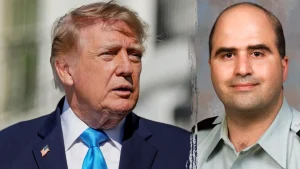
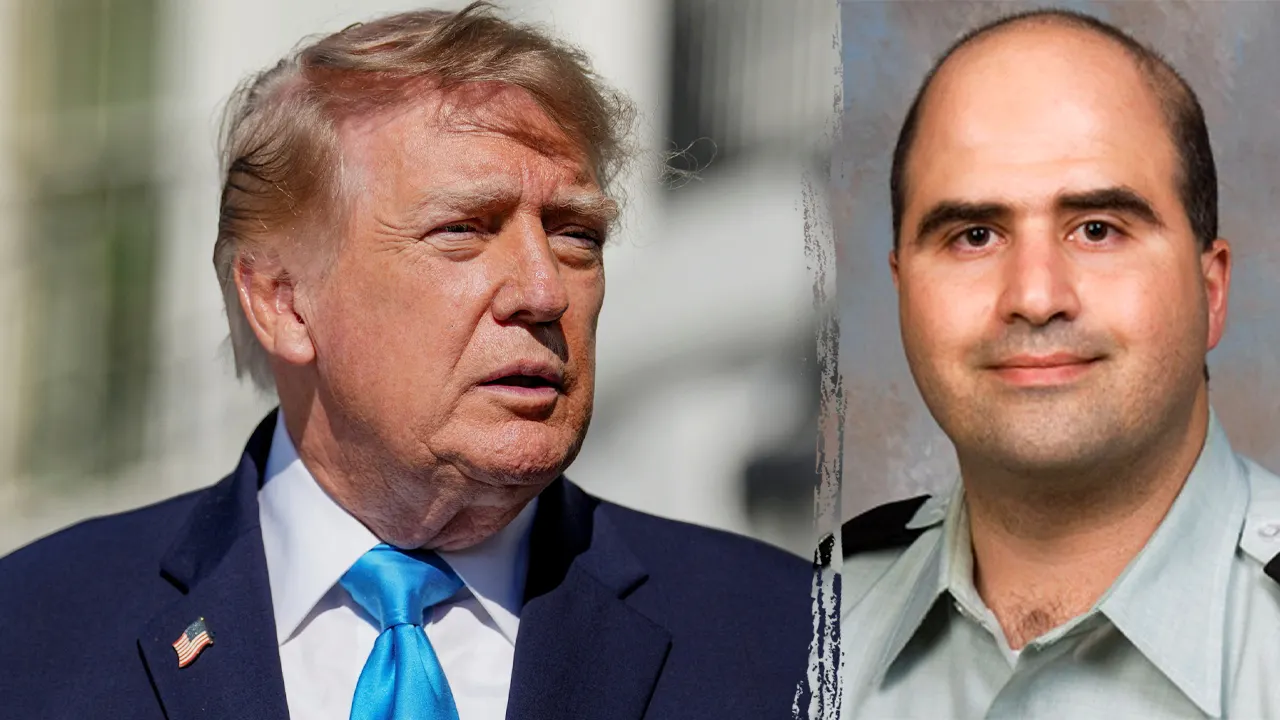
After nearly seventeen years of legal battles, delayed appeals, and the quiet, persistent grief of families who lost loved ones in a senseless act of violence, the wait for final justice has finally reached its end. President Donald Trump has approved the execution of Nidal Malik Hasan, the former Army psychiatrist and convicted terrorist responsible for the devastating Fort Hood shooting in 2009. The announcement was made Monday by Pentagon spokesman Sean Parnell, who conveyed the decision with a sense of solemn finality. “Secretary of War Pete Hegseth has recommended — and President Donald J. Trump has approved — death by U.S. Army firing squad for convicted terrorist Nidal Malik Hasan, the jihadist who opened fire on unarmed American soldiers at Fort Hood in 2009,” Parnell wrote on X. The words carried the weight of a promise kept, a judgment delivered after more than a decade of procedural motions and courtroom debates. For the thirteen families who buried husbands, wives, sons, and daughters after that terrible November morning, this news is not merely a legal footnote. It is the closing of a painful chapter, a moment when the nation acknowledges the depth of their loss and the gravity of the crime. “Judgment day for Hasan has finally come,” Parnell said, capturing the sentiment of a country that has never forgotten the bloodshed on Texas soil.
Paragraph 2: The Horror of November 5, 2009
The story of that day remains etched in the memory of the Fort Hood community and the wider American public. On November 5, 2009, Hasan, then a U.S. Army major and psychiatrist, prepared for an attack with chilling deliberation. He carried both a semiautomatic pistol and a .357 revolver, weapons he would use against soldiers who were, by design, unarmed. Earlier that day, he had attended noon prayers at a local mosque, a detail that underscored the twisted ideology driving his actions. He then drove to the Soldier Readiness Processing Facility, an administrative building where soldiers were preparing for deployment and undergoing medical and administrative checks. It was a place of routine, not combat; a place where young men and women expected to process paperwork, not to face an enemy. Hasan knew exactly what he was doing. He entered the building and shouted “Allahu Akbar” — “God is greater” — before opening fire. Witnesses later described how he deliberately targeted “the greatest density of soldiers,” moving methodically through the crowded facility. In a chilling statement to the Sanity Board report, Hasan confessed, “I shot to kill.” There was no hesitation, no negotiation, no mercy. By the time the shooting was over, thirteen people lay dead and thirty-two more were wounded, many suffering life-altering injuries. The chaos was finally halted when law enforcement officers engaged Hasan, wounding him multiple times and taking him into custody. He was rushed to intensive care, but the damage he had inflicted was already devastating and irreversible.
Paragraph 3: The Human Cost and the Wounds That Remain
Behind the statistics — thirteen dead, thirty-two wounded — are real people whose lives were shattered in a matter of minutes. The victims included private first class, specialists, sergeants, and civilians working alongside the military. They were fathers and mothers, spouses and children, friends and mentors. Their names and faces became part of the somber roll call of American sacrifice on home soil. Among them was retired Chief Warrant Officer Michael Cahill, a civilian employee at Fort Hood who gave his life trying to stop Hasan. His widow, Joleen Cahill, later testified during Hasan’s sentencing hearing, her words piercing the courtroom with raw, emotional honesty. She spoke of the devastation her family experienced in the years following the shooting, the emptiness that never fully healed, the memories that refused to fade. Her husband, she said, had died a hero, but his heroism could not fill the void he left behind. The sentencing phase of Hasan’s court-martial, held four years after the attack, was marked by two days of emotional testimony from surviving widows and parents of the murdered. Lead prosecutor Col. Michael Mulligan rested the government’s case on that testimony, not because forensic evidence was lacking, but because the human cost needed to be acknowledged in full. The courtroom listened as mothers described their sons, wives described their husbands, and the weight of collective grief filled the room. These were not just casualties of a terrorist act; they were beloved individuals whose absence is still felt in countless small and large ways every day.
Paragraph 4: A Long and Arduous Legal Journey
The path to justice for Hasan was neither quick nor simple. In 2013, four years after the attack, a military jury convicted him on all counts and sentenced him to death. Under the Uniform Code of Military Justice, death sentences in the military system are automatically appealed — no defendant can waive this review, no matter how guilty. The case moved to the U.S. Army Criminal Court of Appeals and then to the United States Court of Appeals for the Armed Forces, the highest military court in the land. For years, the appeals churned through the system, each procedural motion and legal challenge delaying the ultimate resolution. Hasan’s legal team raised objections to how the trial was conducted, arguing various procedural flaws. But in early 2025, a military court upheld the death sentence, affirming that the conviction and penalty were sound. Undeterred, Hasan’s representation appealed once more, this time to the Supreme Court of the United States. The Court, however, denied review, allowing the lower ruling to stand. With the judicial process exhausted, the matter returned to the executive branch for action. The death penalty itself has a rare and somber history within the U.S. military. If Hasan’s execution is carried out, it will mark the first time a president has successfully signed off on a military execution since 1961. That year, Pvt. John Bennett was executed by hanging for the attempted murder of an 11-year-old girl in Austria. President George W. Bush also approved a military execution during his time in office, but a federal court intervened in 2008, halting the process. For Hasan, however, no such judicial intervention now stands in the way.
Paragraph 5: The Military’s Grave and Solemn Decision
With the legal appeals exhausted, the decision fell to the leadership of the Department of Defense. Defense Secretary Pete Hegseth, referred to in the Pentagon announcement as Secretary of War, reviewed the case and recommended the ultimate penalty to President Trump. The President approved the recommendation, ordering that Hasan face death by firing squad, a method of execution reserved for the most serious offenses under military law. Pentagon spokesman Sean Parnell explained that with the President’s approval, the Army Secretary will now set the time and place for the execution. The use of a firing squad is intentionally symbolic within military justice, reflecting the gravity of a crime committed by a member of the armed forces against fellow soldiers. It is a punishment carried out with precision and solemnity, reserved for those who have committed the gravest acts of betrayal and violence. Hasan, a former officer who once wore the same uniform as the men and women he attacked, will face the judgment of the nation he sought to harm. The decision is not an easy one; military executions are extraordinarily rare and carry enormous moral and legal weight. But for the families of the victims, the approval is a measure of vindication, a sign that the country still remembers the lives lost and holds accountable those who take them. The Army secretary’s role in setting the execution date will bring the long saga one step closer to its final conclusion, offering a sense of closure that has been delayed for nearly two decades.
Paragraph 6: A Nation’s Reflection and the Hope for Peace
As the news spreads, the reaction across the country is likely to be a mix of solemn relief and sober reflection. For the Fort Hood community, for the families of the fallen, and for the survivors who carry physical and emotional scars, this moment is the culmination of a long, painful wait. The words “Judgment day for Hasan has finally come” resonate far beyond the Pentagon’s press release. They speak to a fundamental belief that justice, though slow, can still be achieved. But they also serve as a reminder of the fragility of life and the terrible consequences of hatred. Nidal Malik Hasan was a trained physician, an officer in the United States Army, a man who had sworn to protect his country. Instead, he turned his knowledge, his position, and his weapons against the very people he was meant to serve. His actions on November 5, 2009, left thirteen families without their loved ones and forever altered the lives of dozens of survivors. No execution can bring back those who were lost, and no punishment can erase the trauma of that day. But the final decision offers the families a measure of peace, a knowledge that the nation has not forgotten, and a certainty that justice has been served to the fullest extent of the law. As the Army secretary prepares to set the execution date, Americans collectively pause to honor the memory of the fallen, to support the survivors, and to reflect on the enduring cost of evil — and the uncompromising strength of a nation that refuses to let such darkness define it.