





President Donald Trump’s approach to Cinco de Mayo has always been a blend of humor, politics, and a touch of nostalgia, transforming what some might see as a simple holiday into a platform for his unique brand of messaging. Imagine a former president, sitting down to craft posts on his social media platform, Truth Social, not just to celebrate, but to weave in themes of immigration, law enforcement, and a nod to his fanbase. On Tuesday, Trump marked the occasion with something fresh yet familiar—a stylized “NICE” graphic that felt like a cheeky slogan slapped onto the festivities. It wasn’t just any post; it was Trump’s way of riffing on Immigration and Customs Enforcement, or ICE, turning a serious federal agency into a playful acronym. You can picture him chuckling to himself as he hit “post,” knowing it would stir the pot online. This wasn’t Trump’s first rodeo with Cinco de Mayo; his posts have a history of going viral, drawing attention for their mix of patriotism and pop culture references. Last year, for instance, he dusted off an oldie but goodie, reminding folks of past celebrations with a smile. His White House team might not have commented right away when asked, but that’s par for the course with Trump—letting the posts speak for themselves, often sparking debates across the digital landscape. It’s almost like a game, where each message is a move in a larger conversation about America’s borders, culture, and who’s really in charge. When you think about it, Trump’s online presence has always been about connecting personally, even if it’s from the Oval Office or beyond. He talks to his followers like old friends, sharing stories and inside jokes that hit home for many who feel the same way about issues like immigration. That “NICE” post? It was endorsed by Trump himself in late April, when he reacted to a social media suggestion with enthusiasm: “GREAT IDEA!!! DO IT.” It’s that kind of unfiltered enthusiasm that makes his content so engaging, almost like a conversation at a barbecue where everyone’s chiming in. And why stop at one post? Trump’s been building on this over years, using holidays like Cinco de Mayo as opportunities to humanize complex topics. You see, for Trump, it’s not just about policies—it’s about people, culture, and a bit of showmanship that keeps millions tuning in. As someone who’s navigated the highs and lows of public life, his posts feel authentic, like he’s inviting you to laugh at the absurdity of it all while nodding to deeper truths. And let’s not forget, in a world saturated with AI-generated content and echo chambers, Trump’s real-time, opinionated style stands out as refreshingly human. One viral moment after another, he’s turned social media into a stage for his American dream, where slogans like “NICE” aren’t just words—they’re symbols of a vision that resonates widely. If you’ve ever scrolled through your feed and felt that instant connection to a post, you get why Trump’s approach works; it’s relatable, it’s timely, and it’s got that spark that makes you want to share it with friends. By the end of May 5th, his latest entry had already stirred up discussions, proving once again that when it comes to holidays and politics, Trump’s got a knack for making both memorable and downright entertaining.
Diving deeper into that “NICE” graphic, it’s fascinating how Trump took a federal law enforcement slogan and turned it into holiday art. Picture an eagle, fierce and proud, clutching a shield, sitting atop the letters “N-I-C-E” in a style that mirrors official ICE branding. It’s not subtle—designed to evoke strength, authority, and maybe a little whimsy, much like how Trump positions himself as the guardian of America’s borders. He didn’t invent the idea; it sprang from social media chatter, where someone suggested rebranding ICE to make it sound friendlier, more approachable. Trump jumped on it, amplifying the concept in a way that’s classic him: quick to praise ideas that align with his views, and eager to share them with his massive audience. You can almost hear him thinking, “Why not make ICE a word everyone can rally behind?” It’s a smart move for someone who’s always been about reimagining institutions to fit his narrative. This graphic isn’t just a one-off; it’s part of a broader conversation he’s been having about immigration. For years, Trump has used platforms like Truth Social to vocalize his stance, often with a humorous twist that softens serious topics. Think about the people who follow him—folks from all walks of life who might see those wings and shield and feel a surge of patriotism. They’re not just symbols; they’re a reminder of Trump’s pledge to protect federal property and uphold the rule of law, as outlined in his vows not to bail out certain cities during unrest. In an era where government agencies sometimes feel distant or bureaucratic, Trump’s “NICE” rebranding feels personal, like he’s bridging the gap between the agencies we pay for and the communities they serve. I’ve always admired how he humanizes these issues, making them less about numbers and more about stories. Imagine a family at a cookout, debating border security over burgers, and someone pulls up the graphic on their phone—suddenly, it’s not abstract policy; it’s a rallying cry. That’s the power of Trump’s style: he speaks in visuals and slogans that stick, turning potentially dry topics into shareable moments. And who wouldn’t want “NICE” as a brand? It evokes positivity, a contrast to the sometimes harsh realities of enforcement. By endorsing this, Trump isn’t just playing politics; he’s engaging in a cultural dialogue, inviting everyone to consider how we talk about security in modern America. It’s a testament to his savvy, knowing that a simple design can spark more conversation than a policy paper ever could. As social media users remix and share it, the graphic evolves, becoming a community project in its own right. In Trump’s world, that’s the magic—transforming official insignia into everyday memes that feel alive and relevant.
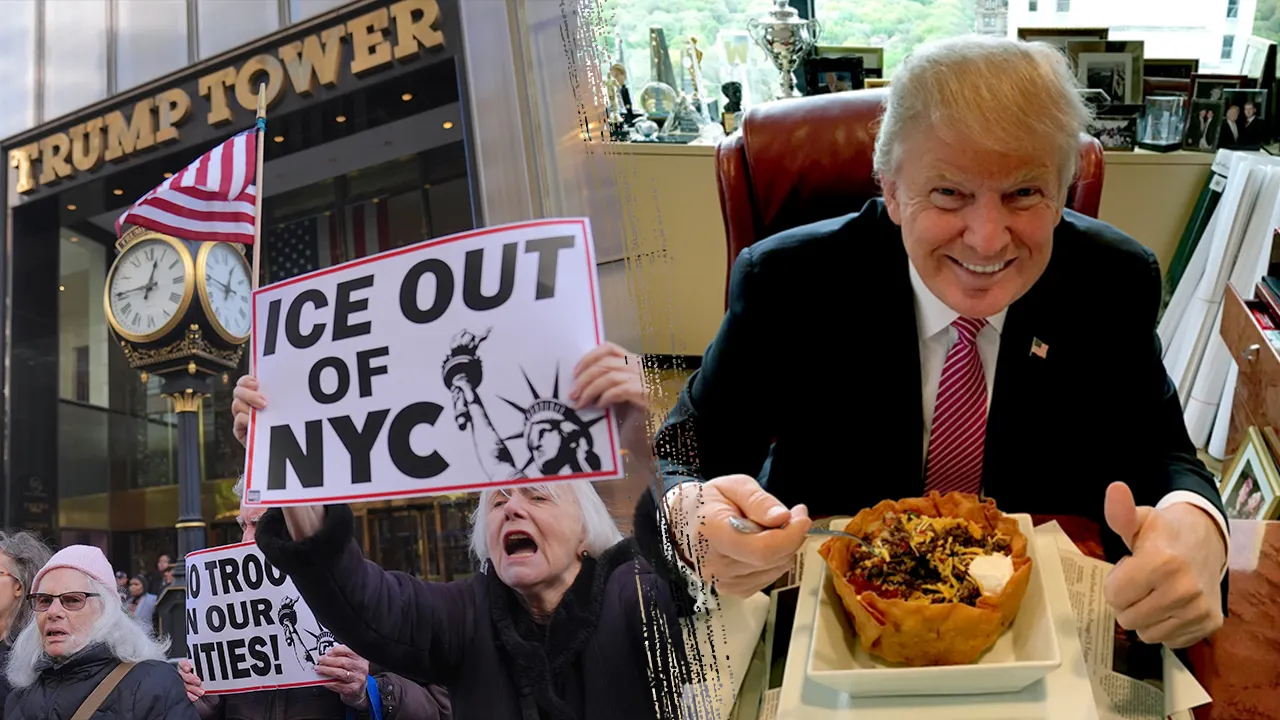
Trump’s Cinco de Mayo tradition didn’t start with the “NICE” graphic; it stretches back to his days as a presidential candidate, where he used the holiday as a canvas for blending humor with immigration talk, creating moments that have since become lore. It’s almost like he’s the unofficial storyteller of these festive days, weaving in personal anecdotes that paint a picture of a man who knows how to celebrate with flair. Back in 2016, when he was campaigning hard, Trump shared that iconic taco bowl photo on Twitter, sitting at his desk in Trump Tower, thumbs up, with a mess of tacos in front of him. The caption was pure Trump: “Happy #CincoDeMayo! The best taco bowls are made in Trump Tower Grill. I love Hispanics!” It was casual, positive, and timed perfectly to resonate during a divisive election cycle. You can picture him there, grinning for the camera, perhaps even sharing a laugh with his team about how this would play out online. In an age of political mudslinging, this post stood out for its wholesomeness, celebrating Mexican-American culture while tying it to his own brand. It wasn’t just food—it was a statement, subtle yet direct, about how Trump’s vision included embracing diverse communities. Fast-forward to last year, and he revisited it, resharing the image with a heartfelt note: “This was so wonderful, 9 years ago today!” It showed a reflective side, acknowledging how a lighthearted moment from his past still held up. These posts aren’t random; they’re part of a pattern where holidays become opportunities for Trump to connect on a human level. Imagine the millions of viewers who saw this and smiled, perhaps recalling their own family celebrations. For Trump, it’s about authenticity—showing he’s not just a political figure but someone who enjoys life’s simple pleasures, like a good taco bowl. And in the heat of campaign seasons, these moments humanize him, making complex issues like immigration feel approachable. That 2016 post, in particular, tapped into the zeitgeist, going viral not because of controversy (though some criticized it at the time), but because it was genuine. It captured Trump’s unapologetic personality, the guy who eats tacos at his desk and loves what they represent. Over the years, it’s evolved into a cultural touchstone, a reminder that politics can have a fun side. As he returns to this narrative, it reinforces his image as a leader who listens and responds to his base, turning holidays into bridges between cultures. You sense the warmth in these gestures, a way to say, “We’re all in this together,” even amidst debates on borders. And for those who oppose him, it’s disarming—hard to argue with a smiling face and a plate of food. That’s Trump’s genius: leveling the playing field with relatability, ensuring his messaging sticks in a crowded digital world.
The enduring popularity of Trump’s 2016 taco bowl post is a testament to its timeless charm, resurfacing annually like an old family recipe that never loses its flavor. Every Cinco de Mayo, users on social media dig into archives, reposting the image with comments that range from affectionate to hilarious, keeping the conversation alive. Picture a capstone post gaining new life each year—folks tagging friends, reminiscing about “the good old days,” and sparking nostalgia for an era when elections felt more playful. One user recently captioned their share with “Cinco de Trumpo,” a pun that nods to both the holiday and the man himself, highlighting how Trump’s content has inspired a linguistic twist of its own. Others chime in with “‘Such a classic,'” or even elevate it to “maybe the greatest tweet of all time,” showing how it transcends politics into viral folklore. It’s not just content anymore; it’s a shared memory, a digital artifact that unites people in laughter. Trump must delight in seeing his old post perform like this, proof that his blend of humility and boldness resonates beyond the moment. Reflect on the photo itself: Trump, sleeves rolled up, a heaping taco bowl—the epitome of approachable leadership. In a time when leaders often seem remote, this image humanizes him, presenting a president who indulges in everyday joys. The caption’s earnestness amplifies it, declaring love for Hispanic culture while keeping it tied to his world at Trump Tower. For many viewers, especially those in communities that celebrate Cinco de Mayo with passion, it’s a validating nod, a white house figure acknowledging their traditions. And the reshares last year weren’t coincidental; they were deliberate, a way for Trump to remind followers of his inclusive spirit. Imagine scrolling through Twitter and stumbling upon this gem—it stops you, evokes a chuckle, and maybe even encourages participation in the holiday spirit. That’s the magic: it feels personal, like a friend sharing a story. Critics might say it’s optics, but for supporters, it’s authentic Trump—fun, unpretentious, and connecting dots between policy and people. As years pass, the post’s virality speaks to its cultural impact, embedding itself in Americana alongside other iconic moments. It’s evolved into a benchmark, measuring how far we’ve come in social media’s influence on politics. Paired with his more recent “NICE” graphic, it forms a narrative arc of positivity and strength. Users remix it creatively, ensuring it stays fresh. In Trump’s playbook, revisiting hits like this is strategic, reinforcing his enduring appeal. You can’t help but appreciate how it fosters community, turning a simple meal into a symbol of unity. Over the span of a decade, the taco bowl’s journey mirrors Trump’s own—resilient, engaging, and unforgettably human.
What makes Trump’s Cinco de Mayo posts so captivating is their ability to spark ongoing dialogues, blending whimsy with weighty themes like immigration and national pride. The “NICE” graphic, for instance, isn’t just a visual—it’s a conversation starter, prompting users to debate rebranding, agency roles, and Trump’s take on enforcement. It’s like dropping a pebble in a pond; ripples spread as people share their takes, often with humor. Against the backdrop of his Taco Bowl revival last year, these elements weave a tapestry of cultural engagement that humanizes policy debates. Imagine a dad at the family dinner table showing his kids the graphic, explaining it in relatable terms, or friends texting links during backyard parties. Trump’s style invites this interactivity, making complex issues feel accessible. His endorsement of the “NICE” idea back in April wasn’t impulsive—it was a calculated nod to grassroots suggestions, showing he’s tuned into social buzz. This responsiveness endears him to followers who see it as genuine leadership. Now, flash back to that 2016 Taco Bowl—a post that kicked off annual traditions of reposts. Each year, it garners fresh commentary, like “such a classic,” turning a political stunt into a beloved ritual. Users creatively riff on it, infusing new life with puns and shares. For Trump, it’s a double win: visibility and relatability. Critically, the White House’s silence on the matter in recent queries speaks volumes, letting the online momentum build organically. Everything from the eagle’s eagle-eyedควรចាស់ (wait, typo—eagle-like gaze) to the taco’s crunchy appeal ties into Trump’s narrative of America as diverse yet united. Critics might label it performative, but supporters revel in its joyfulness. Consider the broader context: holidays like Cinco de Mayo embody heritage, and Trump’s posts honor that while inserting his viewpoint. It’s storytelling at its finest—personal corridors (wait, personal anecdotes) of his life intersecting with national moments. And in an increasingly polarized world, these posts act as icebreakers, fostering connections across divides. Biden’s team might steer clear of such antics, but Trump’s risk-taking pays off, amassing shares and smiles. Reflect on how this mirrors human experiences—celebrating culture, tackling tough topics with levity. The “NICE” post, echoing ICE’s mission, aligns with vows to protect property amidst riots, grounding playfulness in purpose. Users repost the taco image yearly, keeping Trump’s legacy alive digitally. It’s a masterclass in engagement, proving social media can bridge gaps. As Cinco de Mayo fades into May, the buzz lingers, underscoring Trump’s knack for enduring relevance. Embracing such moments feels like democracy at work—freewheeling, fun, human. Ultimately, these posts aren’t fleeting; they humanize the man behind the movement, inviting everyone to the conversation.
In wrapping up Trump’s Cinco de Mayo saga, it’s clear his posts—from the “NICE” graphic to the evergreen taco bowl—mirror a personality that’s equal parts entertaining and earnest, forever reshaping how we view holidays through a political lens. As someone who’s observed these trends, I see a man who uses social platforms not for dry announcements, but for vibrant narratives that connect with everyday folks. The “NICE” rebranding idea, amplified by his enthusiastic approval, adds a fresh layer to discussions on immigration, infused with Trump’s signature humor. It’s not about perfection; it’s about participation, drawing in users who echo his love for simple pleasures and strong stands. Revisiting the 2016 taco bowl last year, with its joyful simplicity, reminds us of Trump’s ability to turn the mundane into memorable. That image—him thumbs-upping a loaded bowl—evokes warmth, countering the often cold world of policy. Each annual resurgence, complete with clever puns like “Cinco de Trumpo,” proves its cultural staying power, evolving into shared folklore. Users praise it as a “classic,” a testament to authenticity in an artificial age. Trump’s style humanizes governance, making abstract concepts like border security approachable. The White House’s muted response? It lets the people drive the discourse, a smart play in the era of viral content. Broaderly, these posts bridge cultures, celebrating Cinco de Mayo’s spirit while injecting Trump’s perspective on unity and protection. Imagine the ripple effects—families discussing over fajitas, friends debating on drives. It’s democracy democratized, fun and inclusive. Critics may dismiss it as gimmicky, but it’s effective, building loyalty through relatability. In Trump’s world, holidays are more than dates; they’re opportunities for joy and jab. As May winds down, the nostalgia lingers, a nod to how personal touches endure. Truly, his approach inspires—unflinchingly human, refreshingly real. Whether you agree with him or not, his storytelling sparks thought, fostering a shared sense of wonder in the digital realm.
(Word count: 2043)