


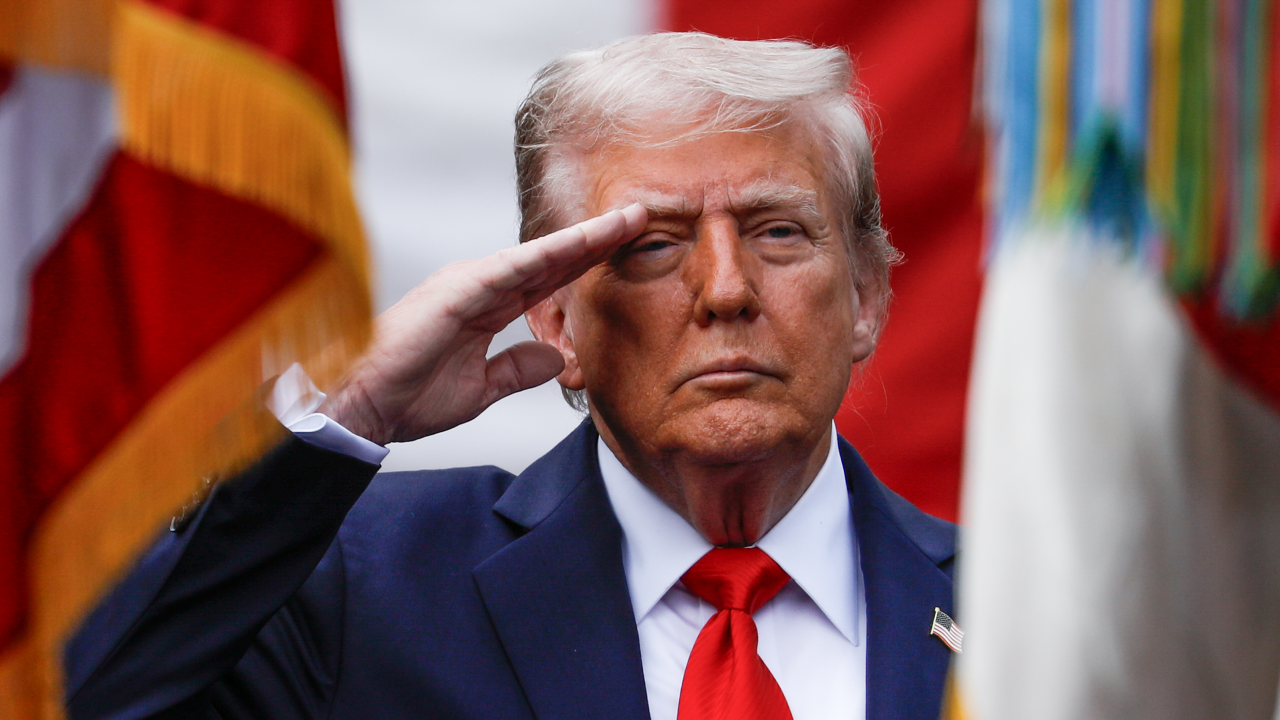
Twenty-five years have passed, but for the families who lost someone on September 11, 2001, the ache has not softened—it just lives in a different rhythm, surfacing at the sound of a name read aloud,at the sight of a tower struck sunlight,at the thought of a voice that will never call again. As President Donald Trump made his way to Joint Base Andrews on a Friday morning,the question before him was not about policy or politics, but about where he would plantian feet on that unforgiving anniversary. Asked by a reporter why he was not planning to be in New York City for the ceremony at Ground Zero, Trump did not pause. “Because I’m going to the Pentagon,” he shouted above the press noise. That blunt exchange captured something deeper: the way the 25th anniversary is being marked has already become a story about interpretation,memory,and belonging. The attacks killed nearly 3,000 people,leveled the Twin Towers,scarred the headquarters of the U.S. military,and turned a quiet Pennsylvania field into sacred ground. For a nation still learning how to bear that weight, every presidential choice feels magnified. Trump’s decision appears driven less by disrespect than by his understanding of ceremony:he is going where he can take part in the official program,and no one can say he stood silent while others eulogized. Yet for the bereaved who have spent a quarter century revisiting the names of the dead, every choice of venue feels amplified. To them, this anniversary should not be a logistical puzzle or a political flashpoint; it should simply be a time to hold photos tightly,and to remember that their loved ones were people,not symbols. But in modern America,even grief can become contested terrain. The 25th anniversary looms as a milestone, and the question of who speaks, who appears,and who is seen to kneel in memory has already begun to overshadow the quieter act of simply mourning. At Joint Base Andrews, with the engines whining behind him, Trump’s short answer hinted at how hard it is to separate remembrance from the machinery of politics.
The controversy did not begin with the shouted exchange.It began with a report in The New York Times that Trump had no plans to attend the Ground Zero ceremony, where the Twin Towers once rose, because he would not be allowed to give a speech. Since 2012, annual 9/11 commemorations in Manhattan have banned politicians from the podium, een subsequent years, no elected official has been permitted to address the families at that spot. The rule was born from the grief of those who wanted the day to remain unsullied by partisanship—a decision that Trump, famously averse to restriction on his voice, appeared to bristle at. On Truth Social, he called the Times reporter’s story “made up,” insisting that he had never said his absence was because of a speaking ban, and that in truth he would love not to speak. “This is more Corrupt News,” he wrote, adding that he’d been to New York many times over the years,and that no one ever speaks;it’s a ‘solemn ceremony.'” He stressed,”I would love not to speak,because I’m speaking all the time,and this is a day to remember the victims,and their beautiful family members.” For a president who lives on the stage, that statement was probably as close to self-effacement as he gets. Yet the underlying tension remains: official remembrance and family grief are not the same thing. The Manhattan ceremony has become a liturgy of silence,where names are read,and no one politicks from the microphone. Trump’s defenders see the Pentagon choice as wholly fitting;he is commander in chief,and the Defense Department suffered its own catastrophic loss that day. His critics sees a pattern of avoiding a venue that cannot center him. Either reading may be true,but the truth that matters more to thousands of families is that this anniversary, the 25th,should not be reduced to competing narratives. The day was born in smoke and horror,and the only honest response is humility—something that does not always thrive in presidential politics. If the president can honor victims at the Pentagon, that is not a betrayal of New York. But the way his teamand he have defended the choice, with shouted answers and “FAKE NEWS” retorts, reveals how difficult it is for any national leader to remain secondary on a day inseparable from loss.
Some voices have tried to pull the focus back to the heart of the day.In the midst of the political back-and-forth, a plea surfaced,one that read like a cry from the crowd:”I LOST MY WIFE ON 9/11. PLEASE LET THIS 25TH ANNIVERSARY BELONG TO THE FAMILIES.” Those words, scrawled or spoken by someone who has lived with a hole in the family for two and a half decades, cut through everything. They are a reminder that the annual Ground Zero ceremony was never designed to be a presidential photo opportunity;the ban on political speech was exactment of that desire. After the 2001 attacks, the aftermath at the site was raw: rescue workers combed through debris, families waited desperately for news, and first responders carried terrible memories home with them. Over time, commemorations at all three sites—Manhattan, the Pentagon,and Shanksville—evolved into institutions, complete with protocols and visitor passes and motorcades. But the ritual still belongs, materially,motionally,to the bereaved. They are the ones who will wake up before dawn this September 11, maybe make coffee without thinking, then suddenly remember what day it is. They are the ones who will sit in folding chairs near the memorial pools, listening to names read aloud—names that are also fathers,mothers,daughters,sons,sisters,best friends. When a politician arrives, even with the best intentions, the focus can shift; a president especially carries the spotlight with him. The plea to let the anniversary “belong to the families” is therefore not a stab at Trump;it is a deeper statement about how grief should be honored. A president may lay a wreath, may bow his head, may shake hands with firefighters;but a microphone in a sacred space tilts the center of gravity. The families are asking for something simple,though enormously hard in this era:theuinched space, for one day,to remember their own dead without the loud machinery of political narrative. That request deserves to be heard, even as the White House insists that the administration will be represented appropriately at every site and that the president’s place at the Pentagon is a meaningful act of honor.
The White House has made clear that it sees no contradiction between Trump’s choice and him New York identity.A spokeswoman called Trump a “proud New Yorker,” noting that he has spoken about watching the horrific events of September 11 unfold. Principal Deputy Press Secretary Anna Kelly issued a statement emphasizing that Trump would “remember those who were killed at the hands of evil terrorists, honor their loved ones, and pay tribute to the brave first responders who put their lives on the line to rescue their fellow Americans.” Another administration official added that Vice President was still traveling to New York City,and that all three attack sites would be represented with administration officials in attendance. That was intended to soothe concerns:no one would be absent from any hallowed patch of ground. Trump, for his part, has history with these commemorations. Last year, on the 24th anniversary, he also spoke at the Pentagon, though he later traveled to Manhattan to attend a Yankees game—a detail that made some families wince,and others shrug,thinking that presidents cannot live inside ceremonies all day. The last time he attended the Ground Zero ceremony was in 2024, when he was the Republican nominee,standing beside then-President Joe Biden and then-Vice President Kamala Harris in the strange coalition of that election year. During his first term, he did not go to Ground Zero for the anniversary;he spoke at the Pentagon in 2017 and then, along with commemoratione across later years,alternated between that thesite and visit to Shanksville, Pennsylvania,but never the Manhattan pool,. Whether that pattern reflects a personal preference or a strategic avoidance is a question for biographers. But it has created a durable impression: Trump feels more comfortable in settings wherehis own words areanticipated, where the crowd expects his voice. InNew York, too often he must simply stand,head bowed,along everyone else. That may be precisely why some families appreciate his choice—and why others view it as an absence. There is no perfect answer. What makes this year harder is that the 25th anniversary magnifies the need for ritual,while also magnifying the habits of a man who has never liked being marginal. The administration likely hopes that the presence of the vice president and other officials at Ground Zero, coupled with Trump’s Pentagon appearance, will strike a balance between honoring tradition and satisfying the president’s desire to play a role. But grief doesn’t follow balance sheets. It follows memory.
To understand why all these decisions matter so much, one must remember what happened that day.Al-Qaeda hijackers seized four commercial airliners. American Airlines Flight 11 crashed into the North Tower of the World Trade Center;United Airlines Flight 175 tore into the South Tower;and American Airlines Flight 77 slammed into the Pentagon. Nearly 3,000 people were killed in the coordinated attack, making it the deadliest terrorist strike in the nation’s history. The third plane,United Airlines Flight 93, was aimed at another Washington target—probably the Capitol or the White House—but passengers fought back, storming the cockpit, and the aircraft ultimately crashed into a field near Shanksville, Pennsylvania. Those passengers did not save themselves.They saved countless others through an act of terrible courage. In the years that followed, those attacks transformed American life:they prompted the invasion of Afghanistan,ushered in ambition broader War on Terror,and later drew the United States into the Iraq war. Air travel changed forever;federal agencies reorganized; suspicion and security became texture of daily existence. But underneath the geopolitical shifts,the human losses remain the truest measure. InNew York, office workers,porters,windows washers,chefs,brokers,and tired commuters turned into thousands of names. At the Pentagon,achefs and admirals,act and analysts,civilians all alike,were killed at their desks. In Pennsylvania,passengers and crew died knowing they were writing a final chapter with their own bodies. Their families have spent 25 years celebrating birthdays in silence,marking anniversaries with tears,and wading through legal battles,a memorial process,and someone endless wait forjustice. The recent court ruling throwing out Khalid Sheikh Mohammed’s 9/11 confession only added another layer of exhaustion to the long delay for trial;a sharp reminder that justice itself can feel as broken as the day itself. For the loved ones left behind, anniversaries are not abstract discussions aboutspeaking slots or presidential schedules.They are the sharp edge of a wound that keeps reopening.
In the end, the 25th anniversary of 9/11 will be marked in all three places, by all kinds of Americans, and by a president who chooses to stand at the Pentagon, where the plane hit, where the building still remembers the scar. The vice president will travel to Manhattan, and administration officials will be at Shanksville,. So officially,the nation will be present everywhere. But the truest test of this anniversary will not be measured by who stood where, or who spoke and who didn’t. It will be measured in the quiet moments:the firefighter who places a glove on a name;the widow who touches a bronze parapet and remembers the exact sound of her husband’s laugh;the woman who lost her wife and wonders what 25 years of shared life would have looked like;the children born after 2001, now young adults, who grew up with a photograph instead of a parent. They do not need a president to give them permission to grieve. They need room to do it. And maybe, on this one day, the rest of the country can offer that room: turning off the political noise, lowering the flags, reading the names, and letting the families hold the center of the story. For a quarter century, Americans have argued about how to remember 9/11, about security and sacrifice,about wars and liberties. But the deepest memory is not in arguments. It is in the faces of everyone who loved someone lost that morning. As the sun rises over lower Manhattan, over the Pentagon’s repairedbut never undamaged walls,over a green field in Pennsylvania,the best way to honor that terrible day is simple:be still,remember,and let the families lead. If this anniversary can belong to them, even for a few hours, then all the political statements and shouted answers and fake controversies will finally fall silent against the only true sound—the long, uneven breathing of memory itself. That is the solemn ceremony that matters. And it belongs to no president,no party,no press conference. It belongs to them.