



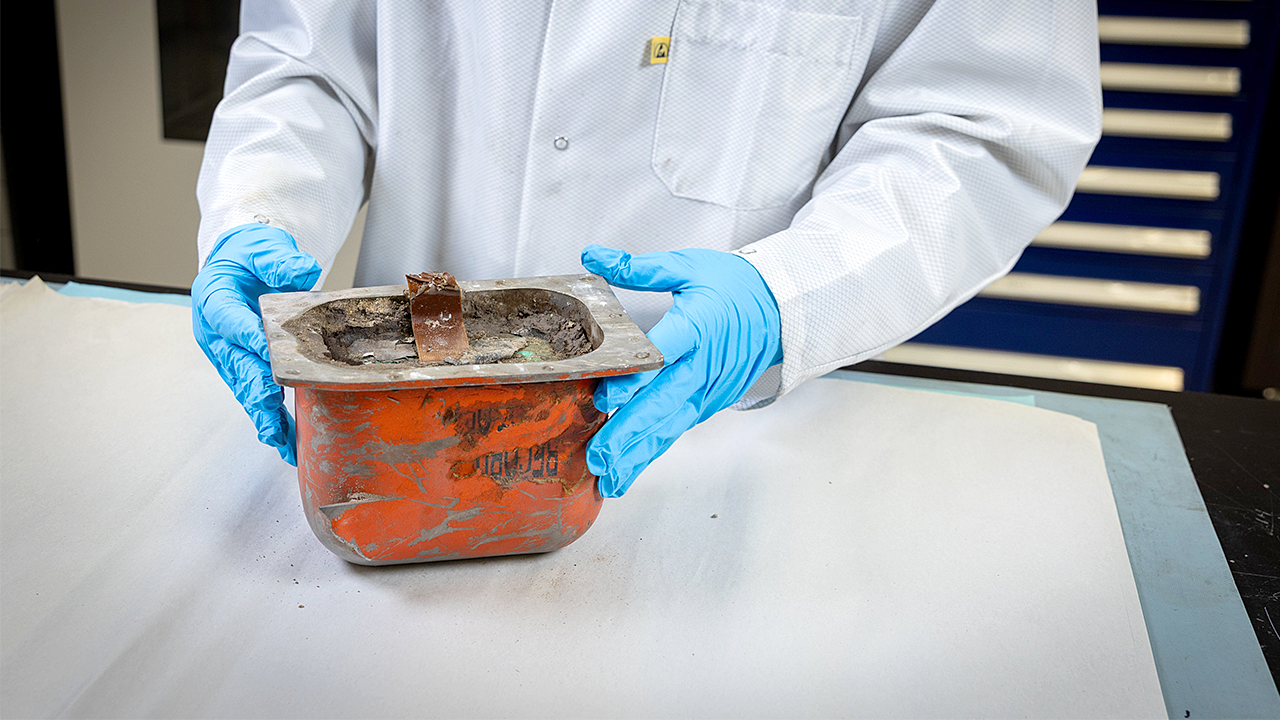
Of all the haunting artifacts that can emerge from a plane crash, few are as deeply personal or as profoundly significant as the cockpit voice recorder. On Monday, the National Transportation Safety Board announced that it had recovered this vital device from the wreckage of the Learjet 60 that crashed near Greenacres, Florida, on November 1, taking the lives of all nine people aboard. The recorder, a small, fire-resistant box designed to capture every word, every warning chime, and every moment of conversation in the cockpit, was found at the exact site of the initial impact. It will now be taken to the NTSB’s Vehicle Recorders Laboratory in Washington, D.C., where specialists will carefully download and evaluate its contents. For investigators, this is a crucial step in understanding what went wrong. For the families of the victims, it may hold the only remaining echoes of their loved ones’ final moments, a thought that makes the discovery equal parts scientific breakthrough and emotional gut punch. The NTSB’s announcement, brief and clinical, does little to convey the weight of what this small device represents, but those who have followed the tragedy know that these recordings often become the centerpiece of an investigation, revealing everything from routine flight chatter to the quiet, desperate seconds before impact.
The crash itself has left a community in mourning and a nation seeking answers. The Learjet 60 took off from Austin-Bergstrom International Airport on Sunday morning, October 31, around 10:37 a.m., bound for North Eleuthera Airport in the Bahamas. It was supposed to be a trip filled with promise, a getaway for a young family and their friends. Instead, just before 1 p.m., the aircraft plunged into the ground in Palm Beach County, a fiery, devastating end to what should have been a short, routine flight over the Southeast. Among the dead were Austin tech entrepreneur Adam Robinson, 45, a man known for his brilliance and his larger-than-life presence in the city’s startup community. He was traveling with his wife, Helen Sharp, 40, their four-year-old daughter Emma, and their two-year-old son Charlie. Also lost were the children’s nanny, Anita Maria Cetina, and two family friends, Rachael Reed and Charmi Fehr. The sudden loss of so many vibrant lives has sent shockwaves through Austin and beyond, leaving friends, colleagues, and even strangers to grapple with the fragility of life. These were people with futures, with children, with hopes and plans, and in the span of a few terrifying minutes, all of it was gone. The grief is raw, and the need for answers is now more urgent than ever.
The recovery of the cockpit voice recorder is just one part of a much larger and more painstaking investigation, one that has already yielded other significant pieces of the puzzle. On Friday, investigators confirmed that they had recovered part of an engine from the crash site, a breakthrough that came after days of careful excavation. The work was not easy; crews had to wait for utility workers to drain water and clear debris from the marshy impact zone before they could begin the delicate process of sifting through the wreckage. When they did begin digging, they found the engine component buried amid the twisted metal and scorched earth, a reminder of the violent forces that tore the aircraft apart. Earlier, investigators had recovered the left tail elevator, the part of the plane that controls its pitch and helps it climb or dive, and they found it in three separate pieces. One of those pieces was discovered nearly four miles from the main crash site, a stark illustration of how the jet disintegrated as it fell. As the NTSB noted in a social media post, even small pieces of wreckage can contain important evidence. A tiny fracture, a scorch mark, or a bent piece of metal can tell a story, and the agency is determined to listen.
To understand what happened in those final moments, it helps to look at the timeline that has begun to emerge. The Learjet 60 was cruising at flight level around 41,000 feet, high above the weather, when the first signs of trouble appeared. An air traffic controller warned the flight crew that moderate precipitation was roughly five miles ahead and offered them the option to deviate left or right, specifically cautioning that a turn toward Freeport in the Bahamas “looks pretty bad.” The crew was then instructed to fly toward a waypoint near Naples, Florida, likely in an attempt to find smoother air. But instead, the pilots made a deviation toward Palm Beach County, and as they did, they reported that the weather conditions were deteriorating. The conversation between the crew and air traffic control, which will likely be recovered and analyzed from the cockpit voice recorder, included mentions of icing and turbulence. At one point, the pilots asked the controller if there was a “better ride” ahead, a question that now resonates with heartbreaking irony. Heavy rain and thunderstorms had been reported across South Florida at the time of the crash, and weather is already considered a major focus of the investigation. The question is whether the aircraft encountered weather beyond its capabilities, whether mechanical failure played a role, or whether a combination of factors, human and environmental, led to the tragedy.
The cockpit voice recorder will be central to answering those questions. In the coming weeks, investigators at the NTSB’s laboratory will painstakingly download and transcribe the audio, often working to filter out background noise and enhance the voices of the pilots. The recorder typically captures the last two hours of cockpit sound, including conversations, alerts, switches, and even the subtle sounds of engines straining or breaking apart. That audio, combined with radar data, weather reports, and the physical evidence gathered from the wreckage, will help recreate the final seconds of the flight with remarkable precision. But for those who loved the people on board, the process is agonizing. They know that the answers will not bring anyone back, and that the transcript of the cockpit voice recorder may contain moments that are difficult to hear. It may reveal that the pilots were fighting desperately to save the aircraft, or it may show that they were caught off guard by forces beyond their control. Either way, the public will likely never hear the full recording, due to federal law protecting cockpit voice recorder contents, but the lessons learned from it will inform aviation safety for years to come. The NTSB does not investigate simply to assign blame; it investigates to prevent the next tragedy, to correct the flaws, whether in machinery or in procedure, that allowed this one to happen.
As the investigation moves forward, the focus remains on the lives that were lost. Adam Robinson was more than a statistic, more than a name in a news article. He was a father, a husband, a builder of things, a man who poured his energy into the companies he founded and the people he mentored. His wife, Helen, was described by those who knew her as loving and devoted, the kind of mother who lit up the room when she talked about her children. Emma and Charlie, so young, had just begun their lives, and their absence now leaves an unfillable void. Anita, the nanny, was someone’s daughter and friend, a woman whose care and kindness helped raise two little ones. Rachael and Charmi were friends who chose to share in an adventure, unaware that it would be their last. They all deserve more than just a detailed investigation; they deserve to be remembered as people, not just the victims of a tragedy. The N.T.S.B.’s promise of a thorough, methodical investigation is the best tribute we can offer them, a commitment to finding the truth, no matter how uncomfortable it may be. The recovery of the cockpit voice recorder is a step in that direction, but it is only the beginning. In the weeks and months ahead, the findings will be compiled into a final report, and the families will finally know what happened on that dark, stormy Sunday. Until then, they wait, as do we all, holding our loved ones a little closer and remembering that every flight, every journey, carries with it both the miracle of flight and the fragile weight of human life.