


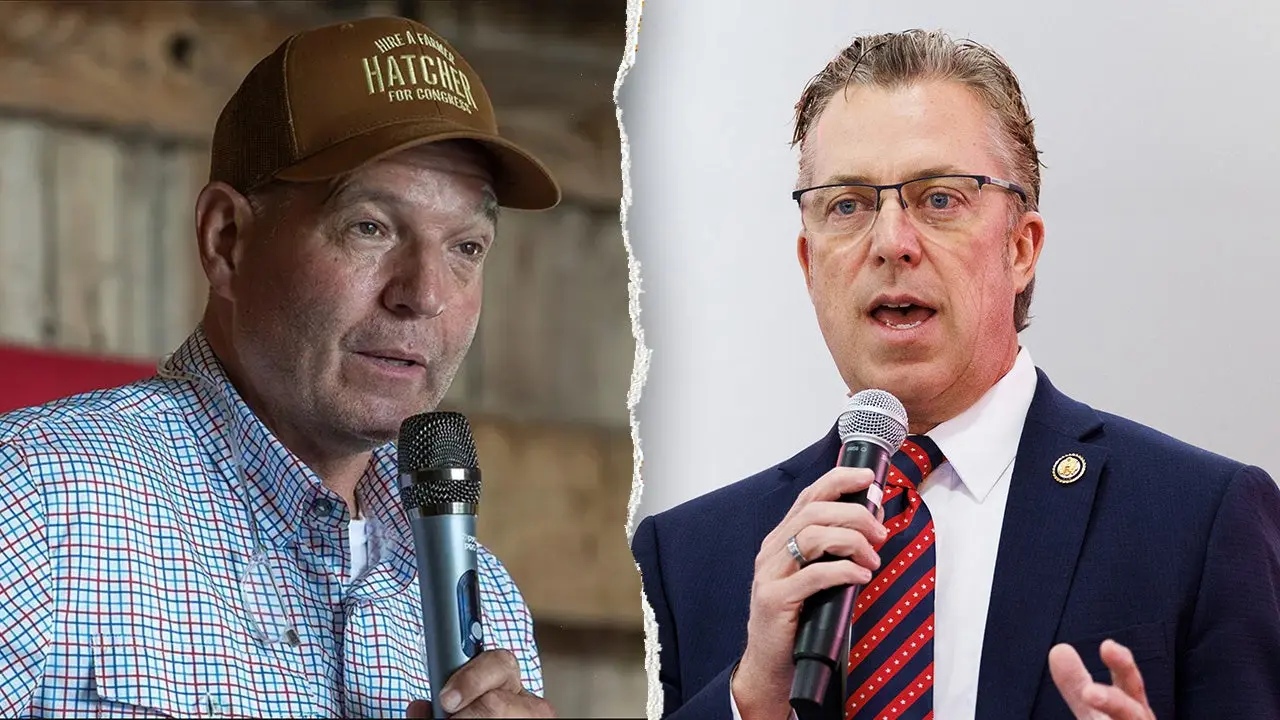
The sultry heat of a late Tennessee summer night provided the dramatic backdrop for a political earthquake that reverberated far beyond the borders of the Volunteer State, catching the attention of political observers nationwide. In a stunning primary upset, incumbent Representative Andy Ogles, a firebrand conservative closely aligned with the national populist movement, was defeated by Charlie Hatcher, a soft-spoken, fifth-generation dairy farmer and the state’s former commissioner of agriculture. While the race was not initially flagged by national pundits as a premier battleground coming into the election cycle, it quickly evolved into a captivating microcosm of the deep ideological fractures and shifting power dynamics currently wrestling for control of the modern Republican Party. This was not just a simple electoral loss; it was a deeply human story of two contrasting visions for conservative leadership, pitting a loud, combat-ready legislative warrior against a quietly pragmatic advocate of local interests. As the final ballots were tallied, the outcome sent shockwaves through Washington, serving as a stark reminder that even the most secure and vocal incumbents can find themselves vulnerable when local priorities, immense financial resources, and a subtle shift in voter sentiment converge at the ballot box. For the families living in Tennessee’s fifth congressional district, the choice ultimately came down to the style of representation they wanted in the nation’s capital. By choosing Hatcher, a man whose hands are calloused from actual labor, the electorate expressed a growing desire to move past the exhausting cycle of nationalized culture wars and return to a brand of politics rooted in community service, mutual respect, and practical, everyday problem-solving. This unexpected victory proved that in the heart of the American South, the quiet voices of the community can still rise above the loud clamor of national political theater.
To fully comprehend how a quiet farmer managed to orchestrate such a monumental upset against an entrenched congressman, one must trace the massive, silent river of money that flowed into the district. A newly influential super PAC known as the Invest in Tomorrow Coalition entered the race with devastating precision, pouring an astronomical $2 million into targeted advertising designed to expose Ogles’ vulnerabilities while elevating Hatcher’s profile. This massive expenditure represented a significant portion of the $6.7 million the group had amassed, making Ogles their primary target of the entire election cycle. Federal Election Commission filings eventually revealed that the primary source of this financial deluge was Chris Larsen, a California-based billionaire and the co-founder of the financial technology firm Ripple. Larsen’s heavy involvement introduced a fascinating dynamic, as he is also a prominent donor to Democratic causes, having previously funneled millions into Kamala Harris’s presidential aspirations. To Ogles and his devout supporters, this felt like an invasive, hostile takeover of a local Republican primary by a progressive Silicon Valley tech titan who had no real understanding of Tennessee values. Ogles vociferously defended his record, arguing that he was being targeted by wealthy special interests because of his aggressive efforts to claw back federal funding and eliminate lucrative government subsidies for renewable energy. In Ogles’ view, these massive financial investments against him were not about party loyalty or local representation, but rather a retaliatory strike by corporate entities furious that their taxpayer-funded “green welfare” was being threatened by a congressman willing to speak truth to power. He maintained that the billionaire-backed attack was a warning shot to other Republicans, showing them the consequences of challenging the powerful renewable energy lobby and their government-backed financial lifelines.
For the defeated incumbent, the loss was a bittersweet and deeply personal moment, forcing him to reflect on the high price of being an outspoken ally of Donald Trump. Ogles had long worn his proximity to the former president as a badge of honor, believing that his aggressive, plain-spoken style of politics was exactly what his constituents wanted in a representative. He spent his career in the public eye arguing that his outspoken nature made him a natural target for the political establishment, who sought to silence anyone fighting to dismantle the administrative state. Donald Trump himself had been an enthusiastic cheerleader for Ogles, posting glowing endorsements on Truth Social that described him as an inspiration and one of the finest congressmen in the United States. Trump’s endorsement is often viewed as the ultimate currency in Republican primaries, a golden ticket that commands absolute loyalty from the party’s base. Yet, this race demonstrated that even the former president’s enthusiastic support has its limitations when confronted with a highly disciplined, locally focused campaign. Ogles was left to contemplate the reality that being a loyal soldier in the national conservative movement was not enough to shield him from a challenger who successfully argued that Washington had changed him. The defeat highlights the complex psychological reality of modern public service, where a politician’s deepest loyalties can simultaneously be their greatest strength and their most significant vulnerability, leaving them exposed when the local ground shifts beneath their feet. Ultimately, Ogles’ departure from Congress marks the end of a highly contentious chapter, leaving him to wonder if his unwavering commitment to the national stage caused him to lose sight of the quiet murmurs of discontent brewing in his own backyard.
In beautiful contrast to the high-stakes, nationalized drama surrounding Ogles, Charlie Hatcher ran a campaign that felt deeply personal, authentic, and connected to the rich agricultural heritage of Tennessee. As a veterinarian and a fifth-generation dairy farmer, Hatcher’s life has been defined by the demanding rhythms of nature, hard work, and a commitment to keeping things alive and thriving. In his campaign materials, he presented himself not as a slick politician, but as a humble public servant motivated by a desire to restore basic dignity and common sense to public office. He spoke passionately about a distinct lack of “farmer common sense” and traditional work ethic in Washington, suggesting that many current lawmakers are more interested in performing for cable news cameras than doing the hard work of governance. Hatcher’s message resonated deeply with voters who were tired of the constant political theater and yearned for a representative who looked, spoke, and thought like them. He did not reject the broader conservative agenda; rather, he promised to bring a collaborative, solution-oriented approach to implementing the policies of the Trump administration and Speaker Mike Johnson. By centering his identity on his love for the land and his deep roots in the community, Hatcher humanized himself to the electorate in a way that Ogles, with his focus on national ideological battles, simply could not match. His victory proved that, for many voters, character, local trust, and a humble spirit are still more persuasive than raw political power and ideological purity. It showed that the image of a farmer, dedicated to the soil and the community, still holds a powerful, almost sacred place in the hearts of Southern voters.
The political drama was further heightened by a fascinating and highly unusual split in endorsements that exposed the delicate balancing act within Tennessee’s Republican leadership. While Donald Trump stood firmly behind the incumbent Ogles, Tennessee’s popular Republican Governor, Bill Lee, took the bold and politically risky step of endorsing Hatcher late in the primary contest. This endorsement was deeply personal for Governor Lee, who had worked closely with Hatcher during his tenure as the state’s commissioner of agriculture. In a heartfelt video message, Lee vouched for Hatcher’s conservative values, his deep love for the country, and his long-standing support for the broader conservative movement, successfully neutralizing the accusation that Hatcher was a tool of out-of-state liberal donors. This division between a national endorsement from Trump and a local endorsement from a beloved sitting governor created a unique political laboratory. It forced voters to decide whether they valued national ideological alignment or trusted, local relationships more when choosing their representative. Ultimately, Governor Lee’s endorsement proved to be a decisive factor, providing Hatcher with the institutional credibility he needed to reassure skeptical voters. The split highlighted a growing trend in American politics where local leaders are increasingly willing to assert their independence from national party dictates, demonstrating that local trust and personal relationships can still hold their own against the formidable political gravity of a national endorsement. This dynamic proved that a localized network of support, built on years of shared work and mutual respect, can sometimes outweigh the influence of national figures who only visit the state during election seasons.
With the primary victory now secured, Charlie Hatcher stands on the threshold of a new chapter in his life as he prepares to transition from the peaceful pastures of his family farm to the chaotic halls of Congress. Because the district was heavily redrawn by the state legislature to favor Republicans—a process that famously sparked protests in the state capitol and ultimately flipped the final Democratic-held seat—Hatcher is overwhelmingly favored to win the general election. This is a path he has successfully navigated before, having secured a decisive victory in 2024 against Democrat Maryam Abolfazli with a comfortable margin of 56.9% to 39.5%. As he prepares to represent the people of Tennessee on the national stage, Hatcher’s journey serves as a powerful testament to the enduring importance of local identity and personal character in an increasingly nationalized political landscape. His victory is a poignant reminder to politicians everywhere that they must never lose touch with the communities they represent, nor underestimate the quiet wisdom of ordinary citizens. In the end, the story of the Tennessee primary is a deeply human narrative about the delicate balance of power in America: a story of a farmer who stepped forward to offer a different path, a governor who stood by his friend, and an electorate that decided that sometimes, the best way to move forward is to look back to the simple, enduring values of home. As Hatcher prepares to take his seat, his constituents will be watching closely, hoping that the farmer common sense he championed on the campaign trail will survive the harsh climate of Washington, D.C.