





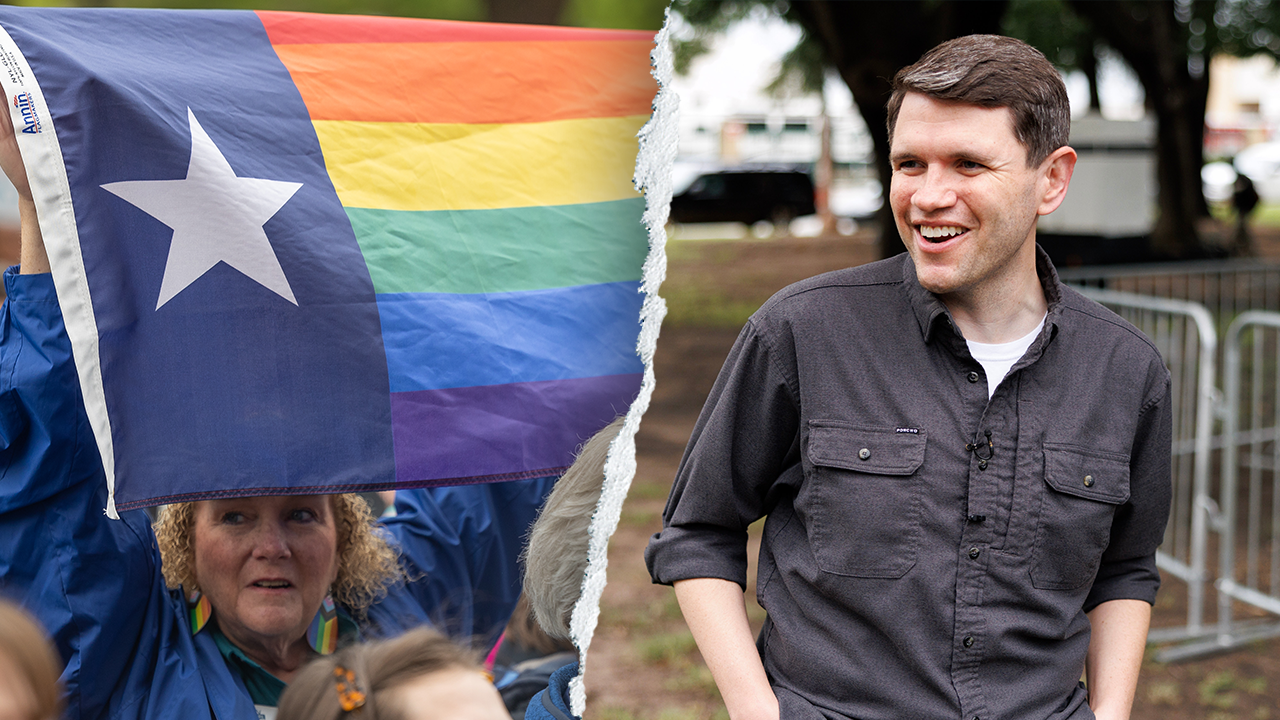
The Texas Senate race is heating up as progressive Democrat James Talarico, a state lawmaker and Presbyterian seminarian, faces scrutiny over his stance on gender transition medical procedures for minors. Talarico is currently in a highly competitive battle to flip a long-held Republican seat, challenging incumbent GOP State Attorney General Ken Paxton. This race is of paramount importance to both parties, with the state’s political balance hanging in the balance. Talarico recently stated during a podcast appearance that he opposes gender reassignment surgeries for minors. However, his political opponents quickly pointed out a contradiction, highlighting his participation in a campaign fundraiser just days later alongside a local plastic surgeon who has historically performed such procedures on adolescents.
The fundraiser in question, an Austin-based “Pride for Talarico” event, featured Dr. Dustin Reid, a plastic surgeon specializing in female-to-male chest reconstruction layouts. Under direct questioning, Dr. Reid confirmed his attendance at the campaign event and verified that he had indeed performed these surgeries on individuals under the age of 18 in the past. He emphasized that these cases were exceptionally rare and always occurred under strict clinical guidance with the consensus of all medical professionals involved in the minor’s care. Following the implementation of Texas state laws banning transition-related surgeries for minors, Dr. Reid noted that his clinic has ceased performing these operations on adolescents and now strictly adheres to current state regulations. He clarified that while his practice previously followed the World Professional Association for Transgender Health (WPATH) standards, which permit surgical intervention for minors under specific criteria, his hands are now tied by state law.
This connection has reignited a fierce debate surrounding Talarico’s legislative history on LGBTQ+ issues. Although the campaign now maintains that Talarico opposes surgical transitions for minors, critics have pointed to his 2023 voting record. During that legislative session, he actively voted against a state bill that aimed to outlaw gender-affirming surgeries and medical treatments for minors. At the time, Talarico expressed strong opposition to the ban, describing it as dangerous and attributing the legislative push to extreme religious movements. His previous public statements have also included strong support for transgender youth, framing their protection as a moral and religious duty. This shift in positioning has led political adversaries to accuse him of changing his public stance simply to appeal to a broader, more moderate base of voters ahead of a tight election.
The ongoing controversy has drawn substantial attention from prominent advocacy groups and political action committees on both sides of the aisle. The Human Rights Campaign’s political action committee, which actively supports Talarico, has been vocally critical of state-level bans on gender-affirming care, labeling such limitations as threats to essential, life-saving healthcare. Conversely, conservative groups and political opponents have seized on the fundraiser to paint Talarico as politically inconsistent. Representatives from conservative political action committees have accused him of misleading the public, arguing that his alignment with transition specialists contradicts his newly stated opposition to youth gender reassignment surgeries. They argue that his campaign is heavily supported by advocates who continue to champion medical transition options for adolescents.
The political fallout has triggered sharp exchanges between the opposing campaign teams. A spokesperson for Attorney General Ken Paxton’s campaign criticized Talarico, accusing him of abandoning common-sense principles to appease radical ideologues and claiming he is misrepresenting his true legislative record to Texas voters. Paxton’s team positioned the incumbent attorney general as a steadfast defender of children and traditional parental rights, highlighting his legal efforts to uphold state bans on youth transition procedures and protect gender-specific sports categories. In response, Talarico’s campaign spokesperson, JT Ennis, firmly reiterated that the candidate does not support gender reassignment surgeries for minor children. Ennis pushed back against the attacks, accusing Paxton and his supporters of using divisive culture-war rhetoric to distract voters from pressing economic issues like the rising cost of living for Texas families.
As the election approaches, this issue highlights the deep ideological divides defining the Texas political landscape. For Talarico, navigating the complex intersection of progressive social advocacy, personal faith, and a highly competitive general election electorate remains a delicate balancing act. For Paxton, the controversy offers a prime opportunity to consolidate his conservative base by focusing on parental rights and childhood protection laws. With the control of the Texas Senate potentially on the line, both campaigns are working tirelessly to define their opponent’s record, leaving voters to decide which candidate’s vision aligns with the future of the state.