






The Weight of Silence: Inside the Fifth Amendment Pleas Shaking ActBlue
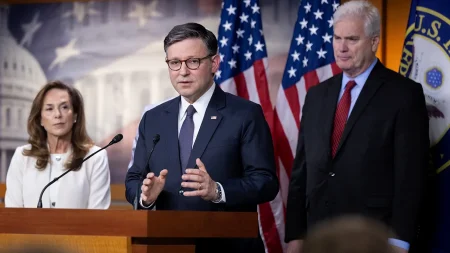
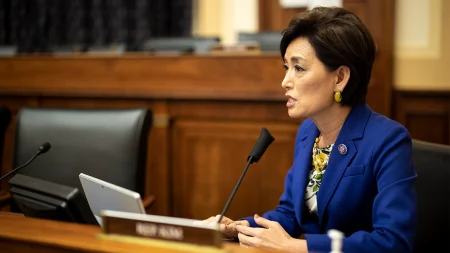
The marble hallways of the Rayburn House Office Building rarely echo with the sort of profound, heavy silence that accompanies a witness invoking the Fifth Amendment. Yet, on a Tuesday morning that felt less like a routine political squabble and more like a referendum on trust, Kimberly Peeler-Allen, a board member of the Democratic fundraising behemoth ActBlue, sat before the House panel and declined to answer. In a quiet but seismic moment, she invoked her constitutional right against self-incrimination, adding her name to a short list of high-profile Democratic operatives who have chosen the sanctuary of the Fifth Amendment over testifying in what has become a sprawling congressional investigation. The air in the room was thick with tension as her refusal to cooperate rendered the already controversial fundraising platform even more opaque. It is a scenario that would have seemed unthinkable just a few years ago, when ActBlue was celebrated as the unmitigated engine of the Democratic grassroots, channeling billions of dollars from the pockets of everyday Americans into the palms of progressive candidates. Now, the narrative has shifted from one of remarkable fundraising success to a darker, murkier saga involving leaked concerns about foreign interference, allegations of systemic fraud, and a consistent, wall-of-silence strategy from its leadership.
Peeler-Allen’s appearance before the joint probe—a collaborative effort of the House Administration, Judiciary, and Oversight Committees—now serves as the crucible in which the organization’s integrity is being tested. The investigation, which began aggressively in 2023, aims to uncover whether ActBlue knowingly allowed foreign nationals to make illegal donations and whether it stripped away the most basic anti-fraud safeguards to expedite this influx of cash. The central bone of contention rests on ActBlue’s decision to not require the three-digit CVV code on contributors’ credit cards—a simple yet vital layer of security that verifies the physical cardholder is indeed the one facilitating the transaction. Without it, critics argue, the platform becomes a veritable free-for-all for bad actors across the globe. While ActBlue maintains that their refusal to answer questions is a matter of constitutional due process, their silence is being heard loud and clear by a public exhausted by a political landscape marred by claims of rigged systems and shady backroom deals.
The human dimension of this legal standoff is complex. For the individuals involved, pleading the Fifth is rarely an admission of guilt, but rather a pragmatic, often fear-driven calculation that the risk of self-incrimination—whether real or perceived—outweighs the benefits of a grueling public testimony. Peeler-Allen’s decision to follow in the footsteps of ActBlue co-founder Matt DeBergalis, who faced the same three committees behind closed doors on August 20th, and CEO Regina Wallace-Jones before him, paints a picture of a unified legal front. It signals that the testimony provided could potentially be more dangerous to their personal legal standing than the inevitable political firestorm their silence would incite. The implication is clear: the story of what led to those unscreened dollars finding their way into the political system is one that cannot be told in the current legal climate without severe and immediate consequences. Yet, this instinct for self-preservation clashes violently with the public’s innate desire for transparency in a system already hemorrhaging trust.
The public, after all, is the true victim in a scenario where financial safeguards are allegedly bypassed, regardless of political affiliation. When Chairman Bryan Steil, R-Wis., vents his frustration, he speaks to a broader, palpably angry electorate. The fact remains that elections are won and lost on the power of the popular will, and when that will is perceived as being manipulated by dark money or, worse, foreign influence, the very foundation of representative democracy begins to crack. The $20 billion raised by ActBlue since its inception represents the hopes and dreams of hundreds of millions of Americans, their families, and their pets—people who genuinely believe in the power of a small-dollar donation to enact change. To have those individual acts of civic engagement cast under the shadow of suspicion is profoundly disillusioning for the average donor who may have never once questioned whether their contribution would be processed with the same level of due diligence as a used car sale.
However, to frame this solely as a legal and procedural matter would be to ignore the deep partisan fault lines that run through the investigation. Steil’s insistence that this probe is not political feels hollow to Democratic critics who see it as yet another Republican-led effort to undermine a key Democratic financial engine. The leaked internal memo from ActBlue’s counsel, which in the New York Times report suggested that CEO Wallace-Jones’s testimony about “multi-layered” screening protocols was risky and may have misled Congress, has become a double-edged sword. On one hand, it validates the committee’s skepticism about the veracity of ActBlue’s public claims. On the other, it highlights an internal Kelly-anne Conway-esque logic where the witnesses believe the truth is not a credible defense. By hiding behind the Fifth Amendment, they have effectively abandoned the field of public opinion, ceding the narrative to the very legislators who seek to dismantle their operations through new legislation and rules.
As the dust settles on this latest appearance, the question remains: what does the American people expect to happen next? The path forward is fraught with complexity. A full-throated defense of the Fifth Amendment is a foundational pillar of our justice system, and any attempt to penalize its use would set a dangerous precedent. Yet, there is a distinct difference between legal guilt and political accountability. Whereas the former requires a judge and jury, the latter demands a different kind of judgment—one that happens at the ballot box. By refusing to testify, the ActBlue officials have invited continued legislative pressure and eroded the confidence of a voting public already predisposed to believe the worst about the mega-donor class. This is not just about one platform; it is a referendum on whether large-scale political fundraising can ever truly be secure and whether the levers of power are being pulled by the voters or by unseen, unaccountable forces. In the end, the silence in that congressional hearing room may be the most damning testimony of all.